Archives for category: Ireland

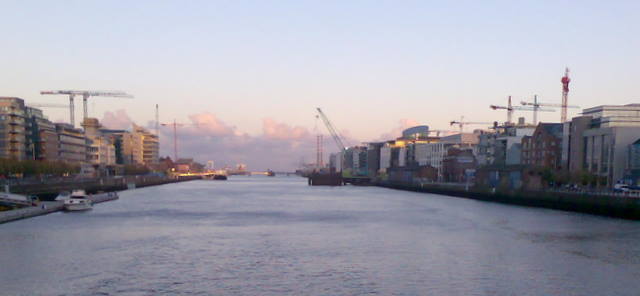
I took these shots with my mobile phone camera near Sean O’Casey Bridge on my way back from work last Monday.

The Liffey from John Rogersons Quay

This picture was taken just south of Sean O’Casey Bridge, a low sun and surprisingly few people around.

The Docklands from Sean O’Casey Bridge

The docklands are undergoing a massive transformation. For some years now, tall cranes have dominated this area, once populated by warehouses and derelict sites.

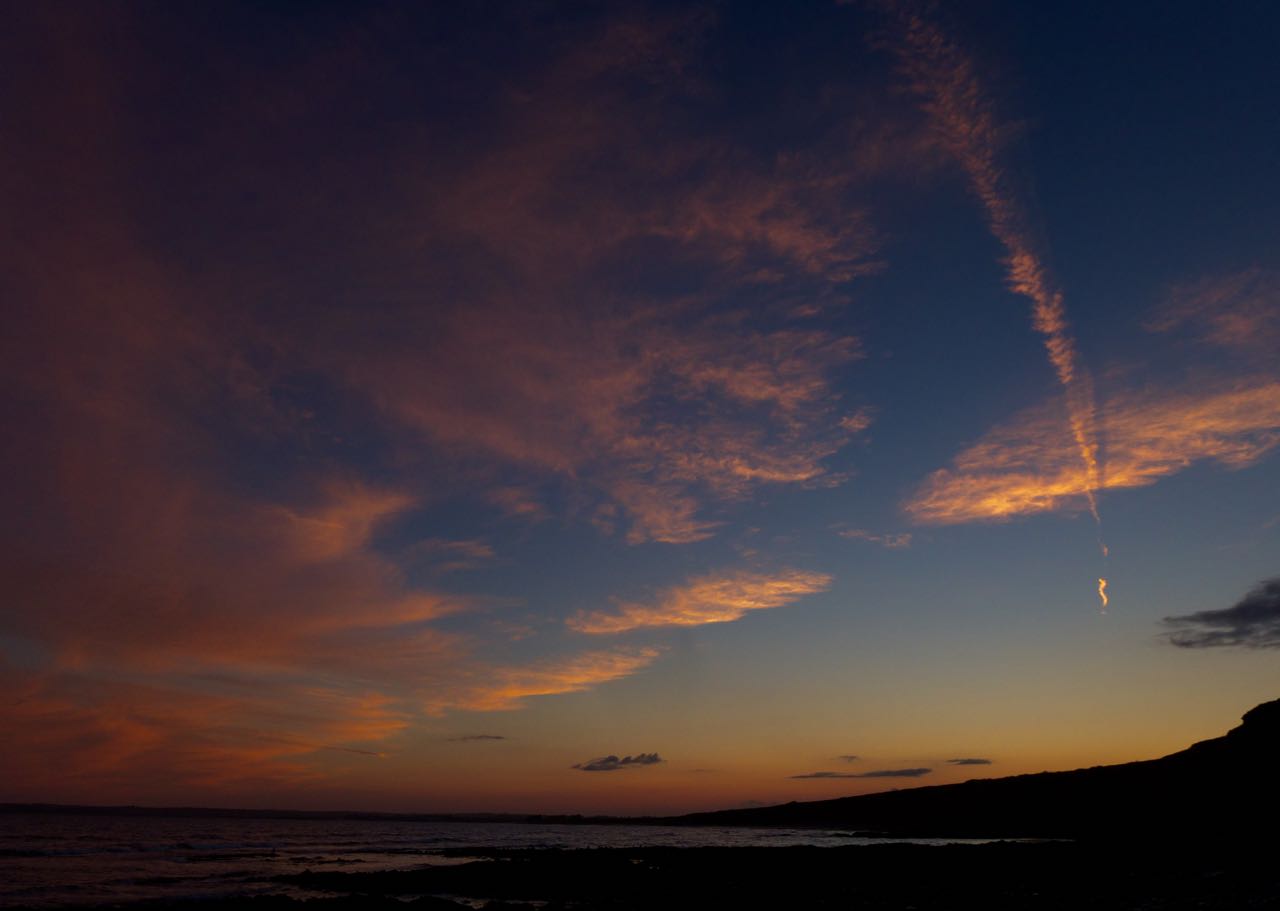
Sunset over Dublin

Finally the Ulsterbank group headquarters, Connolly Hall, the Customs House and the Spire in silhouette, as the sun diminishes into the west.

I’ve been thinking further about the changes that have taken place in Ireland over the past few years. Many words come to mind immediately – brash, self-confident, multicultural, materialistic, dynamic, aggressive, etc., etc. Some of my more recent posts have veered somewhat in this direction.


One word, however, strikes a dissonant chord.

Smug.

We have become very smug about our country’s new-found success. As if nothing bad can or will ever happen again. We have achieved, and now we can just sit back, max out the credit card, let the money roll in and lecture everyone else about how they are doing it all wrong.


Well, I think Dick Wolf’s quote says it all:

As soon as you become complacent, your show gets cancelled“.

The Hill of Tara

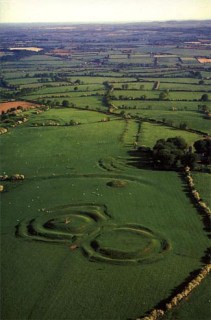
Pat Kenny hosted a radio program from the Hill of Tara yesterday. Tara has a huge amount of significance in the mythology and pre-history of Ireland. It was the seat of the Irish high-kings and the archaeological features in the area are extensive and fascinating. Although built on a low ridge overlooking the River Boyne, the views over the Irish midlands are quite spectacular.

Over the past two years, Tara has rarely been far from the headlines because of a proposed motorway (the M3) that will pass near the Hill on its way to Cavan and Fermanagh. From the press coverage of recent years, you would think that the Hill itself was going to be bulldozed away, given the level of public debate on the issue!

The Kenny show yesterday blew the protestors’ case away in an utterly convincing fashion. We discovered that the construction of the motorway had the support of the vast majority of the local population, so much so that it wasn’t even an issue for Co. Meath voters in the last general election. We discovered that most of the protestors (90%) were non-local. We discovered that the current road (the N3) is utterly unable to cope with the volume of commuter traffic. We discovered that the recently discovered Lismullin earthworks, found along the route of the motorway, were nothing special in the context of Irish archaeology. (You can’t throw a stone in this country without hitting an ancient monument of some sort – this country contains up to 60,000 ring forts alone). We discovered that most of the protestors had no role to play in the public consultation phase prior to the final routing decision. The protestors themselves were found wanting when questioned. To me it seemed that their arguments were high on emotion and thin on rationality. Even worse, they had brought along a bunch of yahoos who did nothing to help their case: they continually hooted, insulted and interrupted the speakers from the government / development side.

Supporting the protest case was a nice “hug the stones” little ditty from Liam O’Maonlaí, which had me rushing to find a cigarette lighter so I could swing my arms in unison with the song. A pro-motorway singer couldn’t be found, strangely enough.

It seems to me that the Tara M3 Motorway is perfectly reasonable and logical in the light of a rapidly expanding capital city and a northwest region that badly needs major infrastructural investment to keep up with the rest of the country. The motorway works itself may actually help us to uncover new knowledge about our distant ancestors. Diligent archeological work will be performed on the motorway site throughout the entire development. This is in contrast to the many thousands of monuments cleared away by private developers and farmers all the time with no consultation or discussion. The protestors have (yet again) pointed their ire at the wrong culprits.

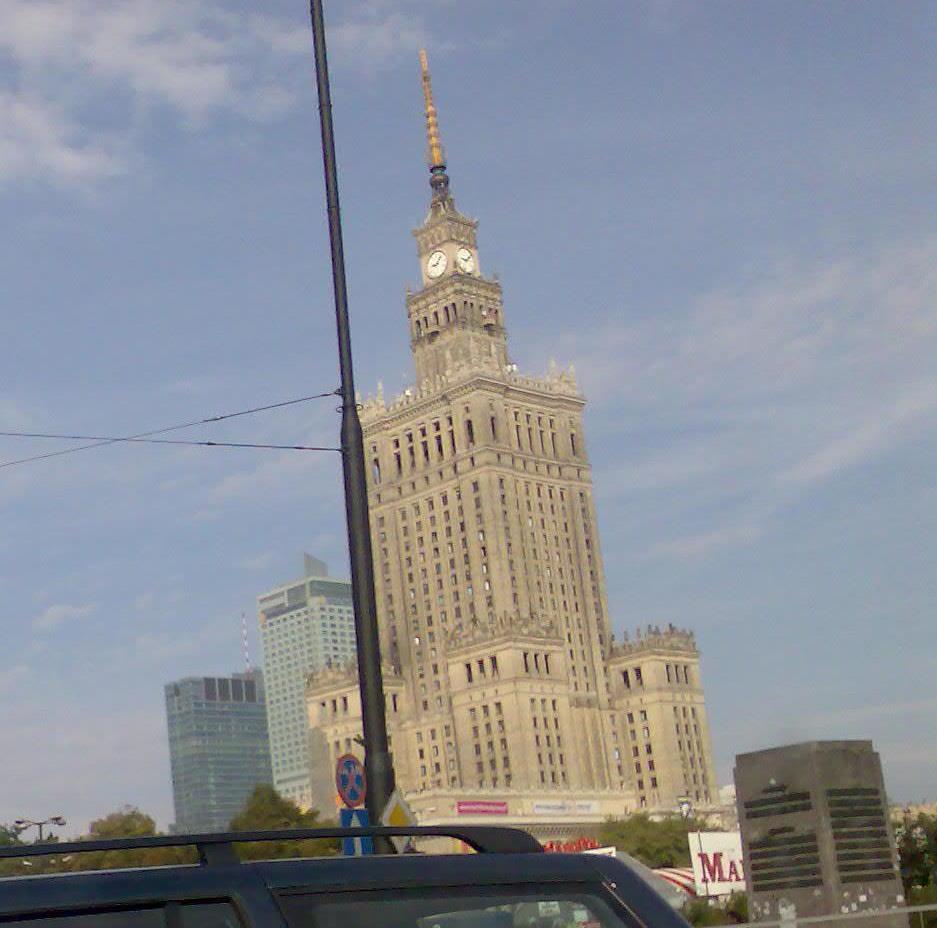
Palace of Arts and Culture, Warsaw

I took a short business trip to Warsaw earlier this week. It was my first time ever in Poland, and my brief impression of the place and its people was overwhelmingly positive. Up until this week, Poland was something of a mystery to me. Although there are lots of Polish people in Ireland at the moment, I know none of them, and thus I had no reference point.

It turns out that the Polish have a lot in common with us Irish. We are very similar in how we see the world. The Polish people I came in contact with were very friendly and seem to live in a world where people are continually putting up with less-than-stellar service and rules. If there’s a law, a regulation or a proscription, there’s a way around it. The Poles laugh a lot: always a good sign.

Compared to many countries in Western Europe, Poland still has some way to go. That doesn’t mean it won’t get there, however. There are clear similarities with the Ireland of 20 years ago. Back then, Ireland was still a backwater: a peripheral little fiefdom struggling to extract itself from decades of neglect, indebtedness and corruption. Few people could have imagined the social and infrastructural changes that would take place since then. The transition into a self-confident state, where things actually worked, was utterly unforeseen in the 1980’s. And yet, looking back, it now seems obvious that Ireland’s economic success was no accident and that many of the crucial factors were in place.

Well, that’s where I think Poland is now – on the cusp of a major economic and social revolution. It will take time: the current bunch of politicians there would make the Keystone Cops seem super-organised by comparison. The infrastructure is poor (Warsaw has only one metro line for a population of 3 million people), and inefficiency is the order of the day if the airport check-in procedures are anything to go by. But there appears to be a mood for change. The Polish who have left the country in recent years have a reputation for uncomplaining hard, high quality work. They love their country, and there’s a young population there who want their lives to be substantially different than what their parents settled for. In addition, the multinationals are entering Poland in their droves. You only need a few big names to enter to create momentum, and these names are now beginning to appear there, establishing substantial distribution and customer service operations.

My time there was short, but I’ve been given a flavour of the country, and I’d like to get back there again – to see more of Warsaw, the Baltic coast, Krakow, the Tatras Mountains and the Bielowieza Forest. Some day soon, perhaps.

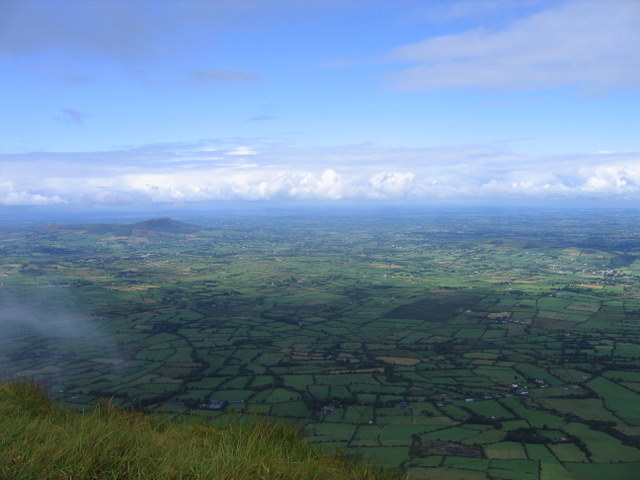
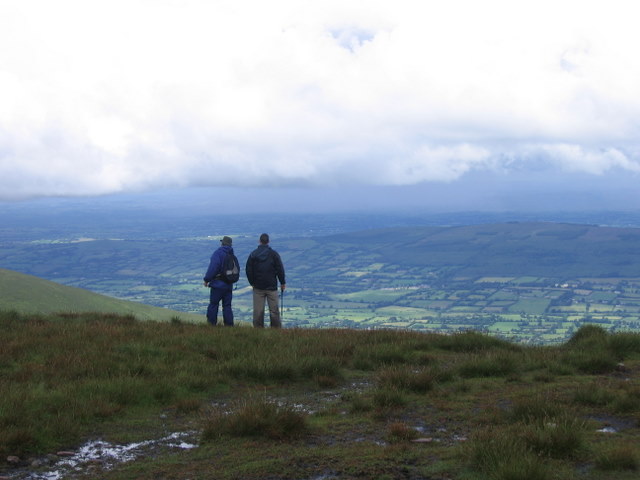
I managed another trip to the Galtees last weekend. This time we took a different route, ascending the valley by Lyreacappul (Ladhar an Chapaill), traversing the ridge of Monabrack and descending into the valley by Sliabh Cois na Binne: a gigantic horseshoe route that took over 5 hours to complete. Apart from the occasional rain-shower, it was a magnificent day. The views from the top were incredible. The entirety of the southern half of Ireland is visible from the summit. What was missing was a view of the sea: the Galtees are Ireland’s only inland mountain range.

Click on the photos to enlarge

Energetic stream in the valley

The Monabrack ridge from Ladhar na Chapaill County Limerick from Ladhar an Chapaill

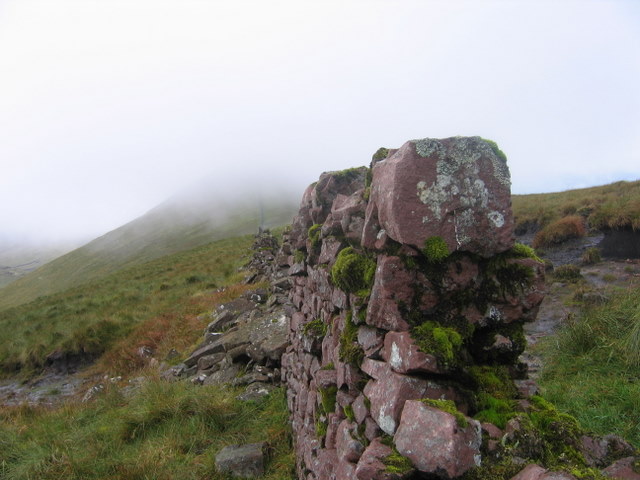
Sliabh Cois na Binne Ancient wall on Ladhar an Chapaill

Sycamore grove

The new Irish Rail experience

Irish Rail recently purchased a whole set of super-duper railway carriages as part of a major government initiative to modernise our country’s rolling stock. You can book your train seats in advance, there is plenty of room for luggage and the journey itself is impressive by its relative silence.

One of the things that particularly interested me were the on-board toilets – automatic doors, push-button locking systems, triple action pee sprays for the loo-bowl, infrared systems for hand-washing, hot air blowers for drying. An almost totally hands-free waste management experience. The future has indeed arrived!

Except for one thing.

On my trip down from Dublin, the smell of cigarette smoke emanating from the little room was overpowering. The little room is being used as a smoking room by some of the lesser-evolved members of this society. And what do Irish Rail seem to be doing about it? Smoke alarms perhaps? Spot fines? Throwing the offenders out of the train at high speed? Garotting them on the emergency break cord? Naah. More than their job’s worth I would guess. After all, we are only talking about health and safety laws here..

In addition, what is it with the Irish male species that they feel obliged to bring on-board 12 packs of beer tins, and proceed to get pissed in front of their fellow travellers? Some of my fellow travellers were already stinking of drink before they boarded the train. If this was air-travel these people would never be allowed on in the first place.

I must be getting old, but it just seems that with all the changes in our country over the past few years, some old habits will take a long time to die out.

My friend Azahar got a laugh out of me this evening. It resonates with something I have been thinking about a lot since I started work in Dublin two weeks ago.

Temple Bar is the central tourist district in Dublin. Walking down its streets, you are assaulted by American themed sports bars, Spanish restaurants, Romanian buskers, French jugglers and Polish and Czech beer-joints, with all things Irish* well out of view. I’m sure this is no accident. Marketing being what it is nowadays, this is likely to be what most tourists to Dublin want. Instead of shamrock emblazoned bars, trad sessions, and Brendan Behan wannabes mouthing off about the price of a pint, what you get instead is an idiosyncratic and vibrant display of World Culture.

I don’t see this in a particularly negative light. To a large extent, “culture” is directly related to backwardness. When Ireland was a land of great culture, thousands of people were buying one-way tickets out of the place. Neither was it a mecca for hordes of tourists back then, as far as I know.

Actually, before I leave this entry, I remember reading once about an accident in the 19th century, where a very large whiskey barrel broke, its contents spilling out on the streets, flooding the gutters. Great crowds of people had to be physically pulled off the streets in a state of extreme inebriation.

Now that’s culture for ya.

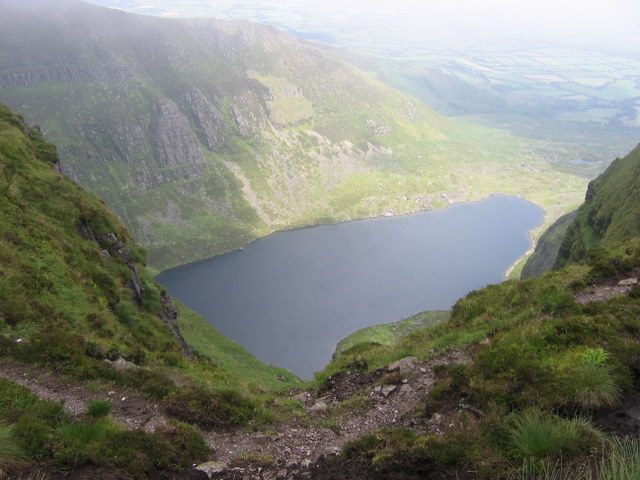
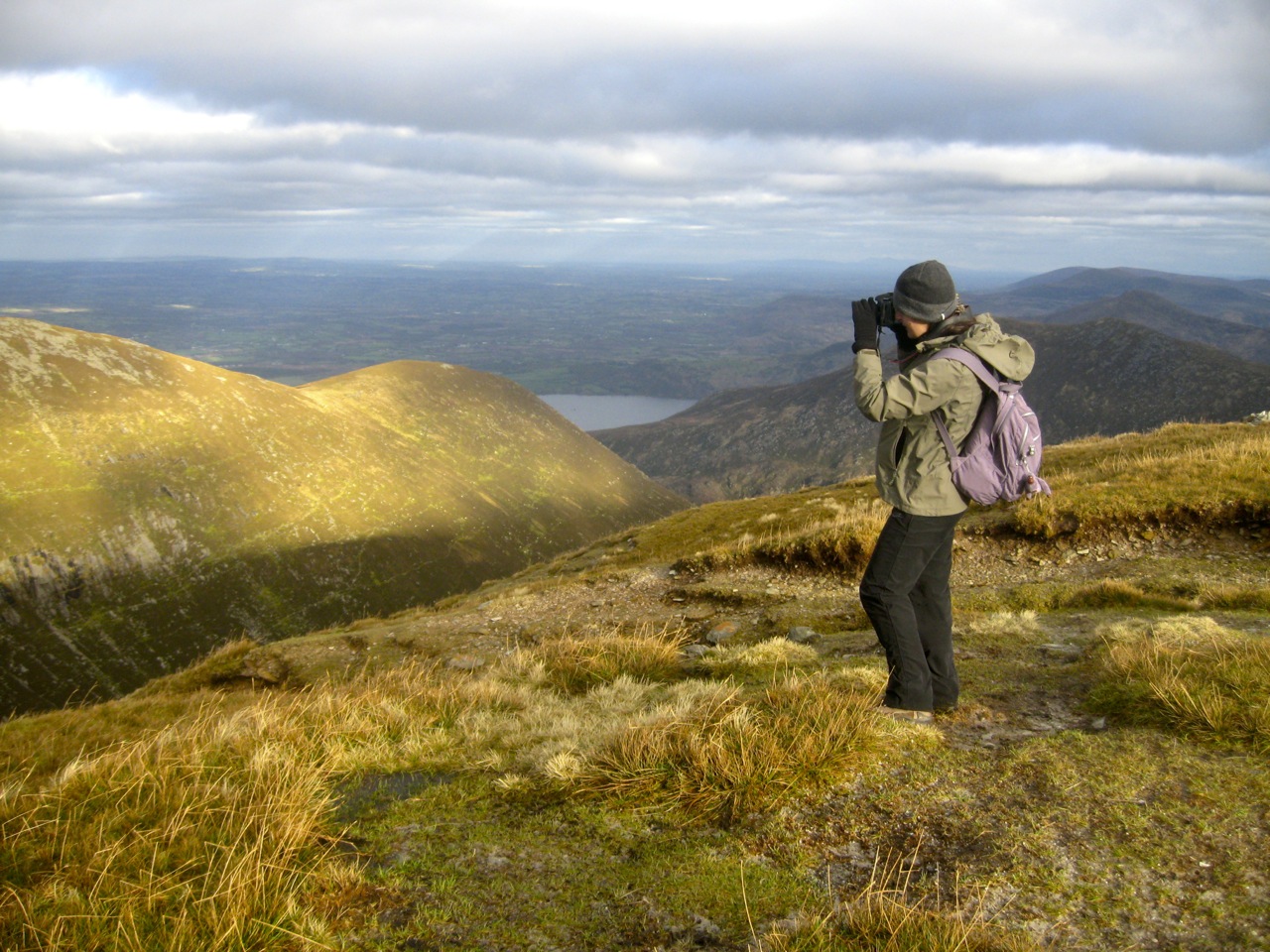
Last Sunday, I journeyed with a few like-minded souls to Coumshingaun in the Comeragh Mountains in Co. Waterford. The centrepiece is a corrie lake caused by glaciation during the last Ice Age. The corrie has a classic “armchair” shape: two gently ascending narrow ridges with precipitous drops on all three sides.

Overlooking the corrie

The journey upwards was quite difficult, compared to Galteemore. It’s a more challenging ascent due to the preponderance of rock outcrops and winding, up/down paths.

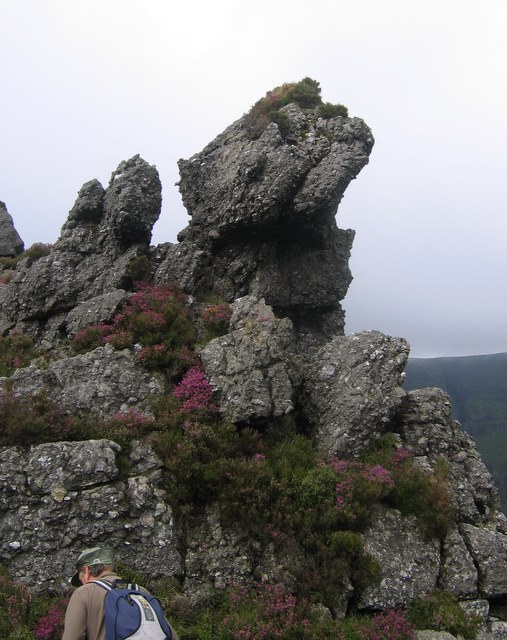
A rock outcrop

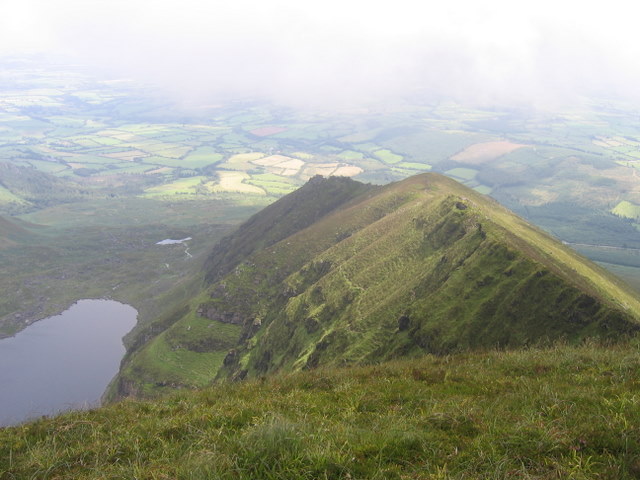
It took us about 2 hours to reach the top. Here’s a view of the ridge by which we ascended.

Our path upwards

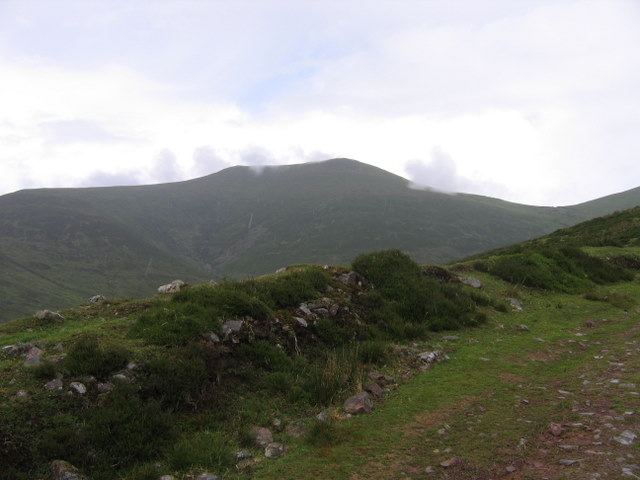
The “summit” is pretty flat, owing to the fact that the Comeraghs are about 350 million years old. Significant weathering, not to mention a few Ice Ages thrown in for good measure, have reduced the mountains to a uniform boggy plateau around 700 metres high.

At the top

Coumshingaun lake is impressive – a mile long, dark, mysterious, fed by gently gurgling waterfalls. Strewn around it are tons of piled up debris from ancient landslides.

Coomshingaun

We completed the “armchair” circuit in good time, returning to the car park in just over four hours. Just the antidote for those Monday morning blues!

The House of Commons in Britain is known for it’s devilishly clever exchanges, memorable put-downs, devastating one-liners and monumental battles of intellect and logic.

We in Ireland have to put up with this*…

This is a dialogue in Dáil Éireann (the Irish Parliament) yesterday between John O’Donoghue and Michael Ring.

Where is the time-out corner when you need it?

Update: Here’s the Curry Chips take on it..

* Real Player required.

Yesterday I went on a walk to Galteemore, the highest inland mountain in Ireland, just over 3,o00 ft high and the smallest of Ireland’s 14 munro’s.

Galteemore

Galteemore is part of the Galtee range in South Tipperary. The mountains stretch about 20km in an East-West direction – roughly-speaking from Cahir to Mitchelstown. The main Dublin-Cork road skirts around its southern and eastern flanks. The Galtee’s are part of the same mountain building event that formed the extensive ridge-valley system of South west Ireland. North of the Galtees the sandstone ridges begin to disappear and the flatter terrain of the Irish Midlands begins.

Overlooking the Glen of Aherlow

I found the walk to the top quite easy, not to say picturesque. The col between Galteemore and it’s smaller sibling, Galteebeag, shows signs of ancient “bog bursts”, or landslides, where entire sections of peat seem to have fallen into the corrie lake below, exposing the solid rock base.

Galteebeag

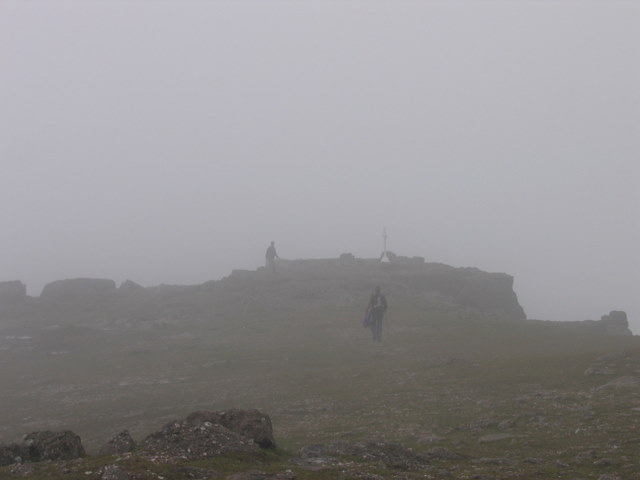
From the summit of Galteemore it is possible to see an amazing amount of southern Ireland: Waterford, Kilkenny, Cork, Tipperary, Limerick: possibly even Kerry, Clare and Carlow. Unfortunately I was unable to see anything at the summit as quite a dense fog closed in.

Summit of Galteemore