Archives for posts with tag: Ireland

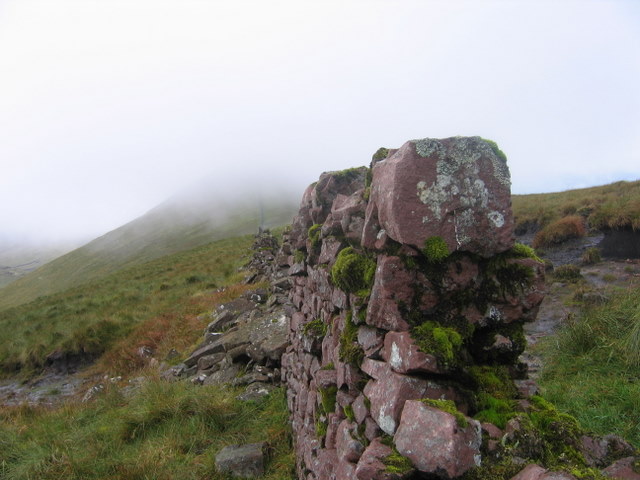
That’s how I feel after I have had a long walk in the mountains! I managed to get in a 10 km walk in the Knockmealdowns in Co. Waterford today in the pouring, freezing rain, and I feel simply terrific after it all. So what if I couldn’t see anything with the fog and the rain? So what if I return to work tomorrow? So what if it is still the middle of winter with lots of bad weather ahead of us in the next few days? After days like this I can take on anything.

(Unfortunately no nice photos to show – my camera finally gave up the ghost a few weeks ago after far too many knocks on hard surfaces. I’m getting a new one next week though, so stay tuned).

 Bertie Ahern

Our senior politicians and civil servants have awarded themselves huge pay increases, bringing our Great Leader’s salary up to 310,000 euro, and those of other senior personnel to over 200,000 euro. The salary increases have been made to keep the pay of senior public professionals in line with the private sector.

Now, while I don’t have a major problem with key people in leadership positions earning high salaries, what amazes me is the government’s utter lack of forethought about how this news may potentially affect the economy. Because some people have attained much higher percentage rises than others, a widespread perception of inequality has almost definitely been created within the public sector. This news is likely to blow the existing pay agreements out of the water. It also means that industrial action and wildcat strikes are now more likely, with a corresponding knock-on hit to productivity and inflation.

To make matters worse, the government have just weakened their own negotiation position when it comes to future industrial disputes. In their minds, the conditions seemed right to justify a large pay increase for themselves. The precarious state of our economy seems not to have been much of a factor presumably. But who would bet against it being a HUGE factor in the broader round of bargaining ahead? It looks like one law for the élite, and something else for the rest of the population.

Another thing I am picking up is that the salaries were recommended by an independent board, tasked at benchmarking comparable salaries against the public sector. “Blame them, not us” the politicians seem to be saying. Clearly, that’s a rubbish argument. Do politicians automatically accept every single recommendation that passes their desk? And how many are accepted with such haste? A wiser set of politicians might have opted to forego their pay raises, recommendation or no recommendation.

I have a feeling that it’s now going to be a long, hard winter, all thanks to our political masters’ generous pay increases.

Here’s what one commenter to the BBC Sport website said in response to Ireland’s defeat at the hands of Argentina:

Eddie O’Sullivan needs to do the honourable thing and fall on his sword. He’d probably miss.”

Ouch!

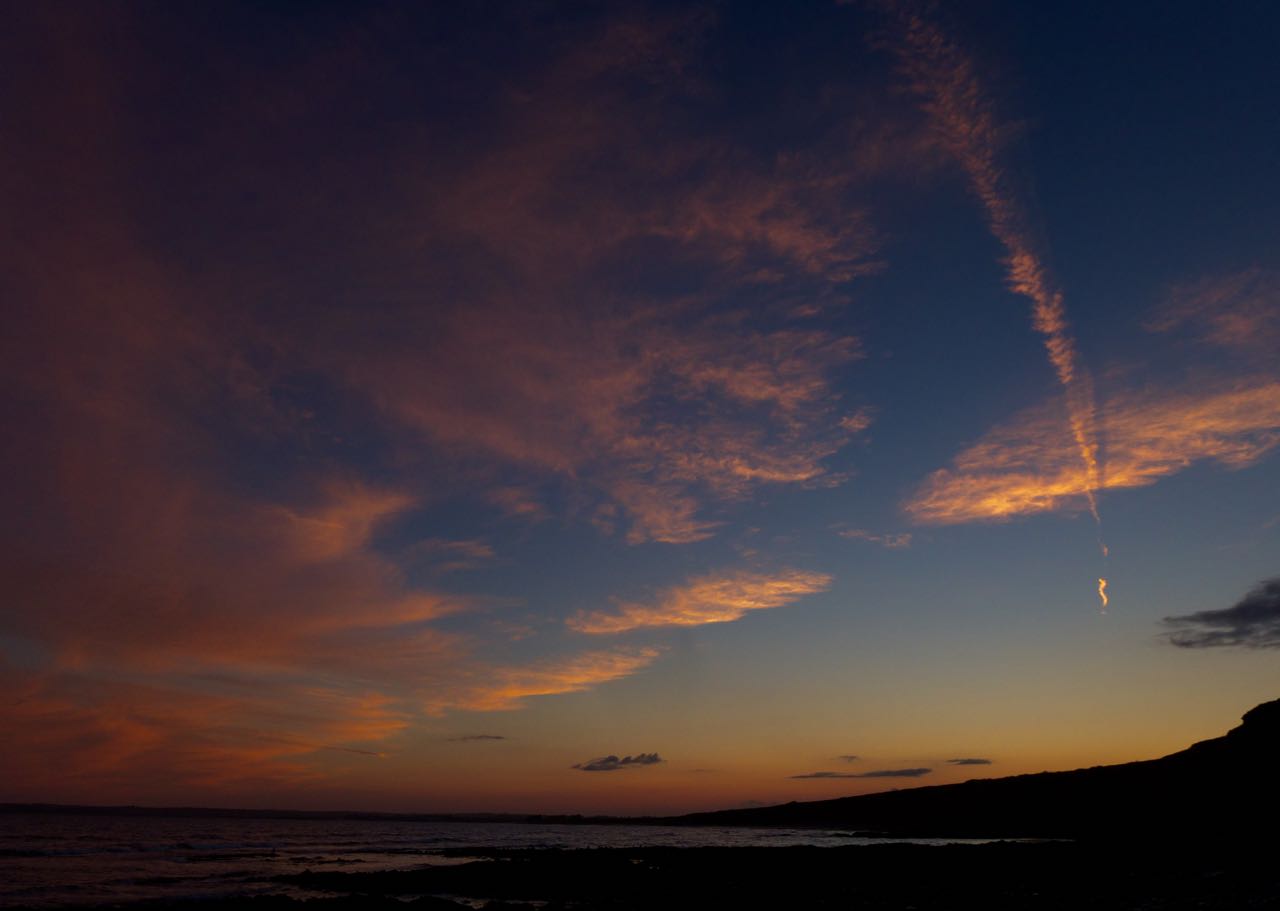
I managed to get myself up very early last weekend in order to take a few photos down by the coast while the sun was low in the sky.

Morning sunrise

This photograph, of the fields, the mist and the windswept bush in the foreground, was taken on my way down to the beach. I love it.

Bird on Ballybrannigan Beach Glow on the rocks Monster head

The above are a few photos taken of the coast and the rocks as they are bathed in the orange searchlight glow of sunrise. Check out the rock monster poking his head out of the ground!

UPC flyer2

I just got a flyer in the door today telling me that Chorus and NTL, the two main providers of cable TV in Ireland, are merging. No news there, however it’s how they are trying to market it that has me irked!

According to them this merger is “a new kind of choice”, and inside in the leaflet we are told that with this new arrangement we will have “greater choice”.

No we won’t. We will have less choice. If this renamed service (UPC) is dreadfully poor (and I’m not hopeful, believe you me) then we will have fewer alternatives to seek out. Between them they will hold a huge percentage of the overall market with around a million customers here in the Republic. The only choices we should care about are our options should UPC fail to deliver, or increase their prices on a whim.

The sheer brass neck of this lot. “Greater choice”. Tsk.

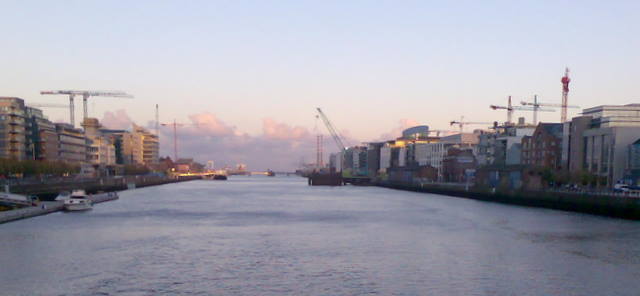
I took these shots with my mobile phone camera near Sean O’Casey Bridge on my way back from work last Monday.

The Liffey from John Rogersons Quay

This picture was taken just south of Sean O’Casey Bridge, a low sun and surprisingly few people around.

The Docklands from Sean O’Casey Bridge

The docklands are undergoing a massive transformation. For some years now, tall cranes have dominated this area, once populated by warehouses and derelict sites.

Sunset over Dublin

Finally the Ulsterbank group headquarters, Connolly Hall, the Customs House and the Spire in silhouette, as the sun diminishes into the west.

I’ve been thinking further about the changes that have taken place in Ireland over the past few years. Many words come to mind immediately – brash, self-confident, multicultural, materialistic, dynamic, aggressive, etc., etc. Some of my more recent posts have veered somewhat in this direction.


One word, however, strikes a dissonant chord.

Smug.

We have become very smug about our country’s new-found success. As if nothing bad can or will ever happen again. We have achieved, and now we can just sit back, max out the credit card, let the money roll in and lecture everyone else about how they are doing it all wrong.


Well, I think Dick Wolf’s quote says it all:

As soon as you become complacent, your show gets cancelled“.

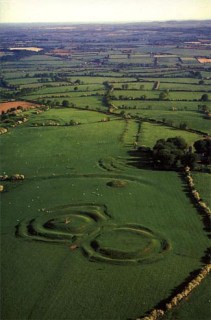
The Hill of Tara

Pat Kenny hosted a radio program from the Hill of Tara yesterday. Tara has a huge amount of significance in the mythology and pre-history of Ireland. It was the seat of the Irish high-kings and the archaeological features in the area are extensive and fascinating. Although built on a low ridge overlooking the River Boyne, the views over the Irish midlands are quite spectacular.

Over the past two years, Tara has rarely been far from the headlines because of a proposed motorway (the M3) that will pass near the Hill on its way to Cavan and Fermanagh. From the press coverage of recent years, you would think that the Hill itself was going to be bulldozed away, given the level of public debate on the issue!

The Kenny show yesterday blew the protestors’ case away in an utterly convincing fashion. We discovered that the construction of the motorway had the support of the vast majority of the local population, so much so that it wasn’t even an issue for Co. Meath voters in the last general election. We discovered that most of the protestors (90%) were non-local. We discovered that the current road (the N3) is utterly unable to cope with the volume of commuter traffic. We discovered that the recently discovered Lismullin earthworks, found along the route of the motorway, were nothing special in the context of Irish archaeology. (You can’t throw a stone in this country without hitting an ancient monument of some sort – this country contains up to 60,000 ring forts alone). We discovered that most of the protestors had no role to play in the public consultation phase prior to the final routing decision. The protestors themselves were found wanting when questioned. To me it seemed that their arguments were high on emotion and thin on rationality. Even worse, they had brought along a bunch of yahoos who did nothing to help their case: they continually hooted, insulted and interrupted the speakers from the government / development side.

Supporting the protest case was a nice “hug the stones” little ditty from Liam O’Maonlaí, which had me rushing to find a cigarette lighter so I could swing my arms in unison with the song. A pro-motorway singer couldn’t be found, strangely enough.

It seems to me that the Tara M3 Motorway is perfectly reasonable and logical in the light of a rapidly expanding capital city and a northwest region that badly needs major infrastructural investment to keep up with the rest of the country. The motorway works itself may actually help us to uncover new knowledge about our distant ancestors. Diligent archeological work will be performed on the motorway site throughout the entire development. This is in contrast to the many thousands of monuments cleared away by private developers and farmers all the time with no consultation or discussion. The protestors have (yet again) pointed their ire at the wrong culprits.

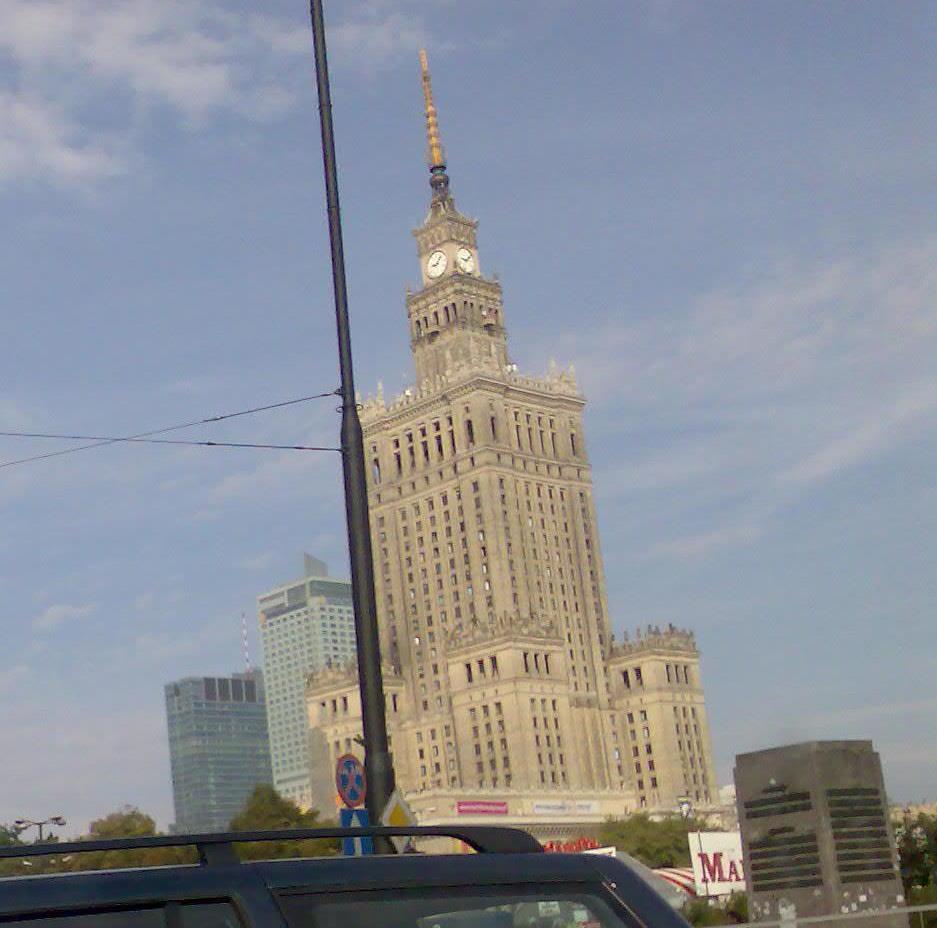
Palace of Arts and Culture, Warsaw

I took a short business trip to Warsaw earlier this week. It was my first time ever in Poland, and my brief impression of the place and its people was overwhelmingly positive. Up until this week, Poland was something of a mystery to me. Although there are lots of Polish people in Ireland at the moment, I know none of them, and thus I had no reference point.

It turns out that the Polish have a lot in common with us Irish. We are very similar in how we see the world. The Polish people I came in contact with were very friendly and seem to live in a world where people are continually putting up with less-than-stellar service and rules. If there’s a law, a regulation or a proscription, there’s a way around it. The Poles laugh a lot: always a good sign.

Compared to many countries in Western Europe, Poland still has some way to go. That doesn’t mean it won’t get there, however. There are clear similarities with the Ireland of 20 years ago. Back then, Ireland was still a backwater: a peripheral little fiefdom struggling to extract itself from decades of neglect, indebtedness and corruption. Few people could have imagined the social and infrastructural changes that would take place since then. The transition into a self-confident state, where things actually worked, was utterly unforeseen in the 1980’s. And yet, looking back, it now seems obvious that Ireland’s economic success was no accident and that many of the crucial factors were in place.

Well, that’s where I think Poland is now – on the cusp of a major economic and social revolution. It will take time: the current bunch of politicians there would make the Keystone Cops seem super-organised by comparison. The infrastructure is poor (Warsaw has only one metro line for a population of 3 million people), and inefficiency is the order of the day if the airport check-in procedures are anything to go by. But there appears to be a mood for change. The Polish who have left the country in recent years have a reputation for uncomplaining hard, high quality work. They love their country, and there’s a young population there who want their lives to be substantially different than what their parents settled for. In addition, the multinationals are entering Poland in their droves. You only need a few big names to enter to create momentum, and these names are now beginning to appear there, establishing substantial distribution and customer service operations.

My time there was short, but I’ve been given a flavour of the country, and I’d like to get back there again – to see more of Warsaw, the Baltic coast, Krakow, the Tatras Mountains and the Bielowieza Forest. Some day soon, perhaps.

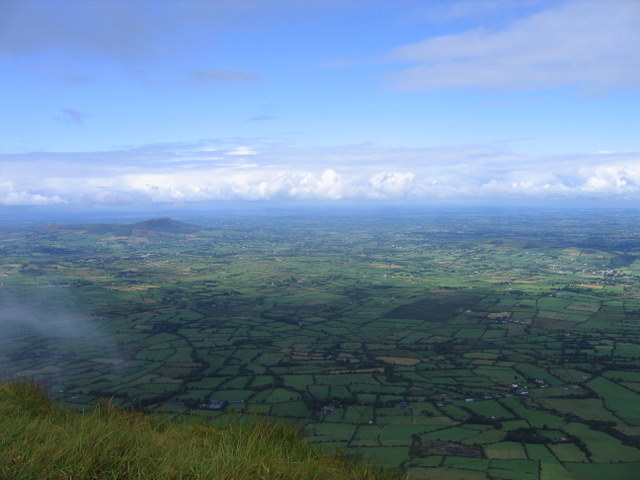
I managed another trip to the Galtees last weekend. This time we took a different route, ascending the valley by Lyreacappul (Ladhar an Chapaill), traversing the ridge of Monabrack and descending into the valley by Sliabh Cois na Binne: a gigantic horseshoe route that took over 5 hours to complete. Apart from the occasional rain-shower, it was a magnificent day. The views from the top were incredible. The entirety of the southern half of Ireland is visible from the summit. What was missing was a view of the sea: the Galtees are Ireland’s only inland mountain range.

Click on the photos to enlarge

Energetic stream in the valley

The Monabrack ridge from Ladhar na Chapaill County Limerick from Ladhar an Chapaill

Sliabh Cois na Binne Ancient wall on Ladhar an Chapaill

Sycamore grove