Archives for posts with tag: Cork

We had a anxious time earlier this week. One of our cats hitched a lift in my car when I was heading to work on Monday morning. The cat made a run for it about 100 metres from the house, but did know how to get home. That evening, despite frantic searches all around the neighbourhood, the cat was still missing. Found cat

The following day, we decided to concentrate the search in the area she went missing. Almost immediately we heard her calling out and within minutes she was safely back home.

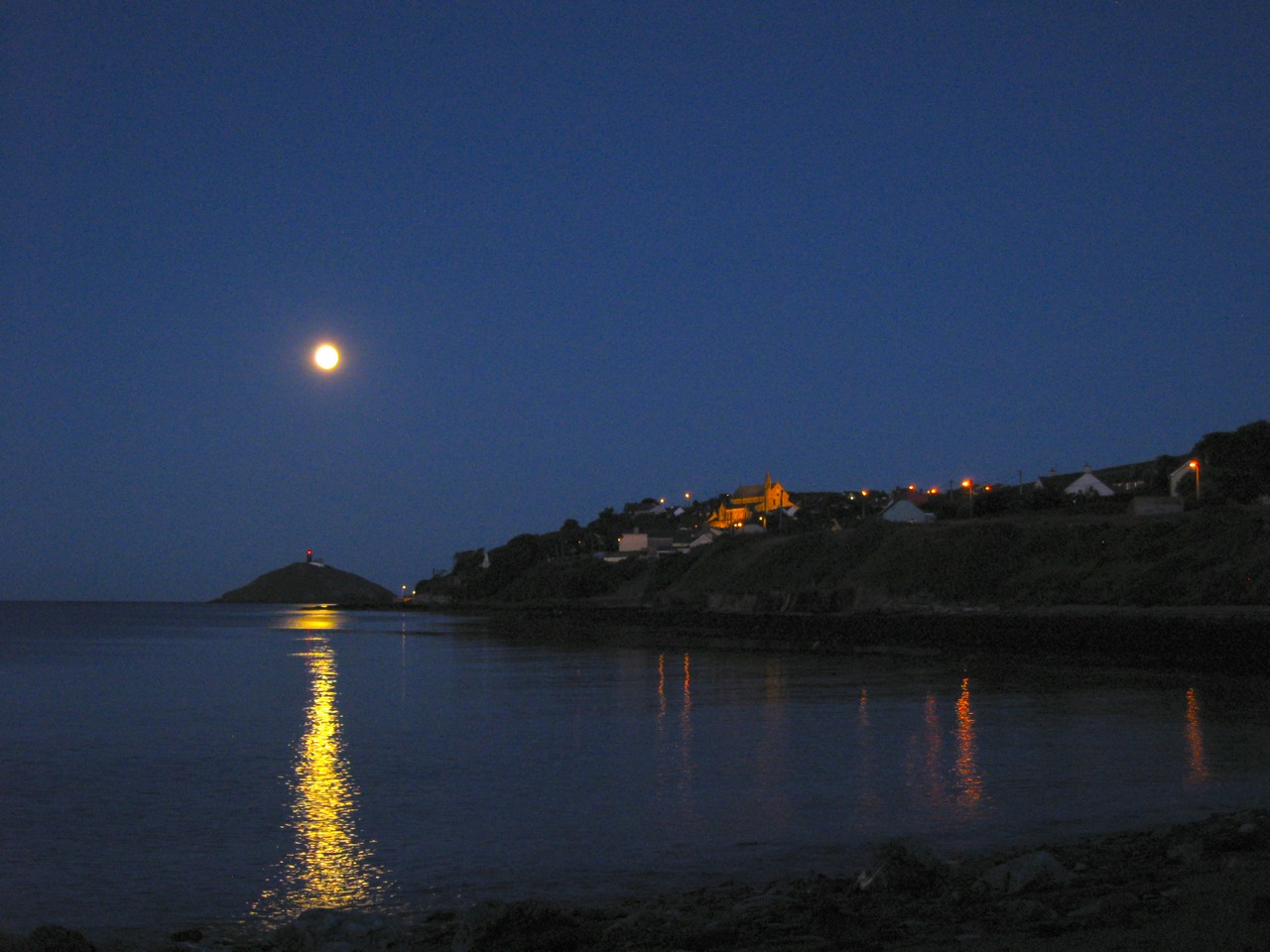
While conducting the second search, I filmed this time-lapse. It was a beautiful evening, with a fog bank swirling close by Ballycotton island.

Yesterday, we had strong showers and hailstorms, so I set up another time-lapse as a fairly intense system passed us by in the distance. Luckily, our cat didn’t have to face that.


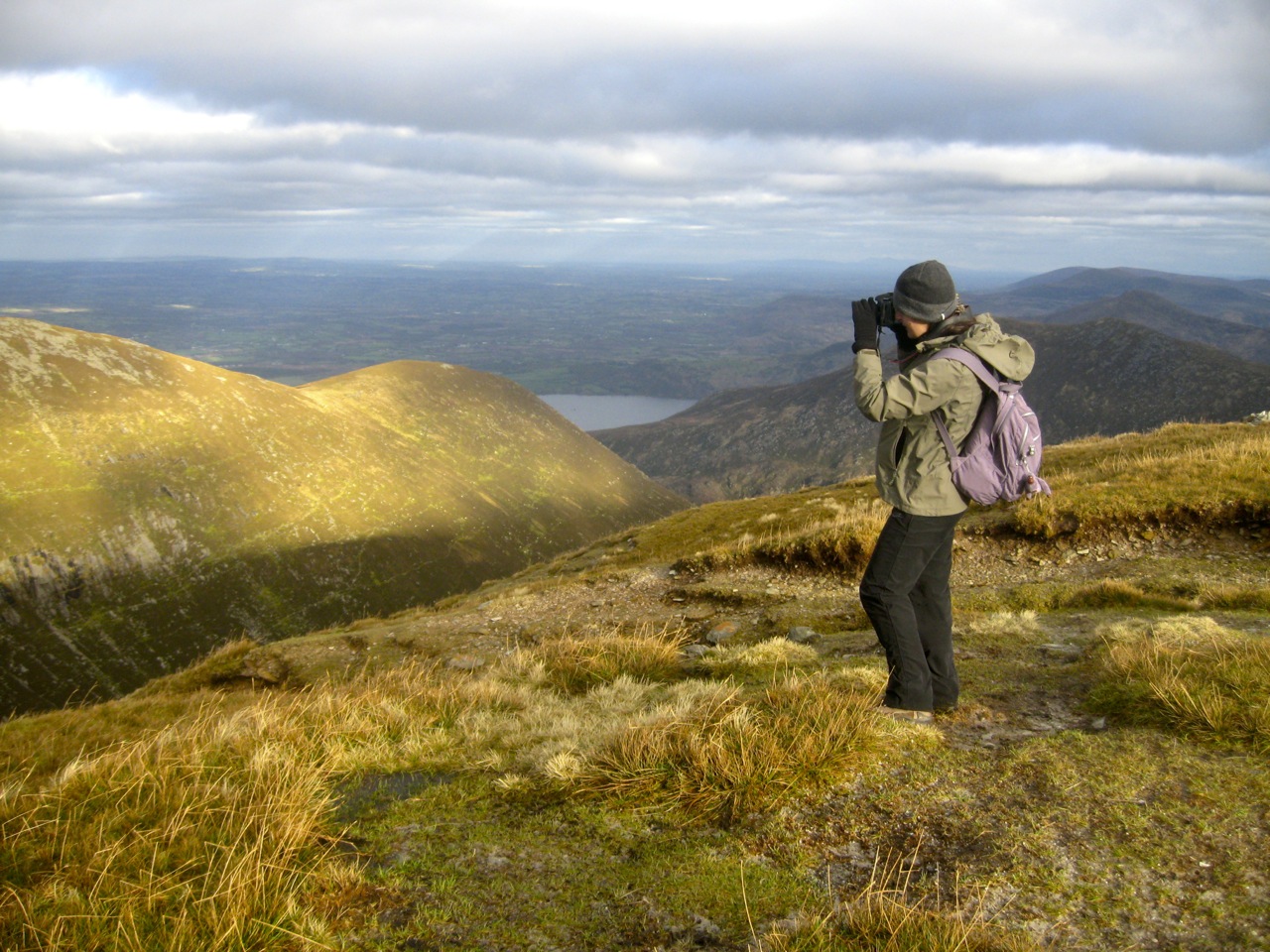
Instead of visiting the St. Patrick’s Day parades, we did the annual Ballycotton to Ballinrostig cliff walk. It’s the only occasion in the year when the coast is opened up to the public. In clement weather it’s one of the country’s most beautiful hikes, travelling over fields, cliffs and rolling hills with the sea to your left all the while. The walk takes in the beaches of Ballycroneen, Ballybrannigan and Inch. This 19km walk is one to be savoured every step of the way.

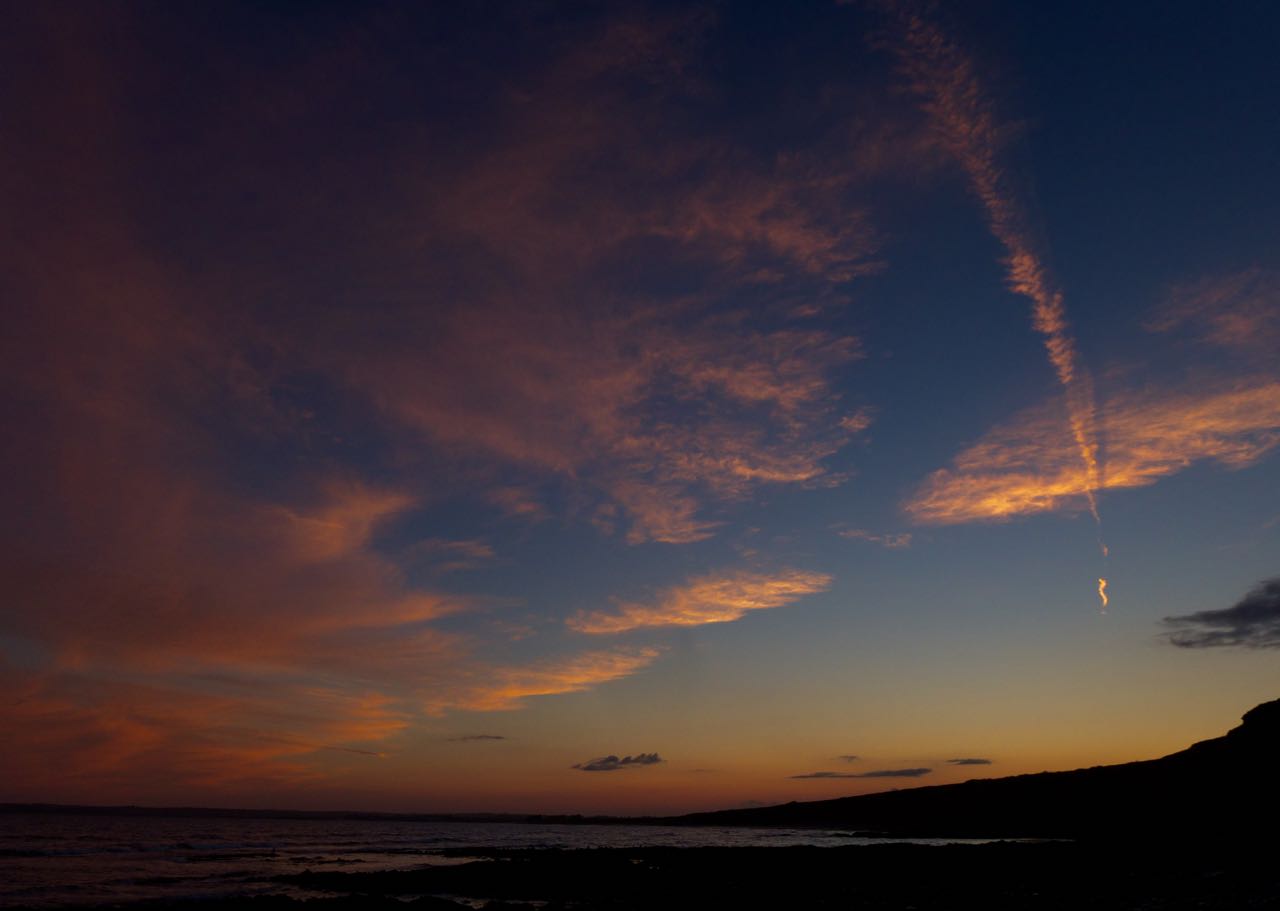
The conditions today were perfect. Plenty of sunshine, no winds and crystal clear visibility in all directions. As you can see from some of the shots below, the real winner were the skies: they were incredibly varied and detailed: a photographer’s dream.

The walk from Inch Beach to Ballinrostig is the most challenging part of the journey for the weary traveller. The soup and pint at the end make it all worthwhile.

I took a brief time-lapse movie at the end of the walk. This video details the slowly rolling clouds from Inch Beach. I hope you like it.

There’s something about Cork City on a damp Saturday morning. It’s as if the city itself is recovering from the night before. There is a fragility and a softness to the place. It’s a town in dire need of a cup of strong coffee.

A few hours later and it will have its act together. By then, the moment will be lost.

Here’s a nice exhibition to visit, if you are around Cork City and looking for some place to go.

The Cork Vision Centre is half way up North Main Street, close by the Gate Cinema. It’s located in what used to be St. Peter’s Church – now completely renovated. It features an impressive scale model of Cork, stretching from Blackrock Castle to the Lee Fields.

The exhibition also has paintings and sculptures by a number of local and international artists. It’s delightful stuff.

The centre is free to visit, and open from Tuesday to Saturday, 10 pm to 5 pm each day.

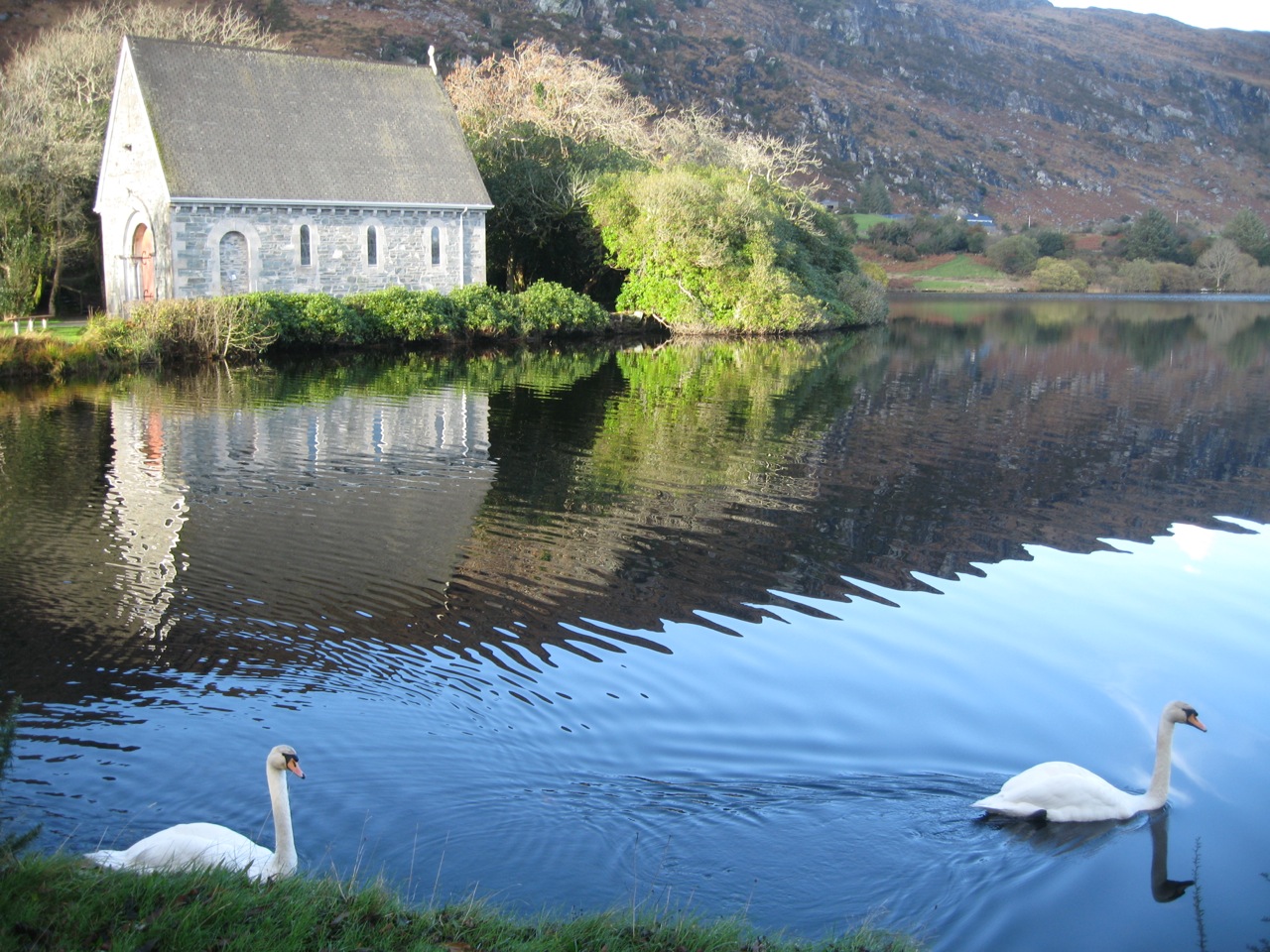
Last month, just before the sun rose in the east, I parked my car beside Loughaderra Lake, taking a moment to exit from the busy line of commuters rushing towards the city. An engaging mist was rising slowly off the water and swans lazily paddled through the ripples. It was a gentleness quite in contrast to the busy N25 road alongside it that streaks its way through East Cork.

I took a short walk down to Garryvoe beach today. It was a calm, cold October day with plenty of sunlight bouncing off the sea and the shoreline.

The red and white stones, sandstone and limestone, make Garryvoe a favourite of Cork daytrippers.

We had to walk quickly as the approaching clouds heralded a big change in the weather. As I am posting this entry it is raining furiously outside.

As you might have noticed from the background image, we’ve recently moved home, to a beautiful house, close to the sea by East Cork.

I was raised in the countryside, but after 20 years living in towns and cities, I had completely forgotten what it was like to live in a rural environment. The silence: interrupted only by the cooing of woodpigeons and crows. The stars: the Milky Way glistening, in all its brilliance, from horizon to horizon. Most of all, the beautiful, ever-changing views: from sunrise to sunset, the changes of colour from dull viridian to brilliant emerald; rain showers signalling their arrival as they float like wayward ghosts over distant ridges.

I’m looking forward now to winter, when the seas boil over and mighty winds assault our house, torrents of rain dashing like arrows off the windows. Inside, a fire burning brightly, king of its tiny domain, keeping us all cozily warm.  And the clear nights, dominated by Sirius and Orion to the south – the brilliant, endless scattering of stars. Endless fascinations.

There’s a feeling of freedom here. We’re minutes away from beaches, cliffs and a quiet fishing harbour. We have a choice of walks we can take, along quiet winding boreens. Although the rapidly approaching autumn darkness will hamper our evening forays, it’s a treasure to be enjoyed at the weekends.

So, hopefully, many long and happy years ahead.

I had the privilege of speaking at the First Friday’s at the Castle in CIT Blackrock Castle this weekend. My talk was “Hoaxes and Hysteria in Astronomy”, where I took a sceptical look at Astrology, UFO’s and the Moon Landing “Hoax” conspiracy theory.

I first spoke about astrology. To understand why astrology is wrong, you need to understand how it originated, and how astronomical discoveries since the 1500’s have completely overturned the basis of the belief system. It also gave me the opportunity to present Phil Plait’s frequently posted diagram:

Then I gave a potted history of UFO’s and our culture’s fascination with all things extraterrestrial. Part of it featured Orson Welles’ infamous radio broadcast that panicked half of America in 1938. Here is the first piece of the radio show. Even now, over 70 years later, it still works as a monumental piece of broadcasting.

Orson Welles later described why he did it:


While a great many people claim to have seen UFO’s, there has never been any hard evidence provided. UFO reports have been plagued by problems of mistaken identity, delusion and hoaxes. One of the best hoaxes was crop circles: initiated by two drinking buddies in the south of England.

I then spoke about the widespread perception that the moon landings of the late 1960’s and early 1970’s were a hoax and that NASA staged a cover-up of monumental proportions. There have been many rebuttals, most comprehensively done by the Mythbusters team.

Personally, I love Michell and Webb’s take on it.

At the end of the talk, I got around to my Baloney Detector Kit:

That last one, the “lone mavericks” suffering for their ideas, is particularly true. There have been far, far more wrong-headed lone mavericks” in history than the tiny number of people who have eventually been proven right.

Finally, if you have managed to read through to the end, here are some useful links should you wish to know more.

  1. BadAstronomy.com : Phil Plait waxes lyrical about his wonderment of the universe, while regularly debunking the widespread misinformation.
  2. Snopes.com : If you hear a strange tale or you get an email that sounds fishy, check this website out. It will give you some food for thought.
  3. Skepdic.com : The Skeptic’s Dictionary is a tremendous resource for people who want to understand the scientific view of modern delusions and weirdness.
  4. Randi.org : The James Randi Educational Foundation has been fighting baloney for years. There are plenty of resources there for budding sceptics.
  5. Skeptoid.com : Brian Dunning has created a comprehensive list of ten-minute podcasts debunking all sorts of strange ideas. You name it, it’s probably there.

We run regular “Skeptics in the Castle” meetings in Blackrock Castle, where experts are invited to talk about the reality behind modern misconceptions, fads and strange beliefs. Check out our website corkskeptics.org. We are also on Facebook and Twitter.

I must be the slowest person ever to join Toastmasters.

My first meeting was in 1988, when I was a student in University College, Cork. I was terribly shy, somewhat socially inept and going through a very difficult period of adjustment in my life. Why I went along, I am not quite sure. Toastmasters just seemed like something I needed to do.

Having arrived late at Moore’s hotel in the centre of Cork city, I blushed awkwardly while asking the receptionist where the meeting was. I clearly remember her gawking at me and giggling as I self-consciously made my way to the meeting room. The people there were a bit older than me, but from the first day, they made me feel welcome. I joined up soon afterwards and very quickly I set myself the task of presenting an Icebreaker speech – the first speech you will do in a Toastmasters club. It was one of the most unnerving things I have ever done. Talking to the audience was almost like an out-of-body experience. I could not believe that this was my voice and that I was commanding the attention of a roomful of people.

Over the next two years I worked through more speeches, performing different roles in the club. I barely missed one meeting during that time. Toastmasters offered me something that I was not getting from college – a chance to express myself, to follow my own interests and to interact with friendly people from all different ages. It just seemed to suit.

After leaving college, my work found me in Belfast for a few years, then Prague and finally Dublin. Five years had passed since my last Toastmasters meeting, but despite the crazy hours I was doing in work, I had a yearning to go back. I joined the Dublin Toastmasters club in Buswells Hotel and I spent 3 years there, slowly grinding my way through the remaining speeches in the manual. I completed my tenth and final speech just before I relocated back to Cork.

It was now 1997, and marriage, babies, a house and new job opportunities were to take pride of place in my life until 2003, when I joined the local club in Midleton. I’ve been there ever since, and I’ve enjoyed almost every minute of it. Despite having served in all sorts of roles in the club and entering every competition that has been going, I’ve taken the advanced manuals at my own slow pace. I’ve yet to get any Advanced Toastmaster qualification. What I have gained, however, are great friends, a good deal of self-confidence and a relative proficiency in public speaking and presentation skills. I’ve gone on to set up a skeptics club in Blackrock Castle Observatory and to dabble in podcasting in my spare time. I am currently president of two clubs: Midleton and the club at my workplace.

Toastmasters for me has been a great experience. No two meetings are ever quite the same. You never know what is going to pop up that might give you a laugh, a jolt, or a pause for thought. The people who attend the meetings, irrespective of their backgrounds, all have fascinating stories to tell. I have learned to underestimate nobody. I have also learned the secret of good presentation skills: practice. The more you present in front of people, the easier it gets and the more polished you become. Toastmasters offers nothing except an opportunity to improve your abilities in a supportive environment. It’s the best way to learn.

I have only the vaguest of ideas where I go from here. I’m hoping to complete my first advanced stage in the next few months and to complete my presidency with two reasonably strong clubs by the end of the year. Beyond that, I don’t know. Maybe a new and scary challenge will present itself. I still have lots to learn and new challenges to take on. Here’s to the next 23 years.

Find a Toastmasters club in your area. World / UK Ireland

We took a boat trip to Spike Island in the centre of Cork Harbour last Sunday. This small, unprepossessing island has a remarkable history. It was a monastic settlement in early Christian times. A military fort was built there in the 18th Century and in the 19th Century it became a holding centre for convicts on their way to Australia. The island was occupied by British forces until 1938 and in the 1980’s it was re-opened as a prison, earning it the monicker “Ireland’s Alcatraz”. The prison has now closed, and the site is currently under the control of Cork Co. Council.

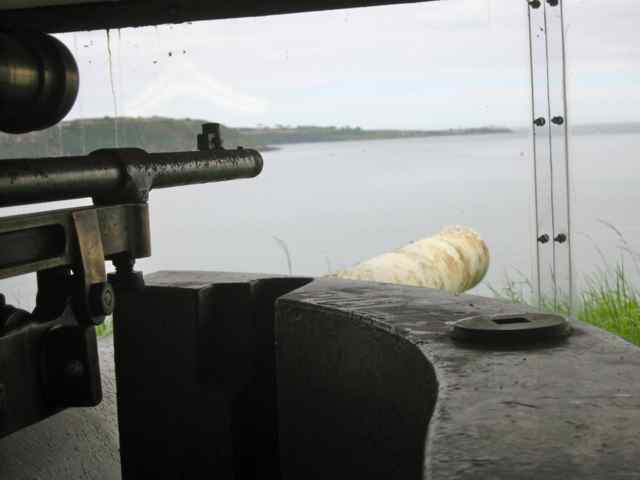
The main building on the island is a star fort, that, with Fort Carlisle and Fort Camden at the entrance to Cork Harbour, provided a strong line of defence from any possible attack from the seas. An impressive 6 inch gun is still in place there, silently directed towards the mouth of the harbour. It has never been used in anger, but plans are afoot to fire it during the Titanic centenary commemorations next year.

In 1985, the fort was used to house juvenile offenders. It was not fit for purpose and later that year, the inmates rioted. Most of the buildings within the fort were burned down. The prison was subsequently modernised but following a dispute with prison wardens, the minister for Justice summarily shut the prison down. In 2006, plans were announced to build a modern prison on the island, replacing the existing prison in Cork. These plans were abandoned after Ireland’s economic collapse. The facility is now deserted apart from the occasional guided tour.

Prisoner cell, in use up to 2004.

During the summer, visitors can go to the island by boat from Cobh. The tour itself is quite fascinating given its strategic location in the harbour and its historical significance. There are still a few issues however. It’s a pity visitors can’t stay longer on the island. There is almost no opportunity to explore it for yourself before you are called back to the boat. Most of the buildings outside the fort are in a perilous state and even some of the more recently occupied rooms could benefit from a spring-clean. Much work needs to be done to bring the history of the site more to life: signs, displays, audio-visuals etc. The narrative from the tour guide was uncritical and failed to take into account many of the complexities of our country’s past. Despite these quibbles, it’s a must see by anyone with an interest in the history of Ireland.

A map of the island is below.