Archives for posts with tag: Cork

Last Sunday, we went on a boat trip in West Cork. We were hoping to come up close and personal with a large pod of fin whales, but, despite excellent weather on the day, they were nowhere to be seen.  Photos of these magnificent creatures will have to wait for another day.

The trip was remarkably uneventful. Not only did we not see fin whales, but we also failed to spot any sunfish, dolphins or minke whales either. Even the skipper couldn’t hide his frustration on the day, as the previous few days had been marvellous for spotting marine creatures. 

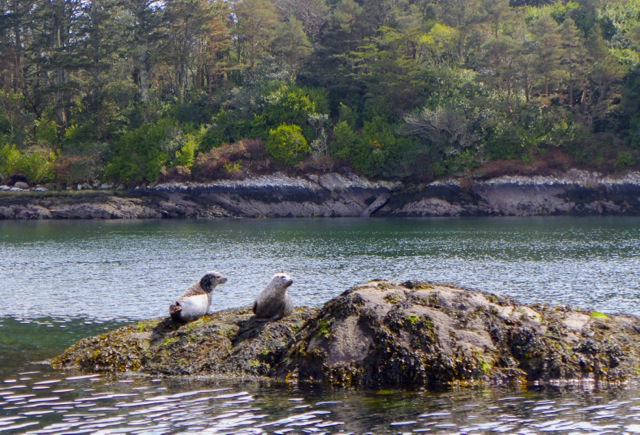
We did manage to see seals, but this time of the year they’re not likely to go too far as the females are heavily pregnant. And no, we didn’t see any newborn seal pups either, in case you’re asking.

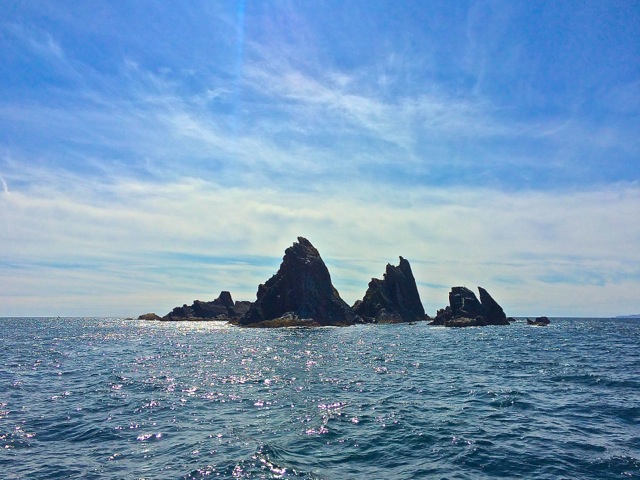
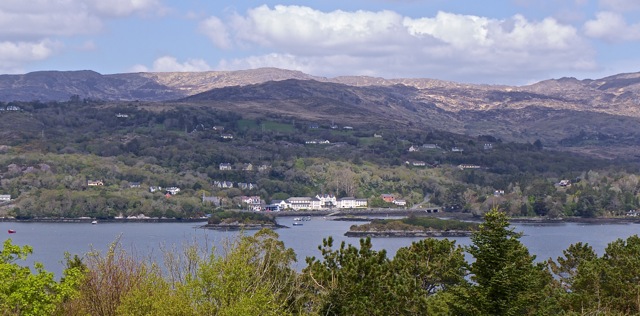
The upside is that I managed to take some nice photos. The coastline around Castletownshend is gloriously photogenic, even if its marine inhabitants were in hiding.

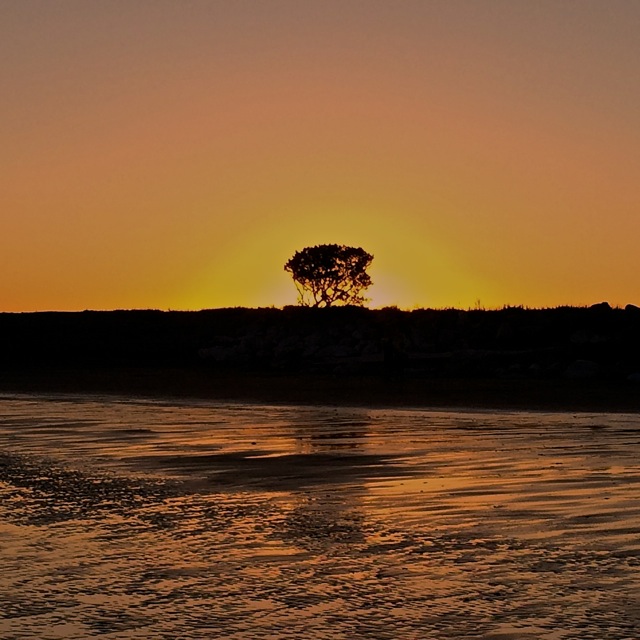
20140825 - Boat Wake

The Stags

The Stags

Seal Rocks

Seal Rocks

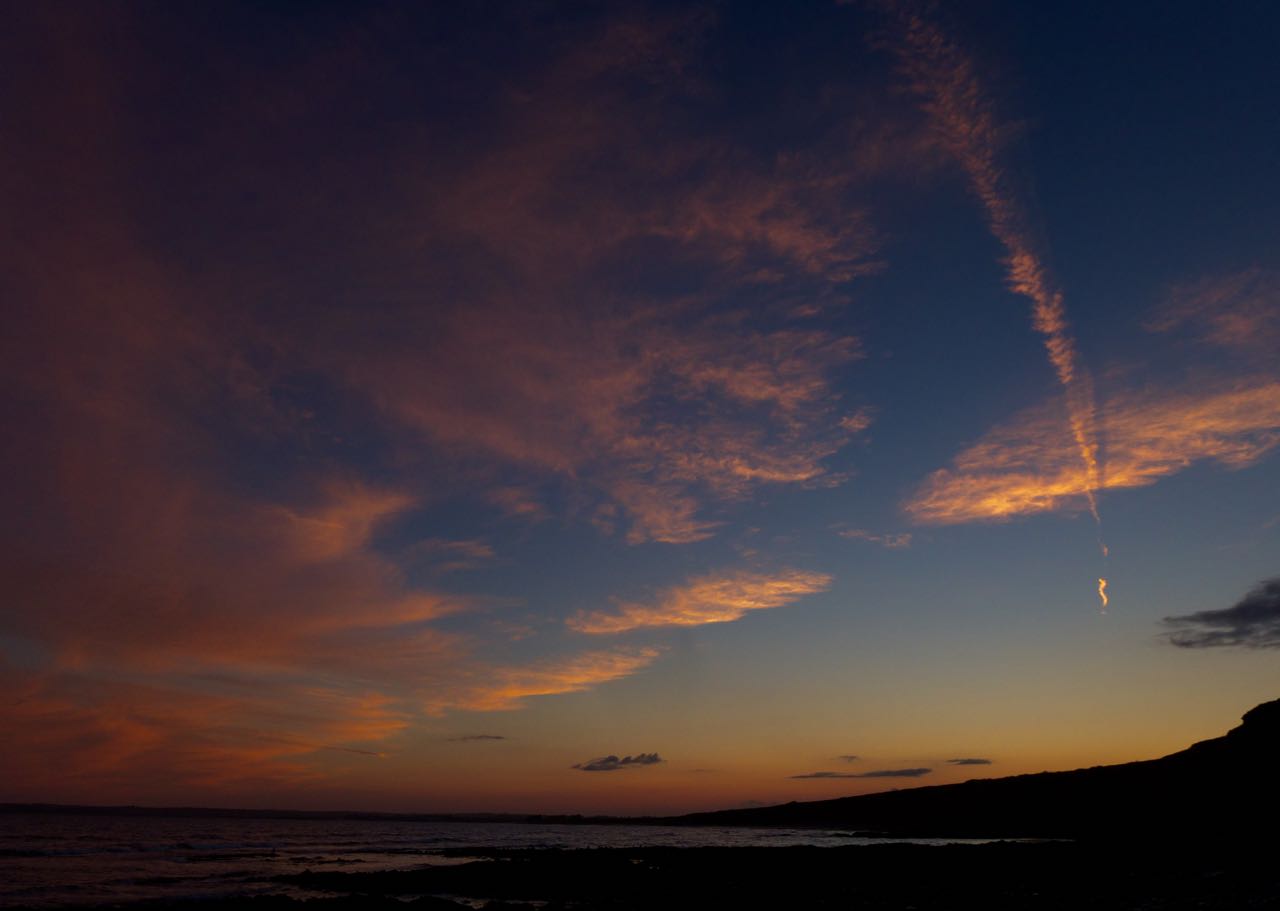
One of the real attractions of Ireland (if we get the weather for it), is our long summers. The sun rises at 5 am and sets at 9 pm with darkness taking its time to arrive, if it does so at all. Our latitude is so high we don’t actually have a proper night for 2 months.

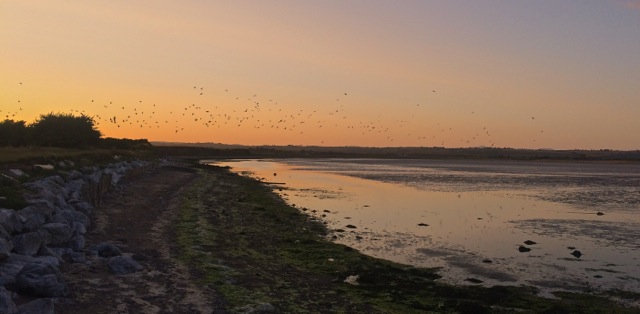
This year has been wonderful. The summer evenings have thrown up a variety of coloured skies and cloudscapes. I took a few photos close to home that give a sense of it all.

20140814 - Ballymacoda Birds

Flock of crows by Ballymacoda beach

20140814 - Rooskagh1

Haystacks

20140814 - Rooskagh2

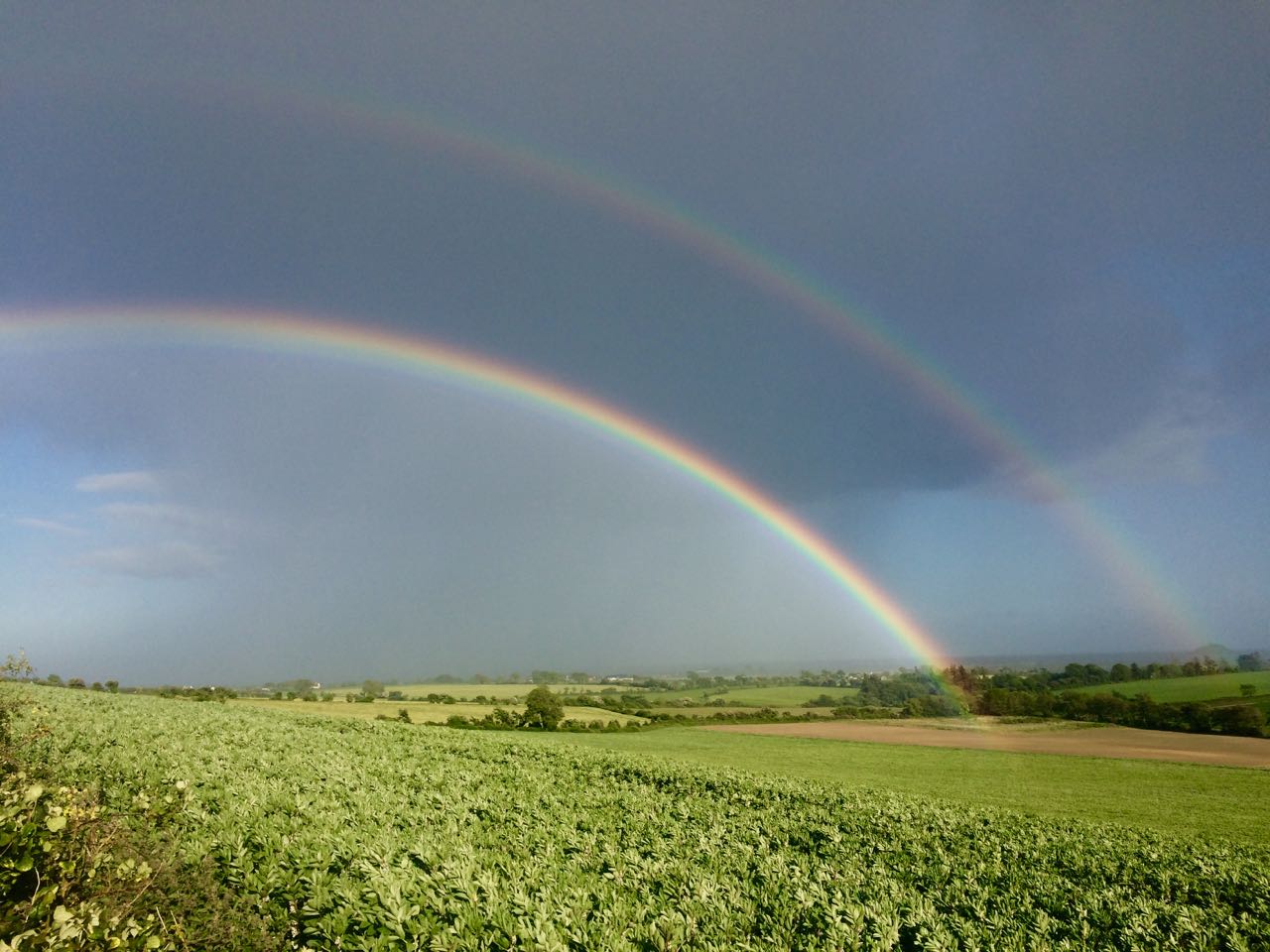
Sign from the skies

20140814 - Rooskagh3

Giant Haystacks

20140814 - Rooskagh4

Eerie happenings in Shanagarry

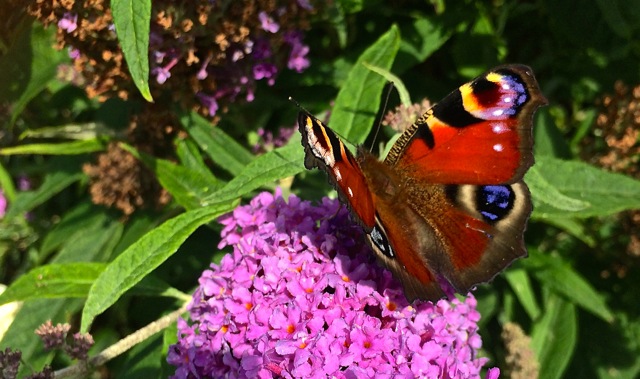
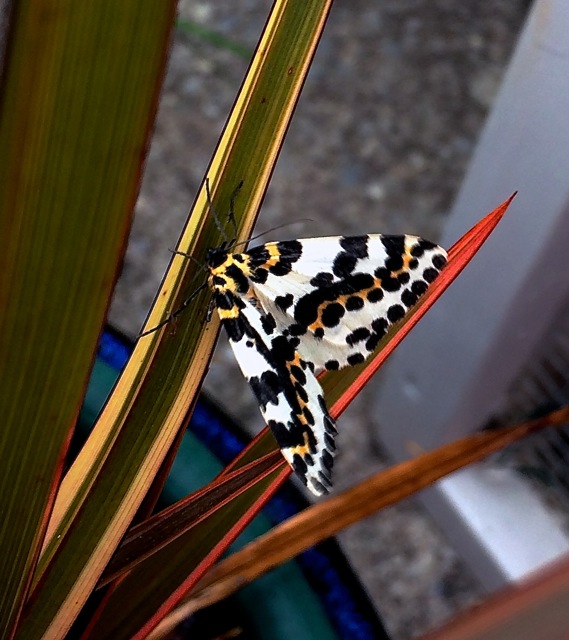
The garden has been abuzz with insects over the past few weeks, going about their chores, unconcerned by the to-ings and fro-ings of us humans. I have been particularly taken by bumblebees. Industrious to a fault, full of variety and character, yet highly unlikely to lose their cool and sting. If you get too close to them, they’ll just fly off, or if they are particularly tired, out will come a leg to ward you off. Getting stung by one of them really is a last resort. Other visitors have included butterflies, moths, hover-flies and dragonflies, with the dreaded wasp conspicuous (so far) by its absence.

Here is a selection of shots, taken on my iPhone, which give a sense of the garden’s busy denizens this year.

20140814 - Bumblebee1

Bumblebee on Ligularia Dentata

20140814 - Bumblebee3

Bumblebees on Echinops

20140814 - Common Blue

Common Blue on Lavender

20140814 - Peacock Butterfly

Peacock Butterfly on Buddleia

Magpie Moth

Magpie Moth on Phormium

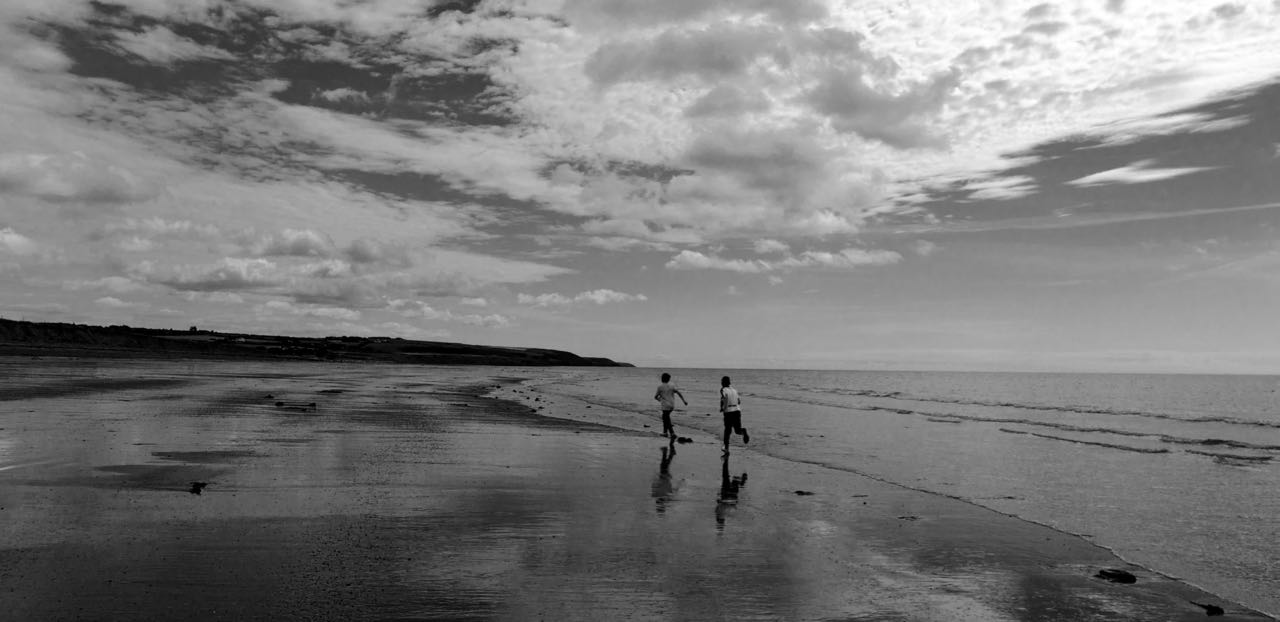
Ballywilling Beach, close to Garryvoe but far more isolated and deserted, is a marvellous place to go for walks, relaxation and photographs, particularly as sunset approaches. Here are some of the photos I have taken there over the past few weeks. I really like how many of these shots came out. I first shared a few of them on Instagram, but I’ve gone back and re-edited them from the originals to see what I can do with different software.

20140814 - Ballywilling6

20140814 - Ballywilling5

20140814 - Ballywilling4

20140814 - Ballywilling3

20140818 - Ballywilling2

20140818 - Ballywilling

Today I took a visit to Garinish Island in West Cork. This is a beautiful garden paradise a short boat trip away from the village of Glengarriff. The gardens are a wonderful fusion of exotic plants and beautiful buildings.

At the core are the Italian Gardens, purpose built for the Gardens by Annan Bryce and Harold Peto. The Caha Mountains in the background provide a delightful backdrop.

Garinish Italian Garden


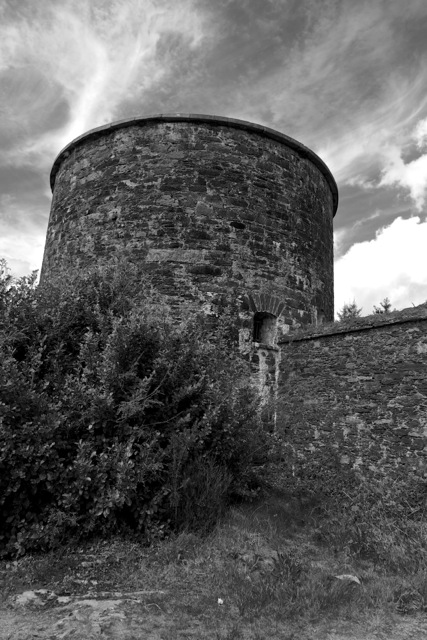
On a hill overlooking the island is a Martello Tower, an old watchtower built to warn of French invasion during the Napoleonic Wars. The view from the top affords a view of the bay across to Eccles Hotel in Glengarriff.


Martello


Eccles View


Garinish is a haven for different plants and trees that would not easily survive in Northern Europe. The climate in West Cork is almost completely frost free, giving sub-tropical plants a fighting chance. Some plants, particularly many species of Rhododendrons and Myrtles, have thrived. I took a few macro shots to explore this further.

I also took a few shots that I converted to Instagram. Prominent is the Roman Temple from which a fine view of the Beara peninsula can be seen.

We passed by a group of Common Seals on the way back. They were basking in the sun, relaxing. I knew well how they felt.

Garinish Seals

Yesterday, we headed to the Galley Head area in West Cork, halfway between Clonakilty and Skibbereen. The day was uncharacteristically perfect. The low winter sun offering this battered coastline some light relief.

The winter storms had not yet abated and the waves around the Long Strand (Castlefreke) were enormous, crashing loudly onto the beach. I caught some nice shots during our walk.

Castlefreke 6

We then headed to the Drombeg Stone Circle, close to Glandore. These Bronze Age Menhirs with their portal stones and altar is a reminder of mysterious times long gone. Close by is a wonderfully preserved “Fualacht Fia” – an ancient kitchen. Red-hot stones were added to the water, allowing the water to boil, thus cooking whatever food had been caught during the day.

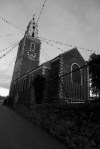
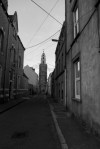
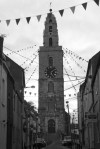
Just as London has Big Ben, and Paris the Eiffel Tower, Cork has Shandon Church. This modest chapel, by no means the largest or most ornate church in Cork, is by far the most emblematic.

I found myself in Cork very early one morning last September. Having a few hours to waste before work, I headed towards St Anne’s Church in an attempt to understand its enigmatic hold over the city.

St Anne’s dates from 1722, its famous bells installed in 1750, it’s clock mechanism a hundred years later. The church is built of red sandstone and white limestone, which have come to represent the colours of Cork City and county. The clock faces, notoriously inaccurate, have given the church its nickname ‘The Four Faced Liar’*.  The large gold-plated salmon, ‘de goldie fish’, on the top is a nod to Cork’s booming salmon industry of the time. Situated a short distance north of the River Lee and a stone’s throw from Cork’s North Cathedral, the narrow streets and alleys around it are a throwback to earlier times. The Butter Museum and the Firkin Crane theatre, Cork’s home of dance, rests in its shadow.

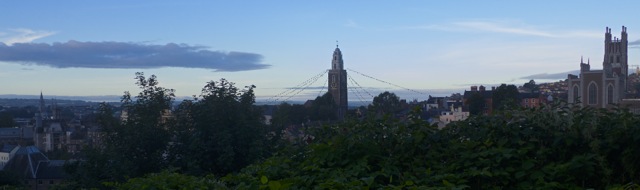
Because of its centrality, its central position and its idiosyncratic design, Shandon is the true heart of Cork City. While the city itself has gone through a transformation in the last few years, with glass and polished marble growing up where dowdy brick and concrete buildings once stood, this symbol of Cork’s heritage remains unchallenged.

Shandon Panorama

* This is the name of a famous Irish pub in New York City, which in turn became the name of a 2010 award winning independent movie.

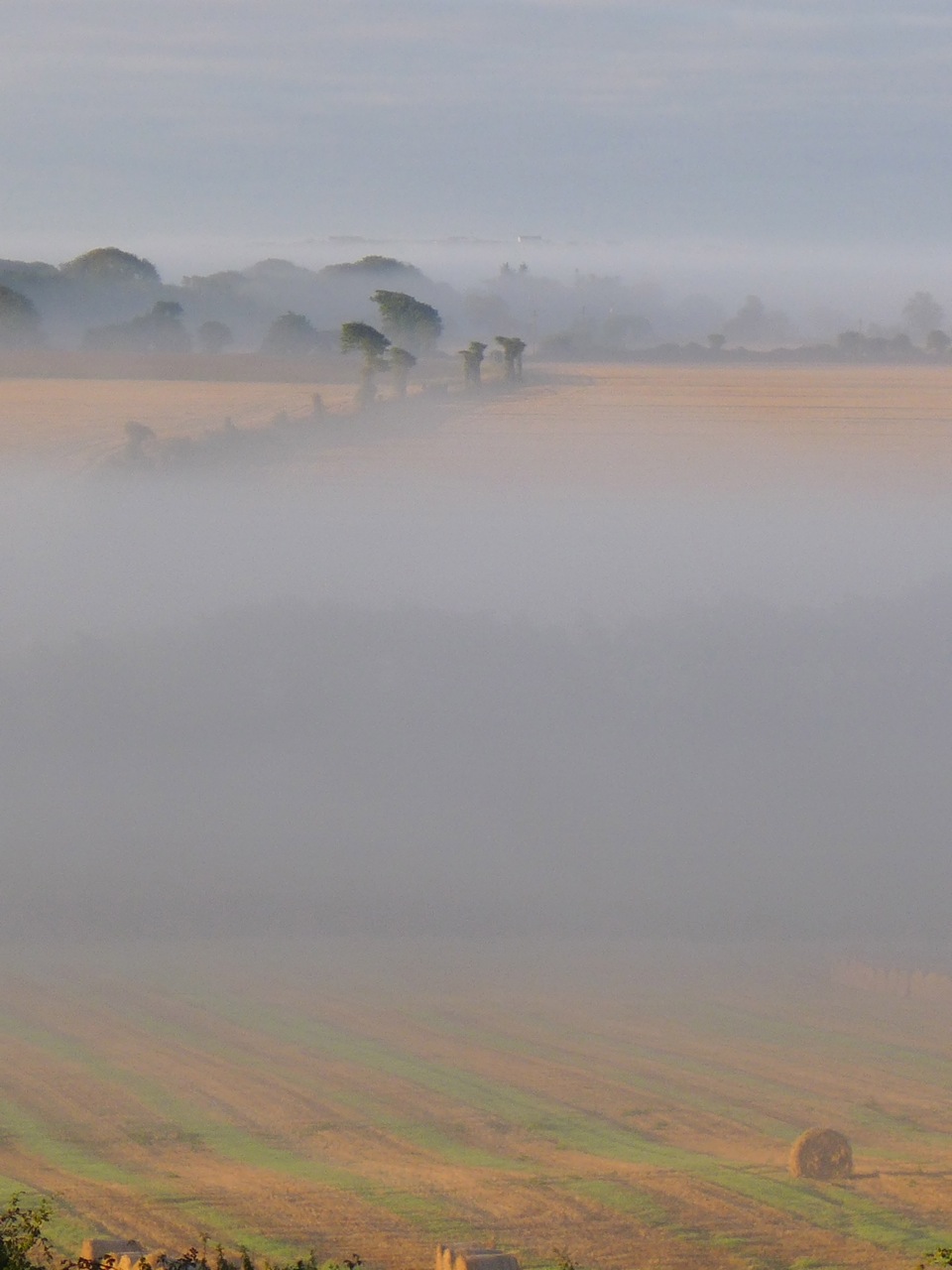
The view this morning.

FieldandFog

(Click to enlarge)

IMG_5152

Yesterday, all the roads around us were closed off to allow a one-day rally to take place. It was quite an event, with dozens of souped-up cars powering their way around these quiet roads; revving and backfiring and braking and changing gears with furious intensity.

Many of the cars were part of an era now long gone: Ford Escorts, Talbot Sunbeams, Opel Kadetts. A few Honda Civics and Toyota Corollas made it through too, but the older cars,  particularly the Escorts, were there in great numbers.

Single shots don’t convey the speed and might of these cars, so I used the “Slow Shutter” app on my iPhone to take photos. It takes multiple photos over a short period, then merges the photos into a single image. I used a “Light Trail” setting to get the desired effect, putting more emphasis on the last photo in order to get a clear primary image. It wasn’t the easiest thing to do. To achieve the desired effect, I had to start filming one or two seconds before the car passed by. Too early and the car would still be too far away. Too late and the car would have disappeared before filming stopped. Nevertheless, I got a few good shots from the event, making it all worthwhile.

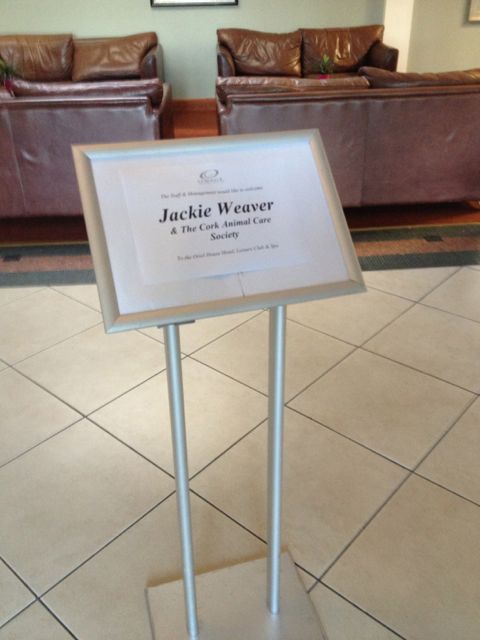
weaverLast night, I visited a talk in Ballincollig given by “animal psychic” Jackie Weaver. Weaver had been invited along by the Cork Animal Care Society, a charitable organisation that looks after stray and feral animals in the Cork area.

I’ve never been to a psychic show before, but through my interest in scepticism, I have heard a lot about them over the past few years. I had heard about all the tricks and techniques used by psychics, so I was slightly curious about how it worked in practice.

Weaver is an “animal psychic”: she claims to communicate directly with animals and understand their language. I wondered if they communicate to her in English, but she told us during the show that they have figured out some sort of universal language, using the metaphor of the ear doing the translating for us, or something. She didn’t tell us how she had learned this language.

Weaver herself was understated, bubbly and soft spoken. She came across as an empathic person who immediately made a connection with audience members, many of whom were strong animal lovers. The audience of around 100 people was composed mainly of women, with just a handful of men present.

The talk started with her going through her life story. She told us she always felt she had psychic abilities, and that she had embarked on her career as an animal psychic after a particularly traumatic onset of cancer some years ago. She got into animal readings, the word spread, and it went from there. Peppered through her talk were references to celebrities whom she now counted among her friends. She made the claim that, given the high profile of these people and what they had to lose if they were wrong, they couldn’t possibly accept her if they thought she was talking nonsense. This is at variance with what I know of celebrity culture.

She dropped a few anecdotes about how she had gotten into the minds of problem animals – how a dog told her that being dropped from a short height as a puppy had caused it to behave strangely, and how another dog was refusing to take heart medication because it thought it was used to make it urinate. There were inevitable swipes and sceptics and scientific vets, who clearly didn’t appreciate these mental abilities.

Weaver requested us to close our eyes, and imagine we were going on a walk through a field and into a house. She suggested we meet someone or something significant in that house, and then later asked audience members who or what they had experienced.  There were a few misses. A man responded that he had experienced nothing, followed immediately by another woman who said exactly the same. She moved on quickly.

She was then given a photograph of a dog, and she started putting forward Barnum statements like how it loves its ears ruffled. While the owner nodded vigorously about many of the readings, Weaver did not pick up that the dog had a major hip problem, nor that it was nearly euthanised as a pup. In the course of the conversation, we learned that its owner was into healing, and a suggestion was given a number of times that the dog would benefit from homeopathics. For a dog that is clearly in pain, this might not be the best advice to give the owner.

We then went on to animals that had “passed to the spirit realm”. Weaver explained that death is a bit like travelling to Australia (presumably without the funnel web spiders and the endless episodes of Neighbours). She did another reading for an audience member based on minimal information. Again the statements were bland and generic, and would apply to most pets. The bereaved owner was much more willing to give details of her dog which made it easy for Weaver to add further soft statements about the animal.

And then it was over. All in all, terrifically underwhelming. No amazing insights, incredible denouements or shockingly accurate observations. It was all very fluffy. One thing I did pick up from her was a sense of defensiveness, that there are many who don’t believe her, including many of the local Cork media outlets. People are already quite sceptical of psychics, but when you are an animal psychic, the doubt increases by another degree. How she mentally manages to deflect this criticism is impressive, and is a case study in itself, I think.