Archives for category: Uncategorized

Photo by Jol (Flickr)

Many periods of irrational exuberance are accompanied by great architectural works that appear, in hindsight, to define the unbridled optimism and arrogance of the era in which they were created. The Empire State Building was a product of the years preceeding the Great Depression, while the Petronas Towers opened its doors during the 1997 economic collapse in Malaysia.

The Burj Dubai, which officially opens tomorrow, is the greatest monument from our most recent period of economic madness. At approximately 820 metres, it overshadows its nearest rival, Taipei 101, by over 300 metres. It has 162 floors and is visible from a distance of almost 100 km away. It cost USD 4 billion to construct, took 5 years to build and had over 7,500 people working on it at one stage.

And now, it’s finished. How long will it take to become economically viable? The Empire State Building took 20 years to do so.

Micheal Martin, Irish Minister for Foreign Affairs, opposing attempts by Islamic States to make defamation of religion a crime at UN level, 2009:

“We believe that the concept of defamation of religion is not consistent with the promotion and protection of human rights. It can be used to justify arbitrary limitations on, or the denial of, freedom of expression. Indeed, Ireland considers that freedom of expression is a key and inherent element in the manifestation of freedom of thought and conscience and as such is complementary to freedom of religion or belief.”

Just months after Minister Martin made this comment, his colleague Dermot Ahern introduced Ireland’s new blasphemy law.

(via Blasphemy.ie)

As the year’s embers grow cold

Let us remember the good times;

Allowing those darker sands

To fall through our hands;

Soil for the flowers of an approaching spring.

I wish you health and joy in 2010.

Here are some of my favourite pictures from 2009. Click on any of these photos to enlarge.

February 2009 – Galtee Mountains, Co. Tipperary

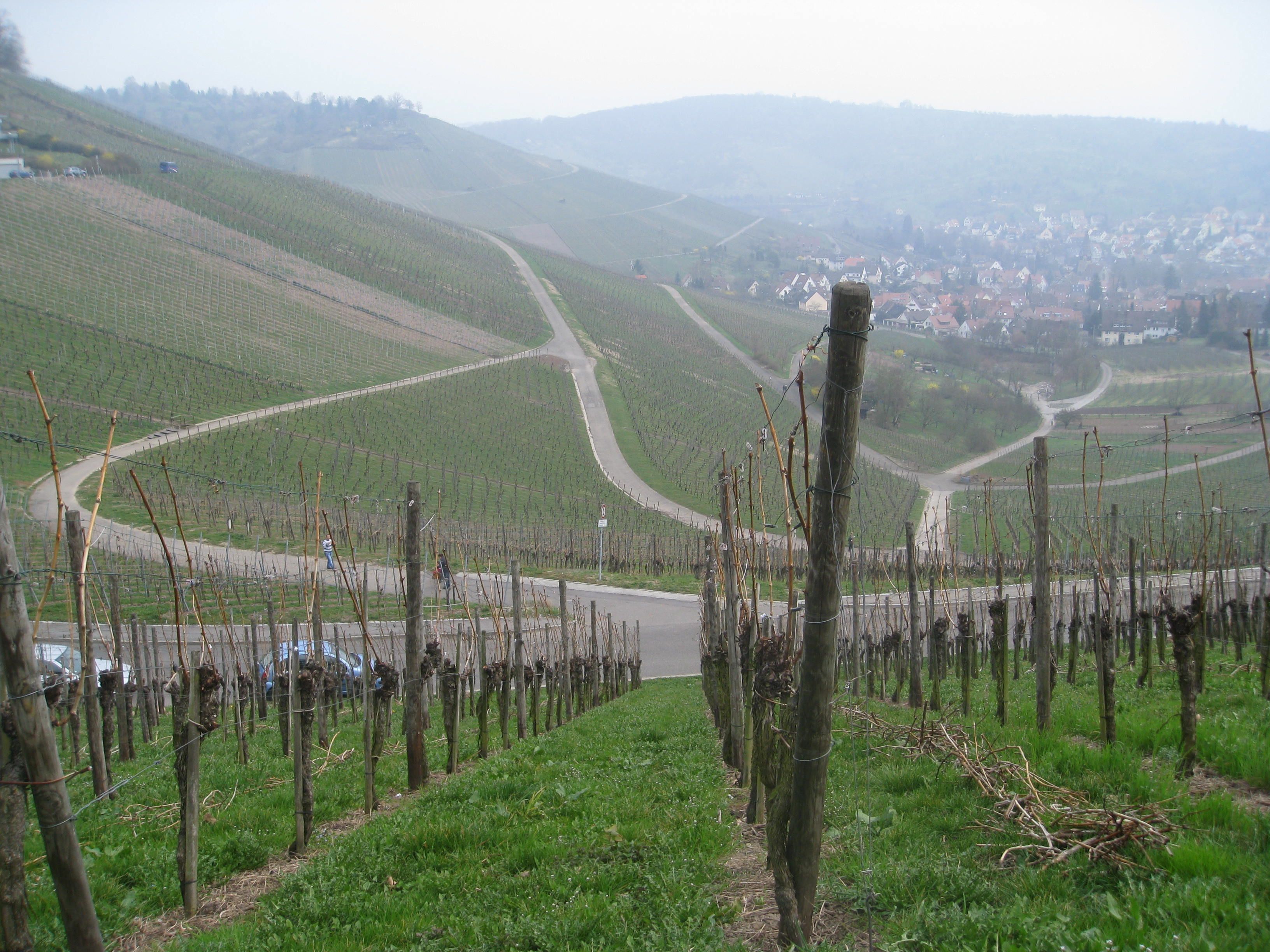
April 2009 – Germany (Wiesbaden and Stuttgart)

May 2009 – Glenmalure,Co. Wicklow

May 2009 – Grand Canal, Co. Kildare

May 2009 – Cliffs of Moher, Co. Clare

June 2009 – Skellig Islands, Co. Kerry

June 2009 – Midleton, Co. Cork

July 2009 – Old Kenmare Road, Co. Kerry

August 2009 – Sheep’s Head, Co. Cork

September 2009 – St. Davids, Wales

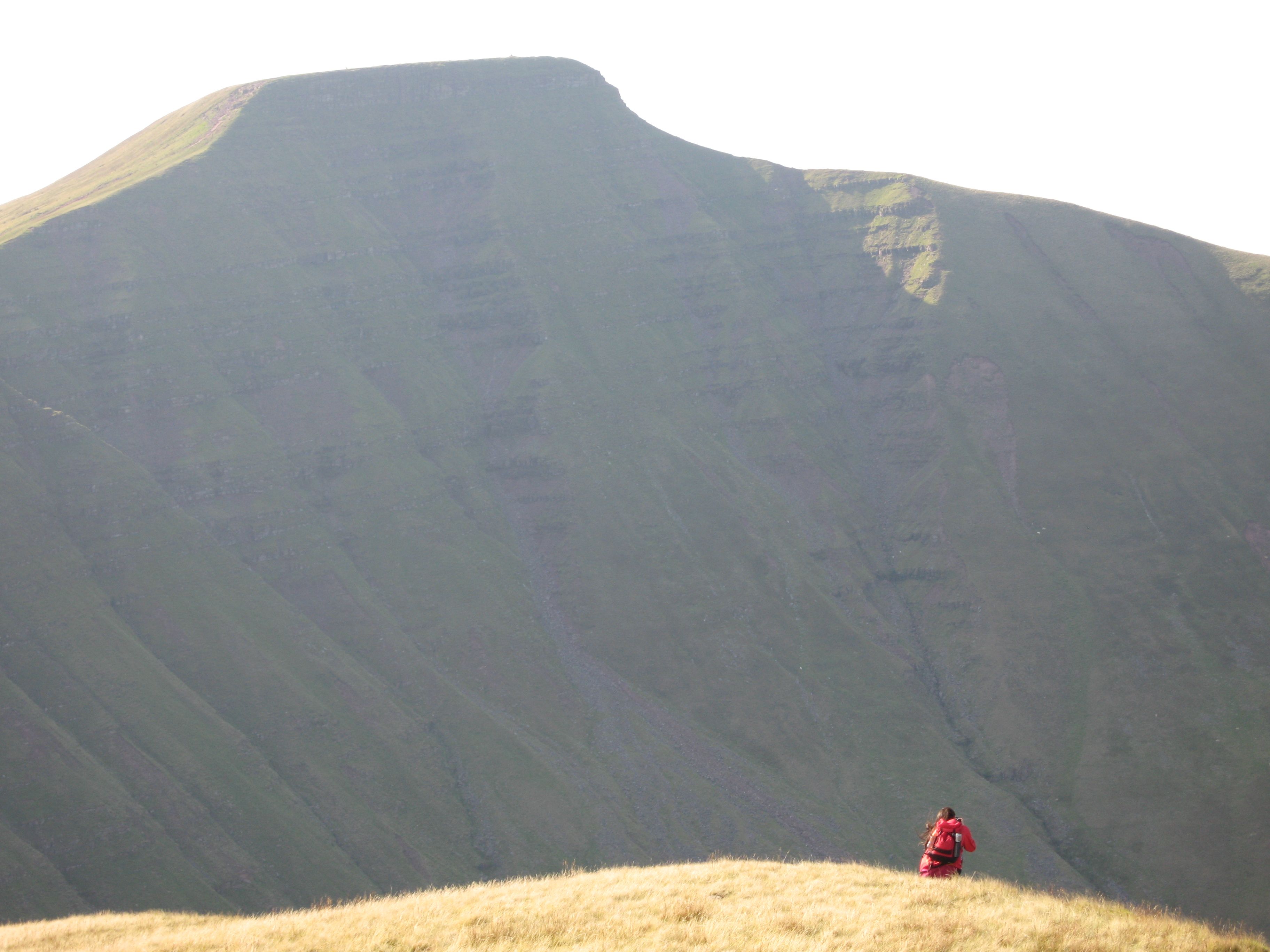
September 2009 – Brecon Beacons, Wales

September 2009 – Elan Valley, Wales

September 2009 – Aberystwyth, Wales

September 2009 – Carrauntoohil, Co. Kerry

I have to admit I am a late starter to Twitter. Like many people, I didn’t particularly see the point. So what if you are eating ham for dinner? So what if you enjoyed the latest episode of the X-Factor? Or you were just bored? To me, it seemed a glorious exercise in inanity, best left to people with way too much time on their hands. I had an account on Facebook. I had my blog. What more did I need?

Nevertheless, I dipped my toe in last June, motivated primarily by the feeling that I was somehow missing the point. I started following a few people and I quickly learned the lingo. I shared a few interesting photos and links. Over the course of a few weeks, my antipathy to the medium began to mellow. I now have to admit there is much more to it than meets the eye. It’s fast, reactive, informative and often highly entertaining. There is a dynamism to it that is quite unique. While blogs and web-pages are the fields and towns of the cyberscape, Twitter has been chosen as the shiny new motorway.

Twitter is powerful too. Even though the number of people who use it is still relatively small, the combined voice of the Twitter community can be deafening when there is a worthy cause to tweet for. We witnessed this in real time this week, when the Trafigura affair broke. It all started when the Guardian newspaper in the UK was prevented from reporting a parliamentary question in the House of Commons – an assault, if there ever was one, on democracy and freedom of speech. Within hours, Twitterers had uncovered who the main players were, what the issue was, and why they wanted so badly to keep the news secret. Trafigura are implicated in a massive toxic waste dumping scandal in Africa: arguably the biggest health disaster committed by a multinational corporation since Bhopal. Nobody knew very much about them until last week. Now we all know, and oh boy, it’s going to get very difficult from here on in for the ladies and gentlemen running that company. For a few hours, Trafigura and their insidious legal representatives Carter Ruck became the No. 1 trending topics on Twitter. Telephone numbers and email addresses were publicised and bombarded. Protests were planned outside their offices. Government ministers were pressed for answers. The report they desperately wanted to suppress was leaked to the Internet and is now stored on myriads of hard drives. The official media could only stand back in amazement as tens of thousands of Twitterers, like piranhas scenting blood, flayed the reputation of Trafigura into shreds. The “Twirlwind” finally abated when Carter Ruck flew the white flag, allowing the media to report the parliamentary question, as was their legal right in the first place.

Today another twirlwind went into full effect when Jan Moir of the Daily Mail penned a snide invective against the gay community using the recently deceased Boyzone singer Stephen Gately as her ammo du jour. In the course of the storm (which is still ongoing as I write), a number of companies pulled their advertising from the online edition of the Daily Mail and her article is the subject of over a thousand submissions to the Press Complaints Commission. In the course of the day, a rattled Moir issued an explanation, if not quite a retraction.

The clear message from both incidents is that Twitter has the power to effect real change. Its muscles flexed this week, and open season has been declared on anyone who wants to conceal information from the public, reveal the extent of their bigotry, or force their people into submission. If corporations, governments and anyone putting themselves up as representatives of the common people are not worried yet, they should be.

Picture 29This last weekend found me in the UK, attending a very unique conference – the TAM London event. TAM (“The Amazing Meeting”) is the brainchild of James Randi, a well known US based magician who is best known for his dogged debunking of the claims of mystics, frauds and charlatans such as Uri Geller, Sylvia Brown and Peter Popoff. TAM is a meeting of skeptics – people who tend to see the world (nay, the Universe) as fundamentally rational and who cast doubt on the extraordinary and often wacky claims of supernaturalists, conspiracy theorists and those who believe in different forms of reality.

It’s pretty interesting stuff, because there are myriads of strange, weird and wonderful ideas out there that make absolutely no sense whatsoever. Some claims are relatively benign (fairies, chakras and fortune telling, perhaps), but other claims are positively dangerous (vaccine denial, AIDS denial, and the rejection of modern medicine for curable complaints). There is just so much material to discuss and investigate, it’s like drinking from a fire hydrant. Where do you start? Going to TAM is as good a place as any.

The attendees at TAM were a motley crew of science enthusiasts, magicians, writers, atheists and agnostics, comedians and every shade in between. The speakers were similarly diverse, ranging from bloggers to musicians to scientists to famous authors – each of them passionate about getting the skeptical message across to the general public.

There were a few real highlights.

Brian Cox, for instance, is the public face of the Large Hadron Collider, one of the biggest machines every created by human beings, whose purpose is nothing less than discovering the fundamental nature of the Universe. He gave a wonderful talk on the potential discoveries in the offing, from dark matter to the “god particle” (aka. the Higgs Boson) to the nature of gravity. Brian can be credited with one of the more memorable quotes of the meeting: “Anyone who believes the LHC will destroy the Earth is a twat”.

Then there was Adam Savage. Yes, the Mythbusters guy. Adam, a man of boundless energy and enthusiasm (if you don’t believe me, watch his TED speech), has done more than almost anyone to make science and scepticism relevant and interesting for TV viewers the world over. His talk was all about the efforts the Adam / Jamie team went to in testing the difficulty of swimming through syrup (busted). Adam raised a big laugh when he described libertarianism as “anarchy for rich people”.

Another highlight was the incomparable Jon Ronson, author of “The Men who Stare at Goats”, and who self-describes himself as being “to humorous journalism what Brian Cox is to science”. Jon introduced us to some of the craziest people on the planet. His talk was brilliant – featuring group sex, murderous pieces of plastic, and the (in)ability of American generals to walk through walls. I can’t wait to see the movie, (where Ewan McGregor plays Ronson – huh?).

Not forgetting Tim Minchin, musician, comedian, precise commenter on the follies of modern life – fantastic! If you have never heard his poem Storm, stop now and listen to it on YouTube. He also sang us a wonderful song about looking forward to Christmas. For his efforts he got a well deserved standing ovation.

I was particularly keen to listen to Simon Singh, who wrote an article about chiropractors in the Guardian and has ended up in court because he, um, told the truth. The ridiculousness of the British libel system was devastatingly exposed for all to see. Simon won an award in the meeting for outstanding contributions to skepticism.

I could wax on about Ben Goldacre taking journalists to task; George Hrab singing about the candiru (nasty little blighter – look it up on Wikipedia); Ariane Sherine on receiving hate mail as a result of her atheist bus campaign; James Randi live over Skype from Florida, Phil Plait metaphorically blowing apart the movie “Armageddon”, and Richard Wiseman doing a truly wonderful job as host for the proceedings, but damn it, I need to get some sleep now.

Suffice to say that TAM London was worth every penny spent – it was truly amazing and wild horses won’t drag me away from going to future meetings.

And they said that squeezing 16 hrs of walking in Kerry down to two and a half minutes could not be done. Pah! I grimace menacingly in their general direction.

Here is the video of the walk. Right here, right now.

Today, bloggers all around the world are re-publishing an edited version of Simon Singh’s article that lead him to be sued by the British Chiropractic Association. I’m happy to reproduce the article here. The world should know what chiropractic is all about.

Some practitioners claim it is a cure-all, but the research suggests chiropractic therapy has mixed results – and can even be lethal, says Simon Singh.

You might be surprised to know that the founder of chiropractic therapy, Daniel David Palmer, wrote that ‘99% of all diseases are caused by displaced vertebrae’. In the 1860s, Palmer began to develop his theory that the spine was involved in almost every illness because the spinal cord connects the brain to the rest of the body. Therefore any misalignment could cause a problem in distant parts of the body.

In fact, Palmer’s first chiropractic intervention supposedly cured a man who had been profoundly deaf for 17 years. His second treatment was equally strange, because he claimed that he treated a patient with heart trouble by correcting a displaced vertebra.

You might think that modern chiropractors restrict themselves to treating back problems, but in fact some still possess quite wacky ideas. The fundamentalists argue that they can cure anything, including helping treat children with colic, sleeping and feeding problems, frequent ear infections, asthma and prolonged crying – even though there is not a jot of evidence.

I can confidently label these assertions as utter nonsense because I have co-authored a book about alternative medicine with the world’s first professor of complementary medicine, Edzard Ernst. He learned chiropractic techniques himself and used them as a doctor. This is when he began to see the need for some critical evaluation. Among other projects, he examined the evidence from 70 trials exploring the benefits of chiropractic therapy in conditions unrelated to the back. He found no evidence to suggest that chiropractors could treat any such conditions.
But what about chiropractic in the context of treating back problems? Manipulating the spine can cure some problems, but results are mixed. To be fair, conventional approaches, such as physiotherapy, also struggle to treat back problems with any consistency. Nevertheless, conventional therapy is still preferable because of the serious dangers associated with chiropractic.

In 2001, a systematic review of five studies revealed that roughly half of all chiropractic patients experience temporary adverse effects, such as pain, numbness, stiffness, dizziness and headaches. These are relatively minor effects, but the frequency is very high, and this has to be weighed against the limited benefit offered by chiropractors.

More worryingly, the hallmark technique of the chiropractor, known as high-velocity, low-amplitude thrust, carries much more significant risks. This involves pushing joints beyond their natural range of motion by applying a short, sharp force. Although this is a safe procedure for most patients, others can suffer dislocations and fractures.

Worse still, manipulation of the neck can damage the vertebral arteries, which supply blood to the brain. So-called vertebral dissection can ultimately cut off the blood supply, which in turn can lead to a stroke and even death. Because there is usually a delay between the vertebral dissection and the blockage of blood to the brain, the link between chiropractic and strokes went unnoticed for many years. Recently, however, it has been possible to identify cases where spinal manipulation has certainly been the cause of vertebral dissection.

Laurie Mathiason was a 20-year-old Canadian waitress who visited a chiropractor 21 times between 1997 and 1998 to relieve her low-back pain. On her penultimate visit she complained of stiffness in her neck. That evening she began dropping plates at the restaurant, so she returned to the chiropractor. As the chiropractor manipulated her neck, Mathiason began to cry, her eyes started to roll, she foamed at the mouth and her body began to convulse. She was rushed to hospital, slipped into a coma and died three days later. At the inquest, the coroner declared: ‘Laurie died of a ruptured vertebral artery, which occurred in association with a chiropractic manipulation of the neck.’

This case is not unique. In Canada alone there have been several other women who have died after receiving chiropractic therapy, and Edzard Ernst has identified about 700 cases of serious complications among the medical literature. This should be a major concern for health officials, particularly as under-reporting will mean that the actual number of cases is much higher.

If spinal manipulation were a drug with such serious adverse effects and so little demonstrable benefit, then it would almost certainly have been taken off the market.

Simon Singh is a science writer in London and the co-author, with Edzard Ernst, of Trick or Treatment? Alternative Medicine on Trial. This is an edited version of an article published in The Guardian for which Singh is being personally sued for libel by the British Chiropractic Association.


Fantasy Section

Our prime minister has his own special place on the bookshelves…

No Googling

The table quiz is under threat. For many years, table quizzes (or pub quizzes) have been a terrific way to raise funds for good causes. However the format needs an urgent rethink, otherwise this source of evening enjoyment will die very quickly. The immediate reason? Cheating. The root cause? Google and Smartphones.

If you are not from Ireland or the UK, you may be unfamiliar with table quizzes, so here’s the skinny.  A large group of participants meet together in a pub. They are split into teams of four people. A quiz master reads out a series of questions that the teams must answer in a short period of time, 2 to 3 minutes usually. Usually the questions are batched together in rounds – maybe 5 questions at a time so that the teams can get an indication of how well (or how badly) they are doing. There are typically 10 rounds overall. The team that gets the most answers right wins. It’s good fun – a combination of teamwork, competitiveness and perplexing problems to while away many a dark Irish winter (or summer) evening.

Enter the smartphone. Smartphones make it pretty easy to cheat. Just log on to Google over a mobile network – ask your question, and the answer will be shown to you within seconds. It’s quick, it’s covert, and it gives those who possess an iPhone or comparable device a huge advantage over less technologically savvy (or more scrupulous and honest) teams.

Almost any what, who, why, where and how question can be answered immediately through a Google search, but it doesn’t stop there. Google translates into multiple languages, it performs simple arithmetic, it can give you synonyms and dictionary definitions, unit conversions and it will tell you what happened on a particular date in time. Most table quiz questions should be answerable in less than half a minute through a quick search of the Internet. 

Yes, yes. Quizmasters will ask that mobile phones are not used, but it’s increasingly unlikely that such requests can be effectively enforced, particularly if you have a large group involved. Access to the mobile internet is extremely easy these days. It’s better instead that quizmasters adapt their questions to the new reality.

Here are a few ideas that will help to limit the power of smartphones in table quizzes.

1) Use more picture questions. Picture rounds are already a staple of most table quizzes, but it becomes more important when hidden smartphones are being used. While words and descriptions can be easily googled, photographs of faces, objects and places are less easy to look up (for the time being). 

2) Use more audio soundbites. Again, sounds are common in table quizzes, and again they are difficult to google. Be aware though! Music, particularly if it is played for a long period of time, can be identified using applications like Shazam. Also be aware that common soundbites, like “One small step for man”, or “I have a dream” can be easily googled. You need to keep your soundbites relatively difficult to uncover, so that people have to concentrate on the sound and the voice, rather than the content. Also consider non-human sounds, such as birds, animals or machinery.

3) Get them to solve puzzles. Examples include:

  • Odd One Out. Give people three or four names or words and ask for them to identify the odd one out. Yes, people can google for more information, but the chances are that they will soon run out of time. It’s one of those things that you either get immediately, or you will have difficulty resolving.
  • Complete the sequence. Try some simple sequences, based perhaps on simple formulas or less obvious sequences like [7,4,1,8,5,2]*. . Just make sure that your sequence isn’t too obvious! Offset it by a fixed number perhaps. For instance [2, 4, 8, 16, 32..] is pretty obvious, but [5,7,11,19,35..] is less clear, even though it’s the same sequence offset by 3.
  • Maths problems – Yes, the ones we were subjected to when we were yinglings. Jim has 70 squaggles. Each squaggle is composed of 13 mirdles. Jim gives 10 squaggles to Bill who only wants 25 mirdles and who gives 3/5 of the remainder to Bob. How many mirdles does Bob have? It’s simple algebra but it will drive the smartphone cheats crazy.
  • Lateral Thinking Problems. These are the type of stories that have a very easy answer if you question your assumptions. For instance “A man who was not wearing a parachute jumped out of a plane. He landed on hard ground and yet was unhurt. Why?” (OK, that one was easy, but more difficult questions are available in books such as this one, and will keep the audience thinking)

4) Go Local. Although general knowledge is likely to be prominently displayed on the Internet, often local knowledge is more patchy. What is the name of the pub on the corner of Main St and High St? Who is the former principal of the local school? What club won the local athletics contest in 2005? Just check that such information is not already available on Google or Wikipedia before setting questions.  

5) Rapid-fire rounds. Give people more questions than they could possibly handle in a short period of time. Ask 20 or 30 questions in a single round. (It can be provided to them on a piece of paper). Yes, people could use a smartphone to answer the questions, but the entry of the questions alone will lose them time. This will put them at a disadvantage compared to more knowledgeable teams. 

6) Individual rounds. Nominate a member of each team to walk up to the platform and answer a series of questions in full view of the audience. Not so easy to use  a smartphone when every other team is looking at you!

Can you think of any other ways to keep Google out of the table quiz? Let me know!

* By the way, how did you get on with this sequence?