Archives for category: tours and trips

This morning I arrived in Shanghai – by some reckonings the world’s largest city. My travels began early the previous morning, with dangerous gusts around Cork Airport making hard work of our take-off.  After a short stop-over in Heathrow, a Boeing 777 took us across the Russian Steppes and Mongolia, touching down in Shanghai at 9.30 am Sunday morning. It’s my first time in China and only one of my first times in Asia proper.

Flying in, the area under the flight path reminded me of the Netherlands, with its cloudy weather, reclaimed land, wind turbines and man-made canals. It’s all brand new, with many roads, bridges and buildings under construction. The airport is shiny and enormous – the terminal building itself seems to stretch to infinity in both directions. A motorway brings you straight into the city centre and driving in you get an appreciation of the huge number of people living in Shanghai. Large apartment blocks cover the landscape as far as the eye can see. It’s an impressive sight.

Shanghai Motorway 1

Click photos to enlarge

A number of huge skyscrapers dominate the cityscape, the largest of which, the Shanghai Tower, is being built at the moment. It will top out at 630 metres, making it the second tallest skyscraper in the world. Construction is due to complete in 2015.

After a brief rest in the hotel, we took a taxi to Yuyuan Bazaar and Gardens. The garden itself is delightful – full of nooks and crannies, steps going nowhere and tiny footbridges. The pools are full of colourful koi carp. A pity it’s too early to see the trees in blossom.

The bazaar was a bombardment of sounds, smells and sights. Everywhere there were people – lots of families and children. Despite the fact that we didn’t have a clue where we were or what we were doing, somehow we managed to visit the Temple of the City Gods, do some tea-tasting and see the lanterns light up as the Chinese New Year ceremonies come to a close. We even got our photos taken by some teenagers, clearly impressed to have come across quaint looking foreigners.

Yu Bazaar 1


20140202-232307.jpg

I’ve just arrived home after a wonderful day in the Aviva Stadium. The boys and I watched a thrilling game between Ireland and Scotland. After an indifferent first half, Ireland let fly and romped home in style in the second half – 28 points to 6.

I loved every minute of it. There’s a real style to the game that makes it thrilling to watch. It was only my first time in the Aviva and my second time at a rugby international. We had a great vantage point behind the Southern goal-posts. Even though the Aviva holds well over 40,000 people, it seems very small and intimate. The play seems close and personal.

I have to admit, though, I know very little about rugby. I understand tries and conversions, I think I understand line-outs and I get it that you can’t pass the ball forwards, but otherwise it’s all a bit of a mystery to me. And those names! Props and Out-halfs and Hookers, Jive Wookies and Rear-Flank Ball Breakers (ok, I made the last two up): I know they must mean something, but I’m completely at a loss to what it might be.

And all these south-city types, talking about the plays. Jesus, it’s like a foreign language. I mean, look at this from the IRFU today:

5 mins – Rory Best combines with Heaslip in the lineout. First decent bit of possession for Ireland. A double hit on Luke Marshall leads to a ruck in midfield and Ireland are pinged for ‘sealing off’.

I mean, what the hell are they talking about? Combine harvesters, satanism, drinking games, table-tennis and window repair would be my best guess.

Here’s another comment from the IRFU blog later in the game:

27 mins – O’Mahony gets up to disrupt the lineout, it is back on the Irish side and Conor Murray goes the aerial route. Possession back to Scotland though and they counter from inside their own half.

Did O’Mahony suddenly become Scottish for a while and start flying, or something? Was I watching Quidditch, perhaps, and didn’t realise?

Ok, one last one:

54 mins – Marshall is used for a crash ball run. Ireland bring play out to the left with good carries from Heaslip and Best. Sexton leads a wraparound move that ends with Rob Kearney being brought down.

A Crash Ball Run? Wasn’t that some sort of Hollywood movie in the 70’s? And what is a wraparound move? Sounds sexy. No wonder Kearney was down on his knees.

I have to admit it. These guys (and probably 99% of the spectators, fuck ’em) saw a completely different game to me. While I was going Ooh as one of the green fellows was hit by a blue fellow, everyone else was going “Smart pinging on the pong frame by O’Driscoll there. Will he ruck to make the 10 metre line scrum?” or some equally nonsensical bullshit like that.

No matter what the sport has ever been, I have always failed utterly in understanding the language that goes with them. Even though I come from a hurling tradition, my train of thought never deviated much from “guy with stick hits ball to other guy with stick”. Rugby, however, is in a class of its own.

As far as I am concerned, they are making it up as they go along. I prefer to believe that none of them know what they are talking about and that it’s all the ref’s fault anyway.

In any case, it was a huge amount of fun and a great day out. Just don’t ask me to explain it. Please. Just don’t.

Yesterday, we headed to the Galley Head area in West Cork, halfway between Clonakilty and Skibbereen. The day was uncharacteristically perfect. The low winter sun offering this battered coastline some light relief.

The winter storms had not yet abated and the waves around the Long Strand (Castlefreke) were enormous, crashing loudly onto the beach. I caught some nice shots during our walk.

Castlefreke 6

We then headed to the Drombeg Stone Circle, close to Glandore. These Bronze Age Menhirs with their portal stones and altar is a reminder of mysterious times long gone. Close by is a wonderfully preserved “Fualacht Fia” – an ancient kitchen. Red-hot stones were added to the water, allowing the water to boil, thus cooking whatever food had been caught during the day.

Nothing much to report about my last day in Singapore as it was all a big rush to make a police statement about the phone, then pack and get to the airport. As ever, people were super friendly. I’m missing it already.

I saw three movies on board:

World War Z: I wasn’t gone on the first part of the film (any horror flick involving kids always seems dreadfully manipulative), but I got hugely into it. Stunning scenes, particularly the wall breach in Jerusalem. This being an airplane movie, Singapore Airlines cut the scene on the jet. Aww.

Red 2: Awful shite. Helen Mirren, John Malkovich and Anthony Hopkins, how could you? Did you need the money to pay off a drug debt? Did you even read the script in advance?

Man of Steel: So it’s 2013, and the saviour of the human race is still a tall good looking white American guy with great pecks and great teeth. Plus ça change. A rehash of the 1980s’ Superman 2 film, now with whizz bang graphics and Dolby sound effects. Visually spectacular – particularly the spacecraft scenes – but the endless fighting and boo-hoo nostalgia ruined it for me.

Is may be just me, but I think CGI has ruined Hollywood.

20131117-233618.jpg

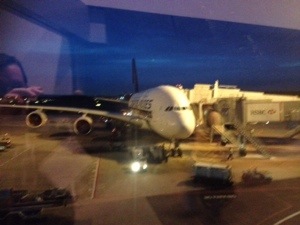
First time on an A380! Such a quiet take-off too.

The amount of space you have is enormous. Zillions of TV channels and noise-suppression earphones as standard.

The Singapore Airlines staff could not have been nicer. Very pleasant, helpful staff. Their reputation for friendliness is well deserved.

And the veal dish. Oh my. Melting in your mouth like chocolate…

No turbulence on route, but no view either as lights were down and most people slept through the night. I stayed awake reading a book for most of it. Better to go to bed tired than wide awake.

I watched Pacific Rim en-route. It’s all AARGH and BAAH and RAAR. Did these actors have to shout their way through the movie? Could they not have whispered to balance things up, as it were?

We left Heathrow at sunset and arrived at sunset in Singapore. The plane routed via Russia, Iran, Afghanistan and Pakistan, then south of the Himalayas. I caught a brief glimpse of the mountains en-route.

20131117-233953.jpg

No big delays on arrival. Taxi driver was a bit mad though. He also wanted us to pay him in cash – which was a problem. The hotel sorted us out.

Got to my room and had the Best Bath Ever. This could become a habit.

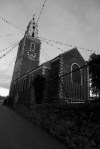
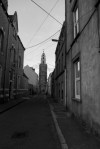
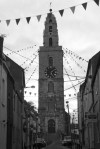
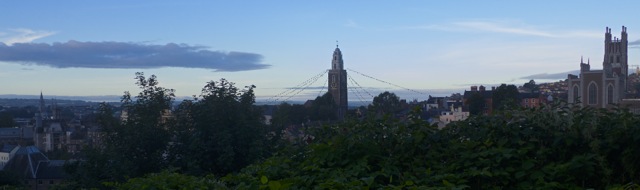
Just as London has Big Ben, and Paris the Eiffel Tower, Cork has Shandon Church. This modest chapel, by no means the largest or most ornate church in Cork, is by far the most emblematic.

I found myself in Cork very early one morning last September. Having a few hours to waste before work, I headed towards St Anne’s Church in an attempt to understand its enigmatic hold over the city.

St Anne’s dates from 1722, its famous bells installed in 1750, it’s clock mechanism a hundred years later. The church is built of red sandstone and white limestone, which have come to represent the colours of Cork City and county. The clock faces, notoriously inaccurate, have given the church its nickname ‘The Four Faced Liar’*.  The large gold-plated salmon, ‘de goldie fish’, on the top is a nod to Cork’s booming salmon industry of the time. Situated a short distance north of the River Lee and a stone’s throw from Cork’s North Cathedral, the narrow streets and alleys around it are a throwback to earlier times. The Butter Museum and the Firkin Crane theatre, Cork’s home of dance, rests in its shadow.

Because of its centrality, its central position and its idiosyncratic design, Shandon is the true heart of Cork City. While the city itself has gone through a transformation in the last few years, with glass and polished marble growing up where dowdy brick and concrete buildings once stood, this symbol of Cork’s heritage remains unchallenged.

Shandon Panorama

* This is the name of a famous Irish pub in New York City, which in turn became the name of a 2010 award winning independent movie.

P1020890

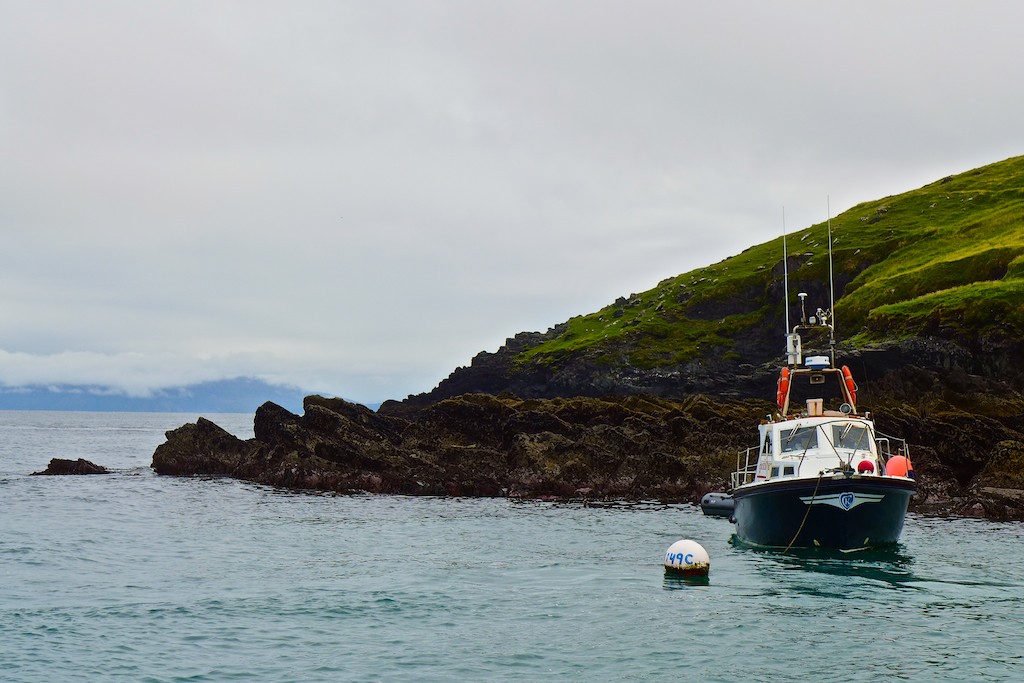
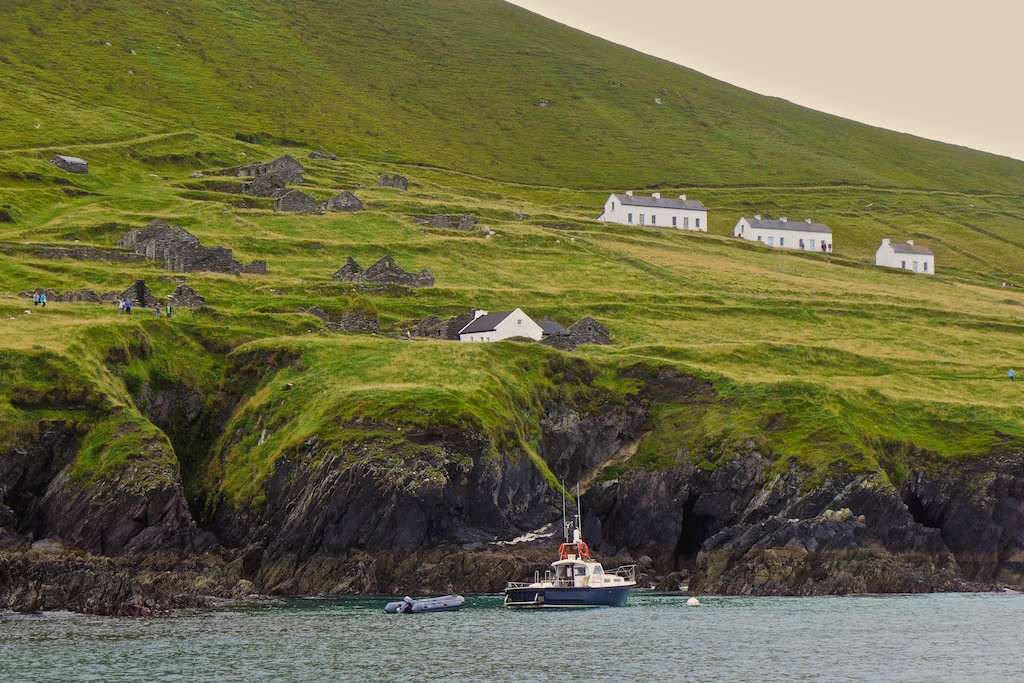
Our departure point last weekend was Ventry, near the town of Dingle. From there we made our way to An Blascaod Mór, the Great Blasket Island, homeland of Peig Sayers. A small community lived on this island until 1953, when they were re-located to the mainland. Close by the beach is a large colony of common seals, curiously observing us as we collected some passengers for the rest of the trip.
P1020862 (1)
P1020860
P1020865Our next stop was Inis na Bró, with its cathedral-like rock formation to the north of the Island. In the distance was An Tiaracht, rising out of the waters like a great pyramid.

P1020884 P1020881

Onwards to Inishvickillane, second home to the family of Charlie Haughey, the controversial politician who held sway over the country in the 1980’s. The only permanent inhabitants of the island are a large family of Red Deer, seen here on the eastern cliffs, not far from the Haughey residence.

P1020897 P1020898

We headed then towards open water, where a different world awaited us. I spotted a harbour porpoise, then an ocean sunfish basking on the surface until the boat came too close. Then suddenly, a cry from the front: “dolphins approaching”. A small pod of common dolphins surrounded the boat, leaping out of the water and rushing close to the bow at breakneck speed. It was over way too fast. Before I had a chance to take any photos, they had lost interest and we were heading back to the mainland, Manx shearwaters, gannets and puffins escorting us back to land.

P1020904


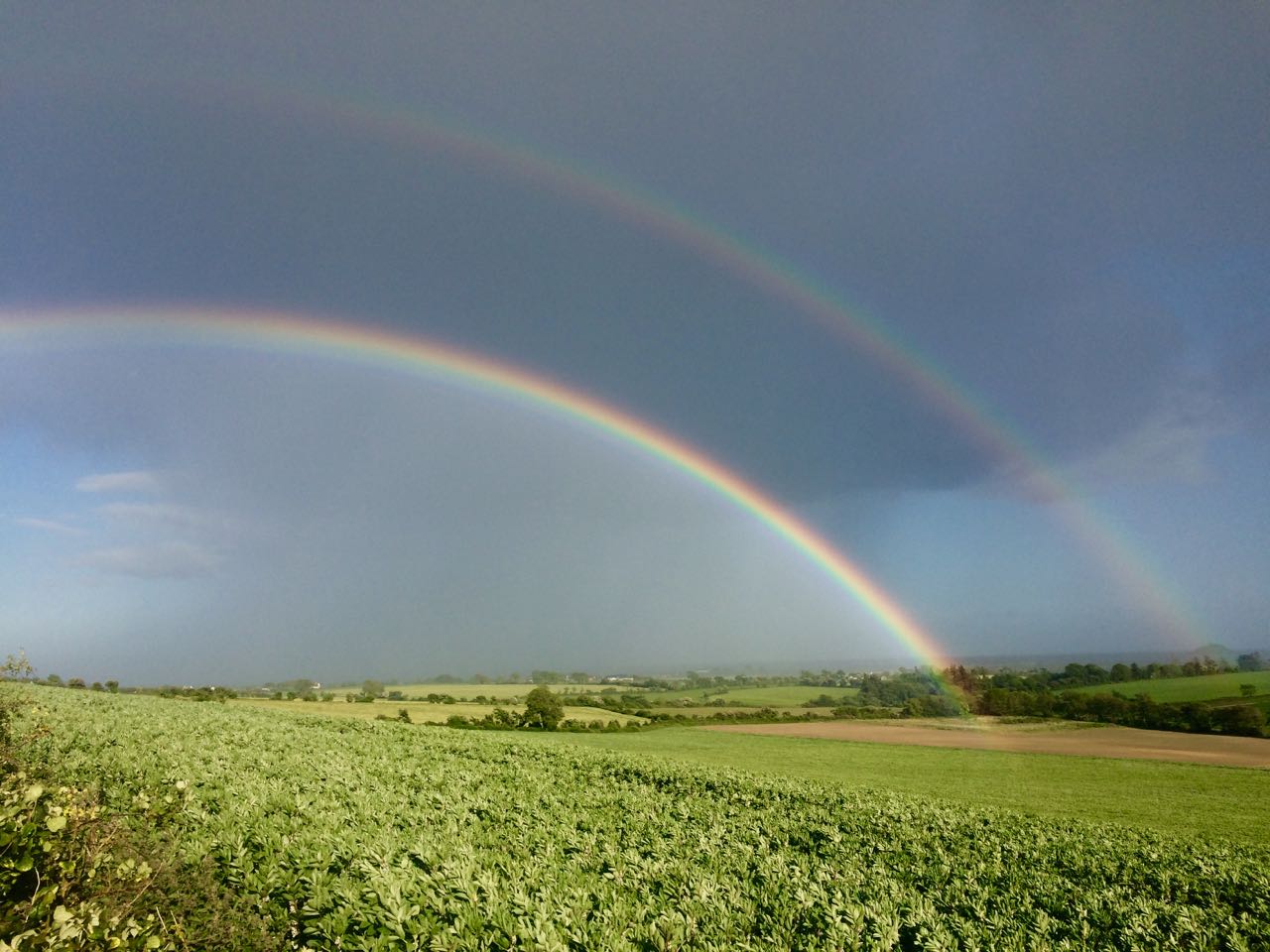
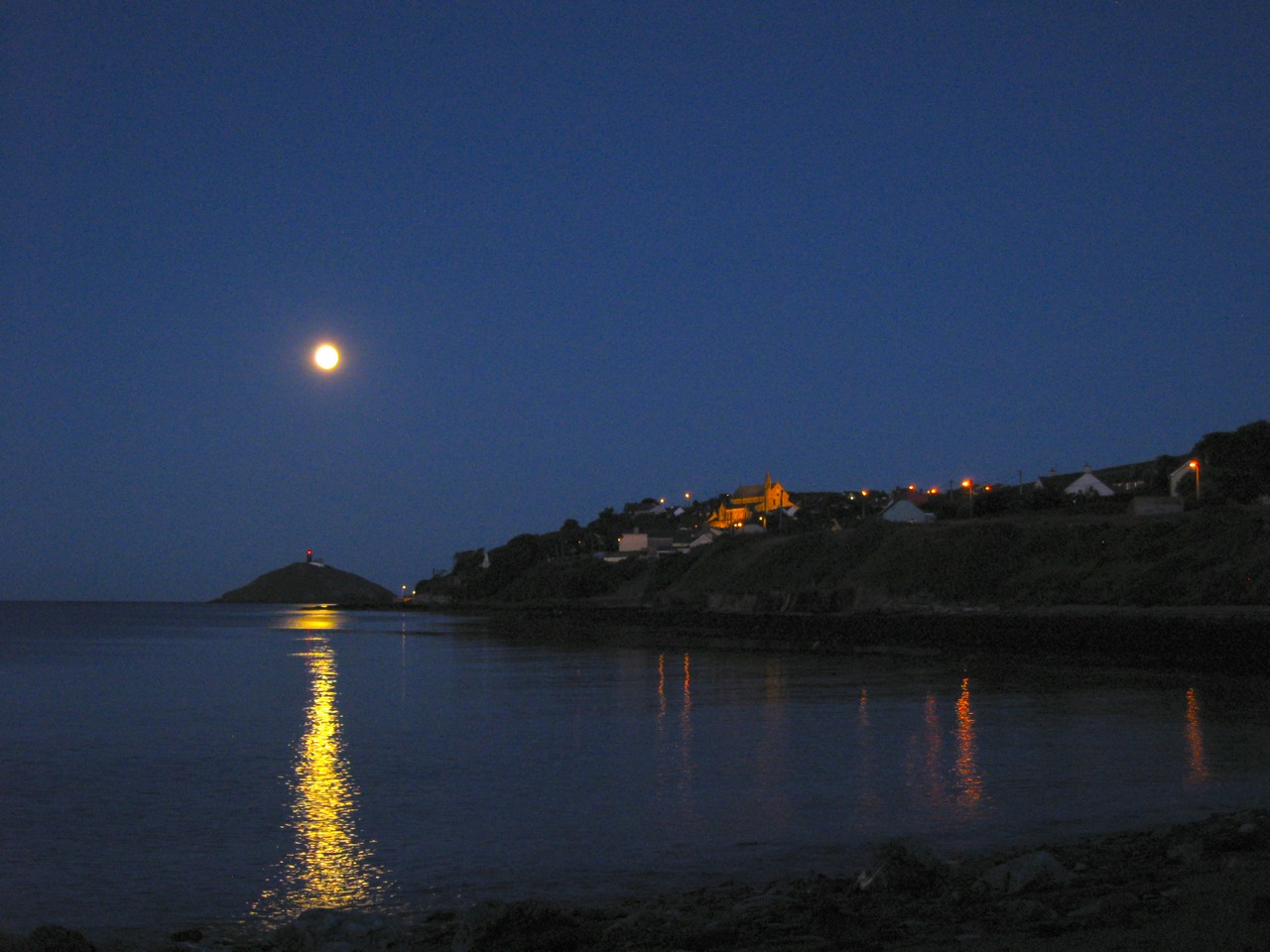
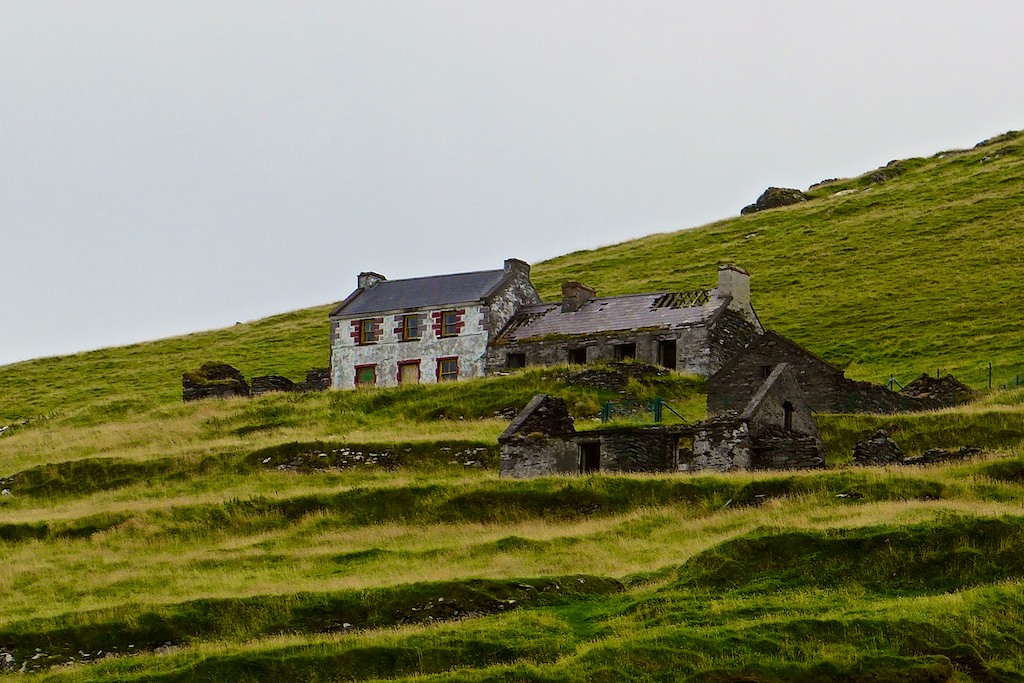
P1020477I’m just back from two very enjoyable weeks in Southern Germany. This time, we travelled through France; starting in Cherbourg and passing by Rouen, Paris, Metz, Strasbourg, Karlsruhe and Stuttgart: a journey of 13 hours. On the way we encountered violent rainstorms, beautiful rainbows and a wonderful “supermoon” as it rose over the fields of Verdun.
A big highlight of the trip was our trip to the Mercedes Benz Museum in Stuttgart. It’s a wonderful place to go, even if you are not a big car lover. Daimler AG has an amazing history. In 1885, they developed the first automobile: a contraption that looks more like a horse carriage than a car; and in short order they were manufacturing everything from motorcycles, to tramcars, busses, vans and trucks. It’s a company that is still going strong after 130 years: an incredible achievement.

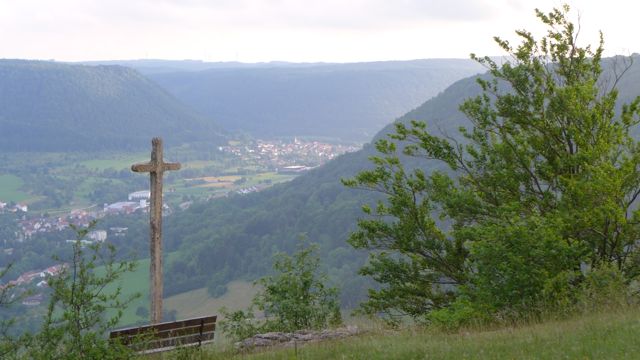
Next up was Ulm, the birthplace of Albert Einstein and the city with the world’s tallest steeple, the view from which is superb, if a little unnerving. As for Einstein, his family left Ulm while he was still a baby and the apartment itself was destroyed in the War. All that remains of Bahnhofstrasse 20 is a nondescript memorial not far from the railway station.

A day later we were relaxing by the shores of Lake Constance, the great alpine lake shared with Austria and Switzerland. We spent the day between Überlingen and Meersburg, finally taking a ferry back to Friedrichshafen.  Above us, a lonely Zeppelin meandered across the lake – a relic of a bygone era.

The weekend gave me a chance to go up in a glider: taking off from Berneck, high in the Swabian Alps. It was wonderful, and not a bit uncomfortable. In Germany, kids as young as 14 can get a gliding license. It’s often the first stop on the way to becoming a pilot.

Next up was Nuremberg, a city of great fascination to a history enthusiast like me. It was here where Hitler’s great rallies were staged, and here where the remnants of his monstrous regime were picked apart for all the world to see: his henchmen called to account for their crimes. I wish I could have spent more time here, as the city itself has so much to offer, from a grand medieval castle to a fascinating transport museum among many other things. Next time.

The next day I went to Tübingen, a famous university city just south of Stuttgart, home to many intellectual heavyweights such as Kepler, Hegel and Alzheimer. With its many alleyways, nooks and crannys, it’s wonderfully picturesque and captivating.

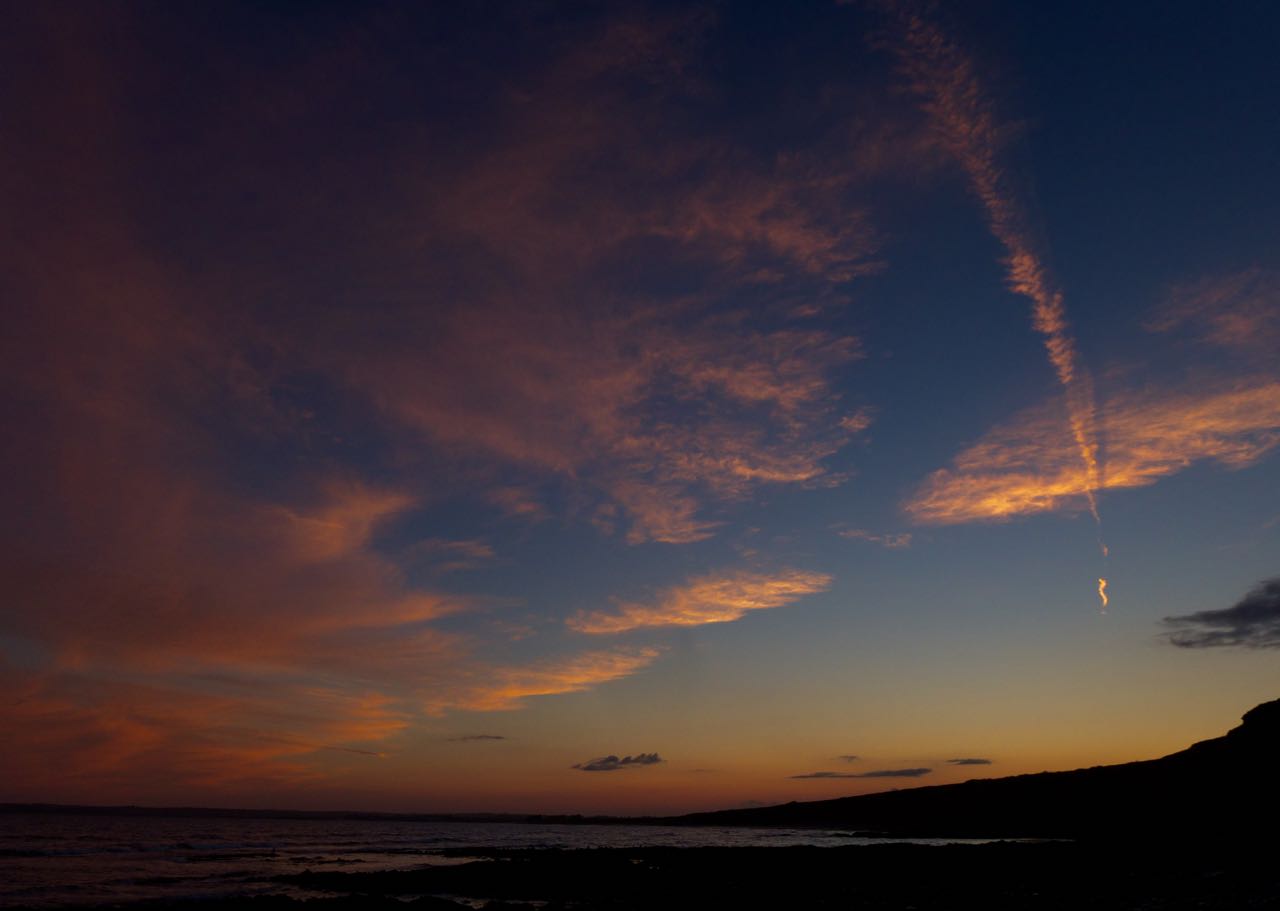
And then it was over and I was driving back across the German and French countrysides, heading once again for home. The night we left Cherbourg, I caught the most arresting sunset of my life to date. A fitting ending to an marvellous trip.

P1020489

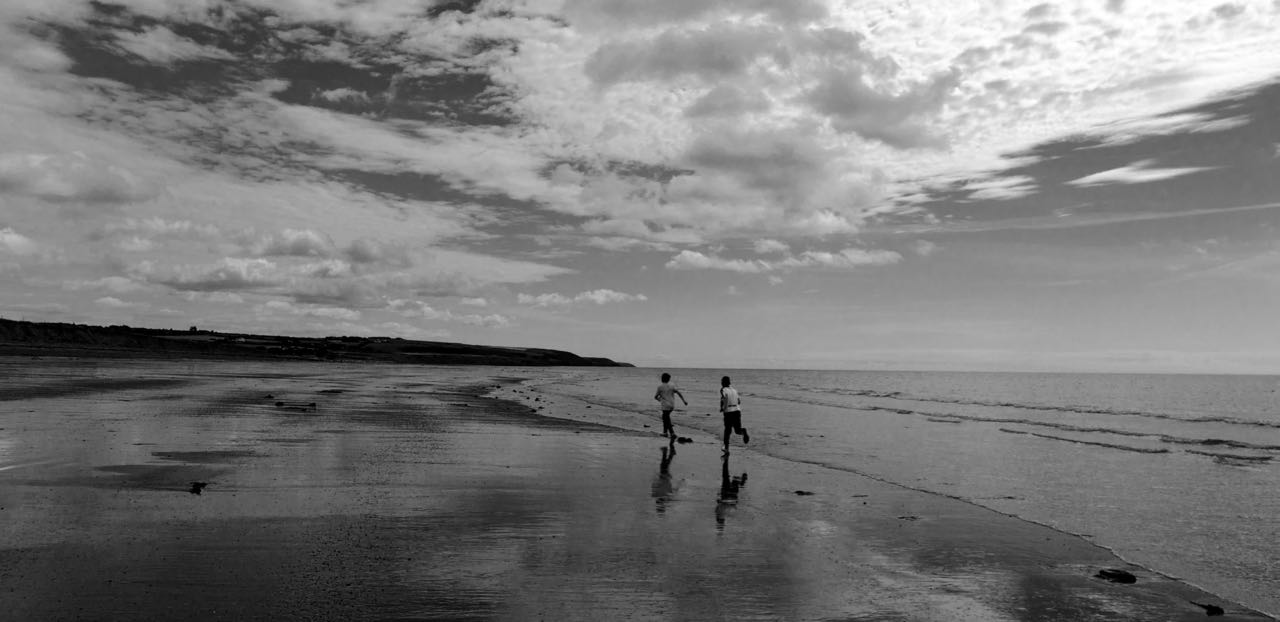
Instead of visiting the St. Patrick’s Day parades, we did the annual Ballycotton to Ballinrostig cliff walk. It’s the only occasion in the year when the coast is opened up to the public. In clement weather it’s one of the country’s most beautiful hikes, travelling over fields, cliffs and rolling hills with the sea to your left all the while. The walk takes in the beaches of Ballycroneen, Ballybrannigan and Inch. This 19km walk is one to be savoured every step of the way.

The conditions today were perfect. Plenty of sunshine, no winds and crystal clear visibility in all directions. As you can see from some of the shots below, the real winner were the skies: they were incredibly varied and detailed: a photographer’s dream.

The walk from Inch Beach to Ballinrostig is the most challenging part of the journey for the weary traveller. The soup and pint at the end make it all worthwhile.

I took a brief time-lapse movie at the end of the walk. This video details the slowly rolling clouds from Inch Beach. I hope you like it.

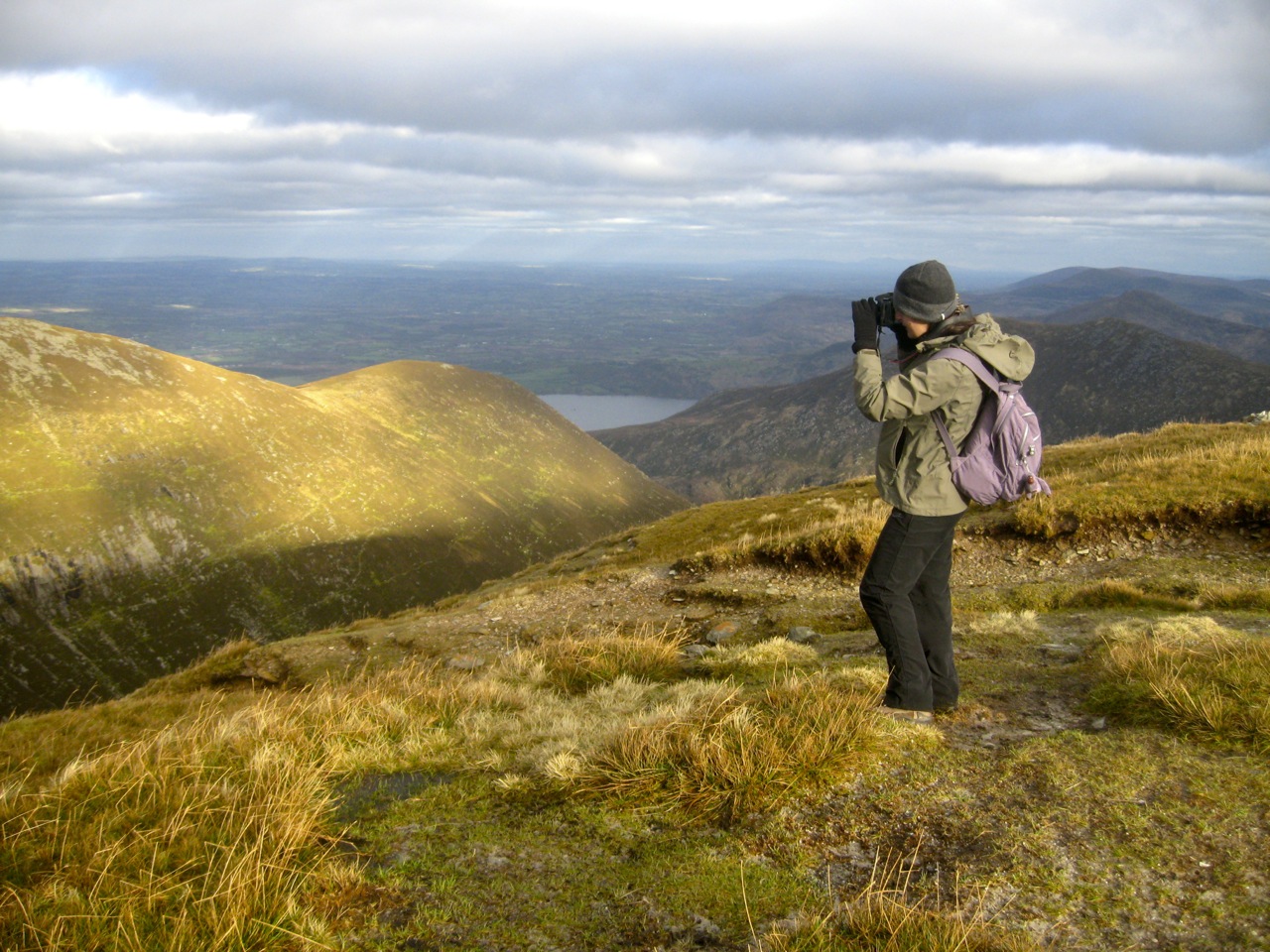
Today I climbed Temple Hill in the Galty Mountains. While Temple Hill is neither the highest, nor the most challenging peak in the Galtys, the walk is enjoyable with a rewarding view at the top. It’s a good introductory walk for novices too – the pathways are well marked, the ascent is mild and not too muddy. All in all, something of a gem in the Galty mountains.

Visibility was good, but temperatures were below zero and there was a slight breeze. An extensive sandstone cairn at the top provided some comfort from the bitter winds.

While at the top, I set up the tripod and took a time-lapse movie looking over at Lyracappul. It’s about 20 minutes of footage squeezed into just 37 seconds.