Archives for category: photographs

Another New Years Day, another walk in the hills.

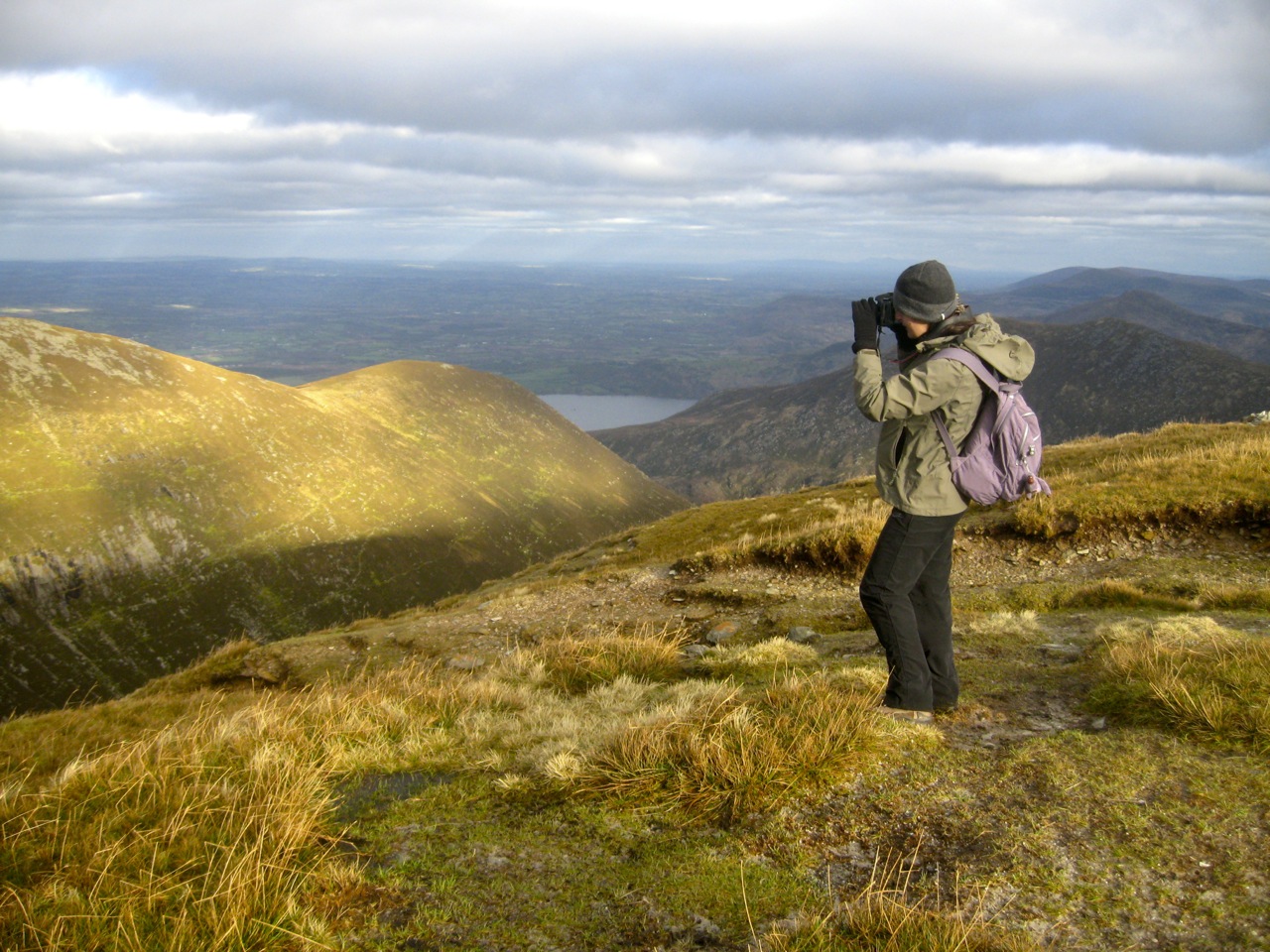
Today we returned to Lyragoppal in the Galtee Mountains. The weather was good, but it became quite cold and windy as we reached the summit. Visibility at the top was not so good, which is a pity because the view from the top is expansive and quite breathtaking.

The walk itself took just under 5 hours. The walk itself was not too difficult, although the journey to the summit was quite a climb.

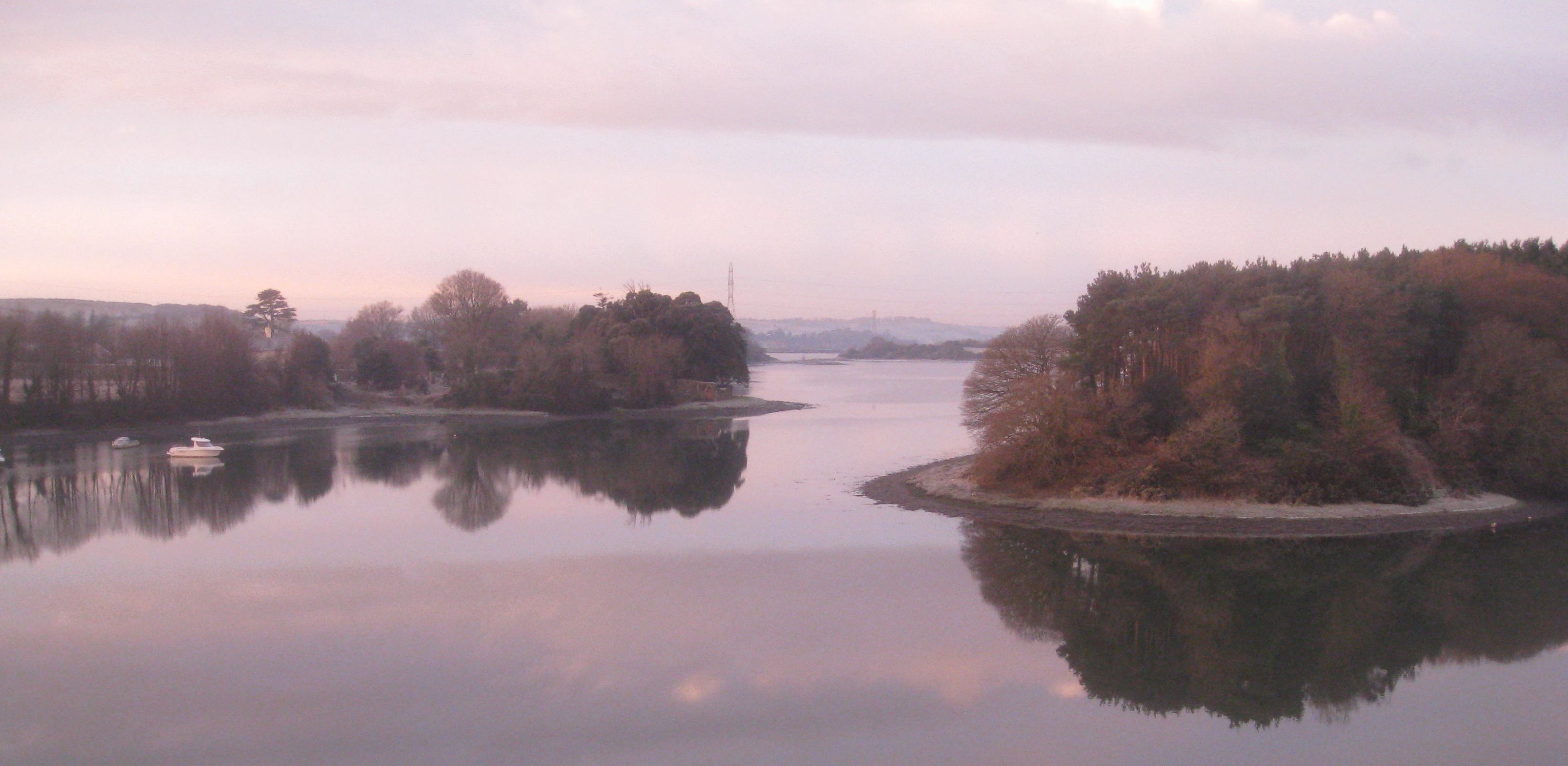
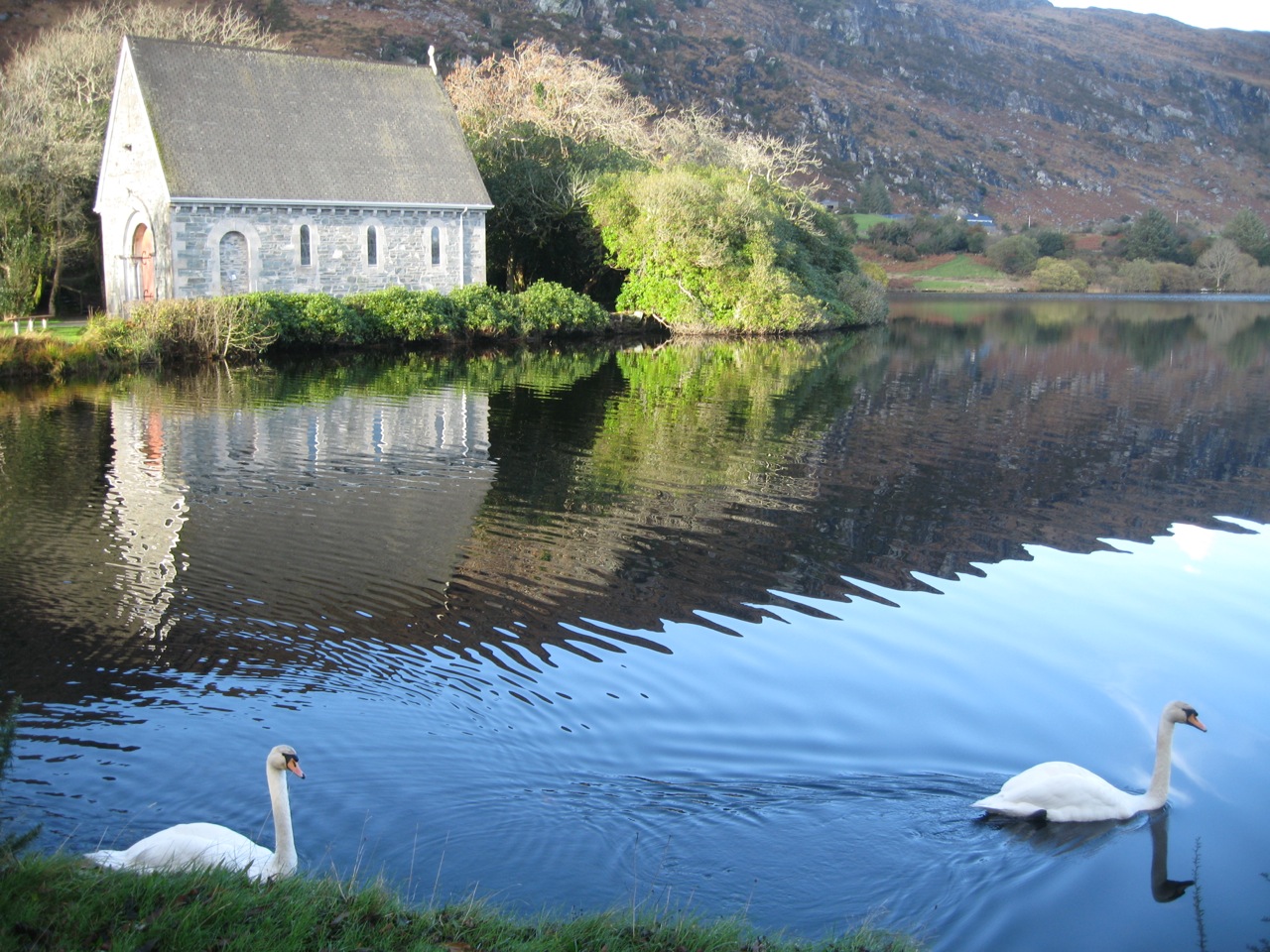
Last month, just before the sun rose in the east, I parked my car beside Loughaderra Lake, taking a moment to exit from the busy line of commuters rushing towards the city. An engaging mist was rising slowly off the water and swans lazily paddled through the ripples. It was a gentleness quite in contrast to the busy N25 road alongside it that streaks its way through East Cork.

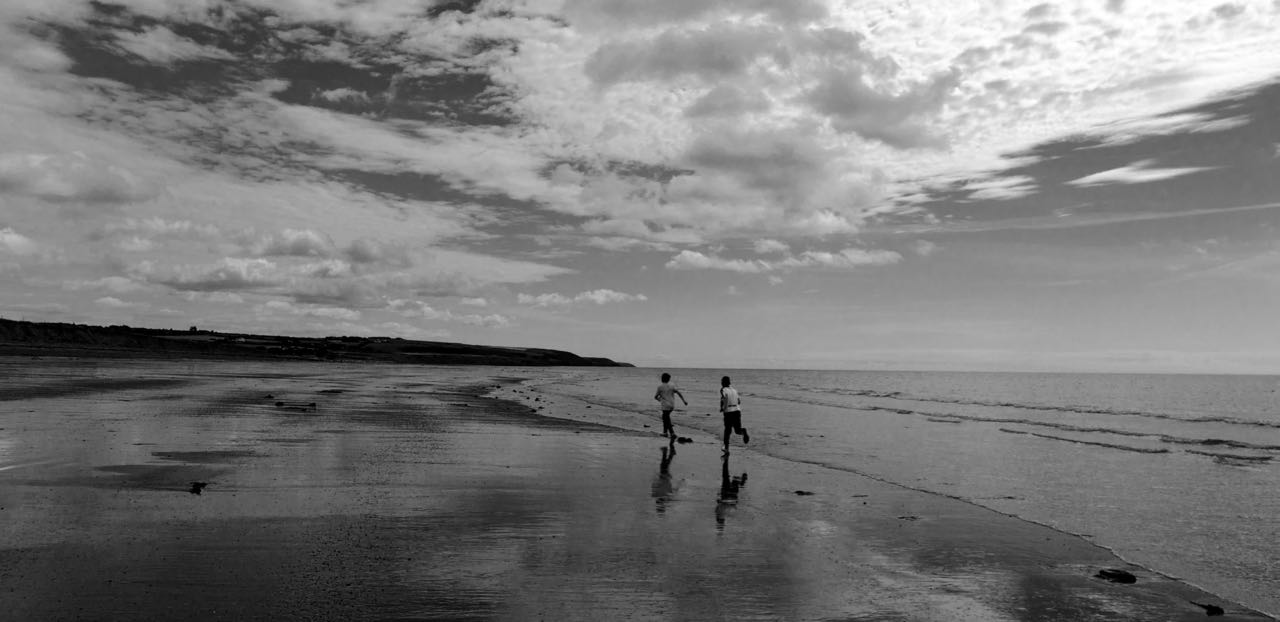
I took a short walk down to Garryvoe beach today. It was a calm, cold October day with plenty of sunlight bouncing off the sea and the shoreline.

The red and white stones, sandstone and limestone, make Garryvoe a favourite of Cork daytrippers.

We had to walk quickly as the approaching clouds heralded a big change in the weather. As I am posting this entry it is raining furiously outside.

Over the weekend, Deirdre, Mark, Brendan and I took a walk in the Comeraghs: starting in the Nire Valley, crossing over to the Gap, making our way around to the Western Lakes, then climbing up to a small cairn on the plateau.

We traversed the boggy plateau, briefly encountering a “spot of bother”, when one of our group (who shall remain nameless) began to sink into the mud, saving himself using a technique with two poles that I will never forget.

After ploughing waist-deep through boggy streams and navigating through a cloudy and featureless landscape, we came to a point that we expected would lead us down the mountain. Instead of a gradual descent, however, we encountered a sheer cliff-edge. We had walked slightly further west than we had intended. We spent the next hour handrailing the cliffs until we finally discovered a safe exit from the plateau.

Just as we were going down, the cloud lifted, and we were able to make out a spectacular panorama. The walk back to the cars was almost magical, with the setting sun illuminating the valley in orange, yellow and emerald green.

It was a challenging, fun-filled, haphazard walk that we’ll remember for a long time.

I have finally yielded to the hype and I’ve downloaded Instagram. Instagram is a photo sharing app for smartphones which allows photos to be uploaded and shared. Mood filters can then be added to enhance the original.

At this time the pictures are only available on the web via services such as Webstagram.

Here are some photos from my walking trip through the Gap of Dunloe in County Kerry today.

I applied a Valencia filter to this one, creating a 1950’s effect. The old bridges in the Gap made it easy to re-create a “Quiet Man” look and feel.

We’re not sure if this boy is a pony or some sort of cross-breed. He was a great subject, though, staying bolt-still during the photo-take. The filter here was “X-Pro 11”.

This photo used a “1977” filter. From what I can remember, photos back in 1977 were pretty much like photos nowadays. The washed out look from many of these photographs is more due to the breaking down of the photographic chemicals over the intervening decades.

Finally, some lenticular clouds over the Gap, looking for all the world like UFO’s. I don’t think I used any filters at all here.

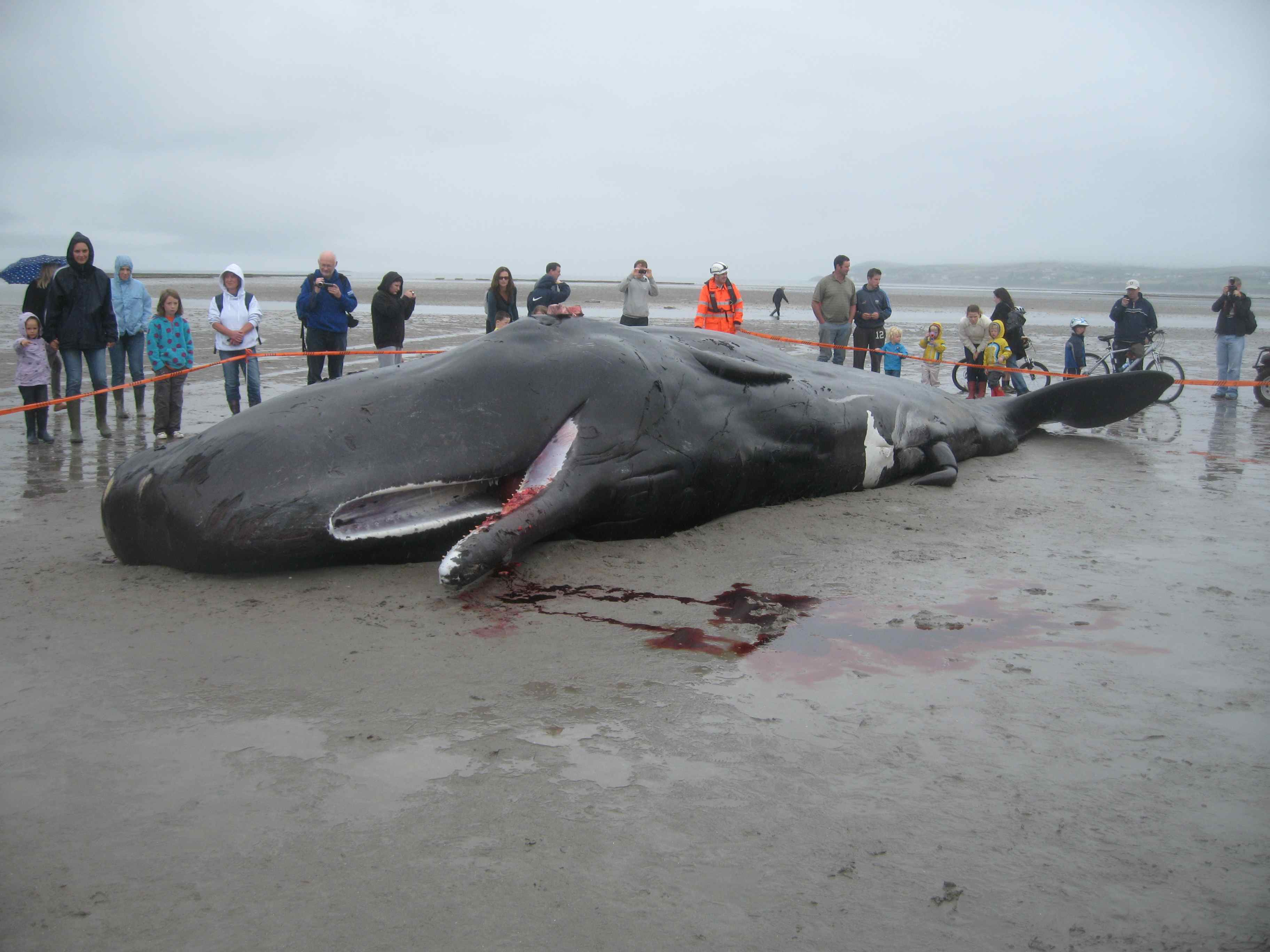
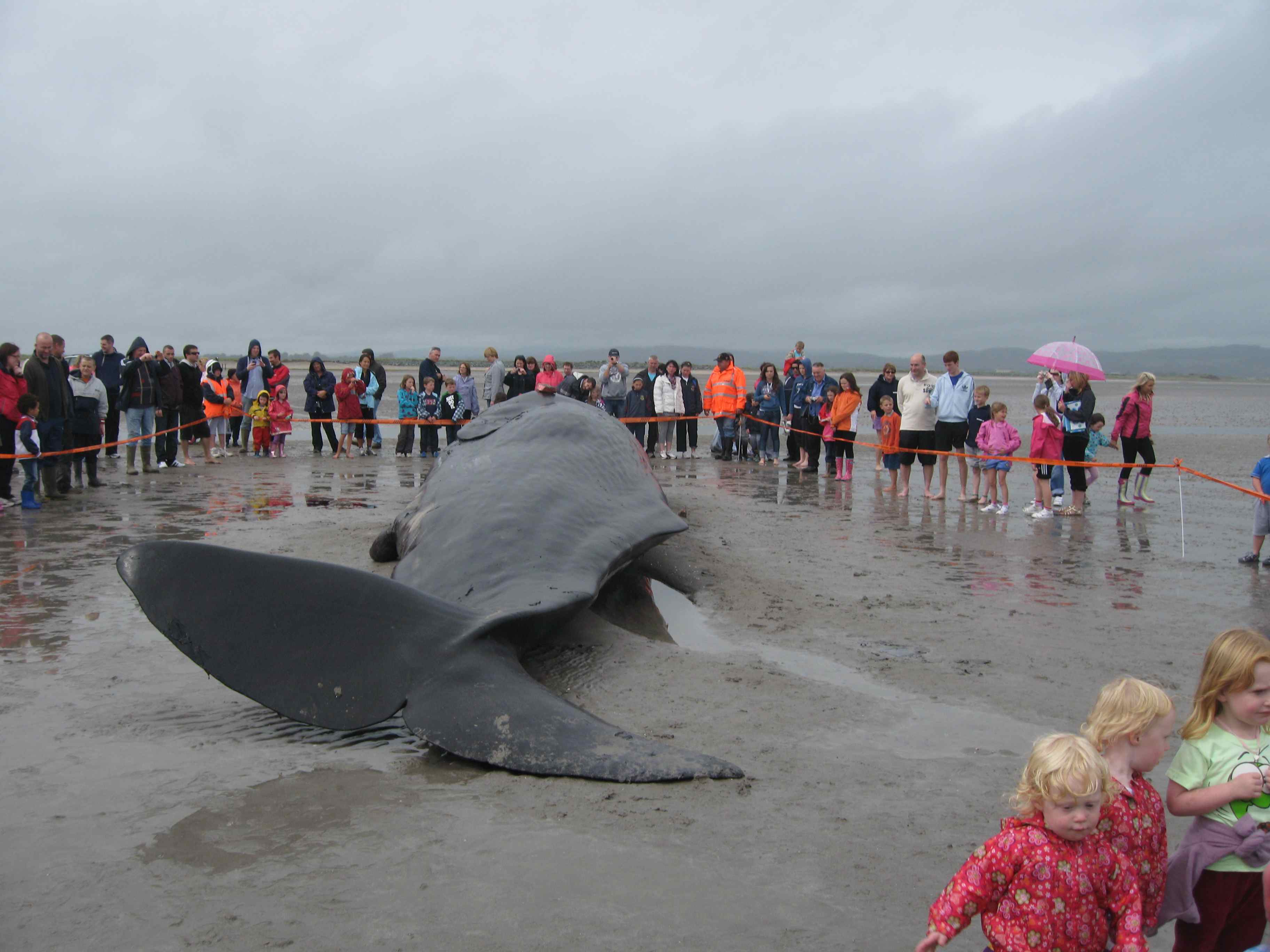
On Saturday we travelled to Ring, Co. Waterford to visit the last resting place of a juvenile sperm whale.

Sperm Whale beached off the Cunniger, Ring, Co. Waterford

The whale had been sighted off the coast of Wexford on Thursday. It was clearly in some difficulty – travelling slowly and far too close to the coast for its own good. Sperm whales spend most of the their time in deep waters off the continental shelf. It is unusual to see them so close to the coast unless there is something wrong. By Friday morning, the whale had beached itself close to the Cunniger – a long narrow spit reaching out from Ring to Dungarvan. Even though it remained alive all day Friday, long enough for the tide to come back in, it was clear to everyone that the whale was dying. Re-floating it would have been an exercise in futility.

Beached Sperm Whale, Waterford

The whale died overnight. It was not old and not even fully grown; no more than 20 years of age and measuring 10 metres from head to tail fin. It is not known why he perished. Some observers noted that he was underweight and possibly starving. A post-mortem is unlikely to be carried out, so the cause of death may never be known.

Dead sperm whale looking from tail fin

A large crowd was present by the time we arrived. Curiosity had spurred families from all around the country to see this rare, if somewhat morbid, spectacle. Scientists had taken some tissue samples earlier in the day, causing a small pool of blood to form under the whale’s mouth. For many, this would have been the largest creature they had ever seen up close. It was quite moving to see such a beautiful creature so helpless and still.

This blog entry was written to accompany my podcast for the September 5, 2010 broadcast of the 365 Days of Astronomy. The podcast can be listened to here.

One of the high points of my stay in Germany recently was a visit I made to Nördlingen on the border between the provinces of Bavaria and Baden-Württemberg in southern Germany. It’s a beautiful place. It is enclosed by a defensive wall that dates back to the 14th Century – there are only three towns in Germany with this claim to fame. All the buildings are full of character. The town was the site of two battles during the Thirty Years War and were it not for the cars and the shops, you could easily imagine yourself in another time, another era.

But beautiful and all though the town is, this is not the reason I went there. It’s Nordlingen’s surroundings that interested me the most. The town is located in a region known as the Ries: a round, flat plain with an approximate diameter of around 23 km (15 miles).  This area is quite different to the surrounding countryside as the following scale model clearly indicates.

For many centuries, the prevailing idea about how this geological feature came to be was that it was an ancient volcanic caldera. The trouble was that much of the boulders and debris surrounding the  region were of non-volcanic origin. Many ideas were presented as to how this material got there, but it’s didn’t fully add up. The origins of the Ries remained controversial until fifty years ago.

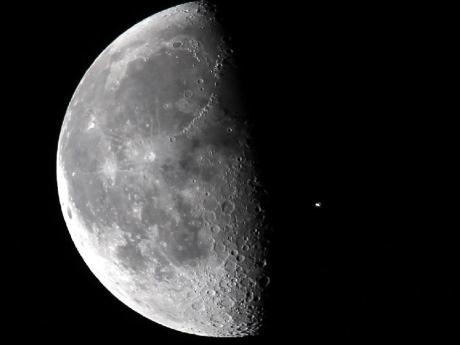
Enter Eugene “Gene” Shoemaker. Gene was an astronomer and he had a few questions. When he looked at the Moon he saw a landscape quite different to the Earth. Everywhere on the Moon he saw craters. Big craters, small craters, enormous craters. Why then was the Earth practically devoid of them? Was it credible that the Moon could be subject to the slings and arrows of outrageous impacts while its larger sister, our planetary home, missed them all? He was convinced that the evidence for impact craters must exist on Earth, but where were they all? Gene had a good idea what kind of material would be created when a large object hit the Earth. It was just a matter of finding it.
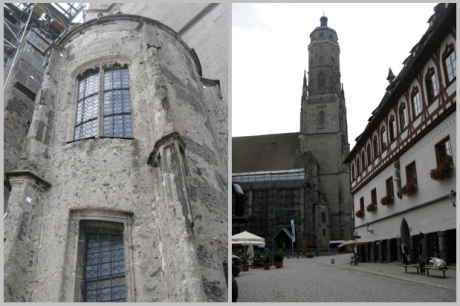
Gene found the answer in Nordlingen. During a visit to the town in 1960 he became fascinated by the stones of St Georg’s Church in the centre of the town. He immediately realised that the church walls contained coesite, a material only created as a result of a massive meteorite impact. The rock had been mined locally from the Ries. This lead to a simple, stark conclusion. The Ries had been formed as a result of a gigantic meteor impact. “It was the first big impact crater on the Earth that we could prove was an impact crater, and that just changed the whole ballgame”, said Shoemaker.
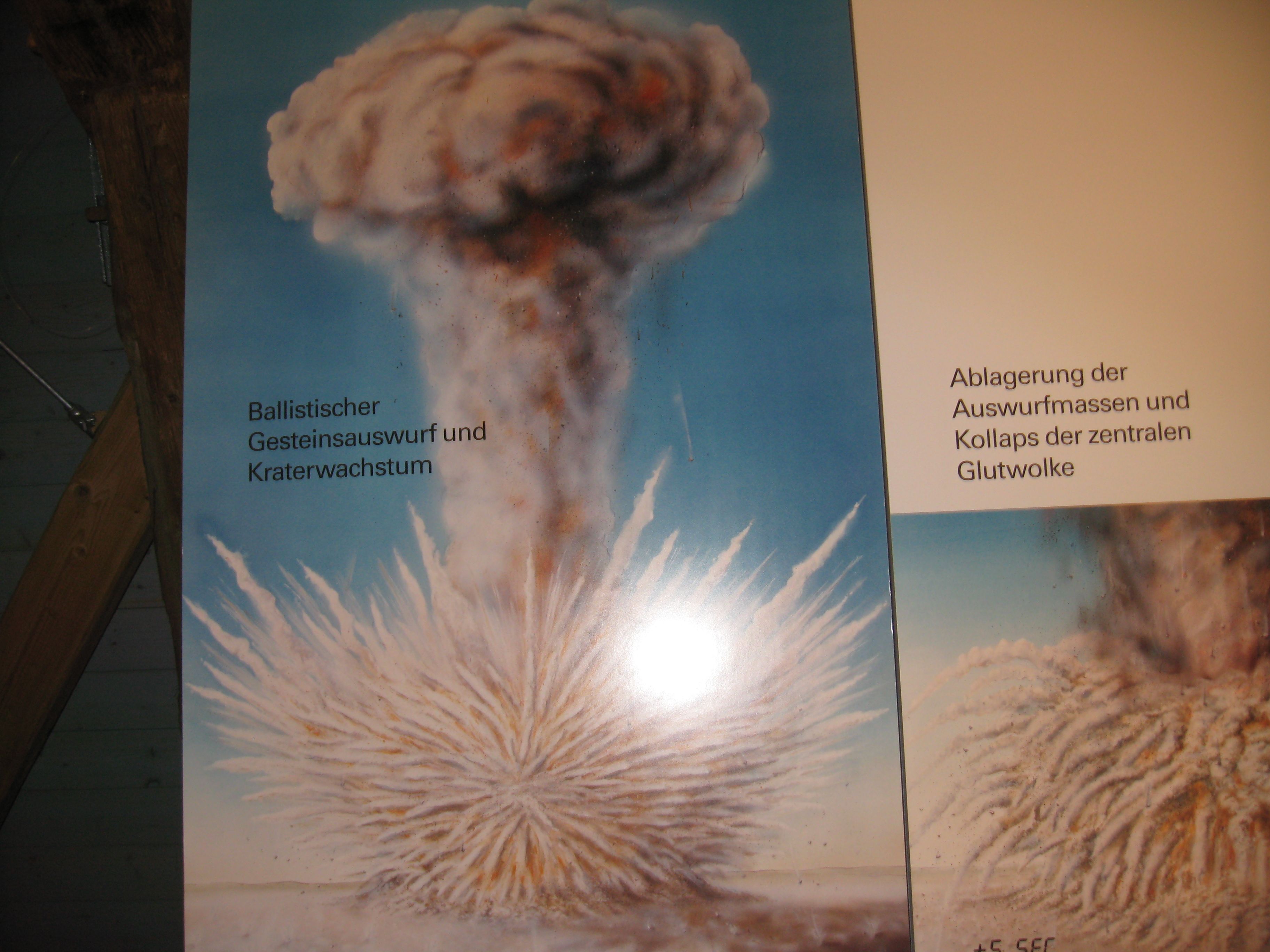
Here is what we know. 15 million years ago, two large objects, one measuring up to 1km in diameter, crashed into southern Germany. The large object hit Nordlingen. Hitting the ground at a speed of 45,000 km per hour, it punched a hole 4km deep into Earth’s crust, vaporising on impact. The surrounding rocks were compressed to a quarter of their size by the impact and they responded with an explosion measuring 18,000 megatonnes of TNT, hundreds of times larger than the greatest nuclear bomb ever detonated on this planet. An enormous shock wave killed all living things for a hundred kilometers in every direction with devastating effects felt much further afield. A mushroom cloud 30km high was generated. Much of this cloud, composed of melted rock from deep within the crust, subsequently fell back to earth, covering the crater and the region around the Ries with a material known today as Suevite. The church of St Georg in Nordlingen is built from this material.
A massive amount of bedrock was ejected ballistically, forming rocks known as Bunte Breccia. The deepest rocks landed close to the impact zone while rocks close to the surface were hurled over great distances. Some limestone blocks have been found 70km from the crater while glassy rocks known as Moldavites have been discovered 400km away in the Czech Republic.
The 1km deep hole left by the impact became a lake and life returned to the Ries. Over time the lake itself became clogged with sediment and subsequent glaciations flattened out the region into the wide plain we see today.
A particularly good place to see the crater expanse is the Daniel, the steeple of the aforementioned St. Georg’s Church. From a height of 80 metres you can see in all directions the flat, fertile countryside with the hills forming the outer crater in the far distance.
A smaller meteorite simultaneously hit the region of Steinheim am Albuch, 40km away from Nordlingen. While the resulting crater was much smaller – just 3km in diameter – a distinct central uplift remains. Steinheim is a village well worth visiting. There is an excellent little museum in the hamlet of Sontheim im Stubenthal and plenty of well marked trails with wonderful views of the crater.
Addresses
Nordlingen:
Rieskrater Museum
Hintere Gerbergasse 3
86720 Nördlingen, Deutschland
09081 273822-0
Steinheim
Meteorkratermuseum
Hochfeldweg 5
89555 Steinheim, Deutschland

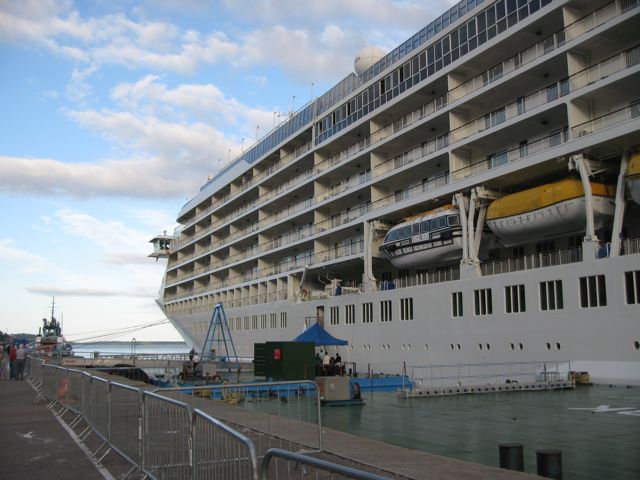
The World cruise ship came to Cobh yesterday. It will be berthed in Cork Harbour for the next two days. It’s an interesting concept: the passengers own their cabins and many of them are long-term residents. It’s like a floating apartment block where the view outside the front window is constantly changing. A way of living that chases the summer around the globe, if you like.

Here are some pics from yesterday evening.

Wishing everyone a relaxing and peaceful day wherever you are.

I’m just back from a trip to Germany. I started in Munich, proceeded to Stuttgart and ended up in Wiesbaden.

A couple of random things from my trip:

Munich Airport

In all the flights I have made – and I have flown hundreds of times – I have never seen anybody freak out when the plane is taking off and landing. This unblemished run ended last Saturday, when the woman seated in front of me had a full-blown panic attack. As the plane took off, the poor woman started to hyperventilate, emitting regular eeping noises as we hit any bumps or turbulence. She let out a full blown scream at one stage when the plane encountered an air-pocket in the cloud layer. She relaxed completely once we reached cruising height, but as the plane began it’s final approach, all around her were treated to a repeat performance. It must be terrible for her, as such an atavistic fear is not easily remedied.  

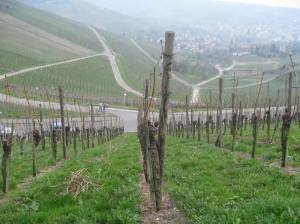
Vineyards on the Wuttemberg (Stuttgart)

The German train system is pretty unforgiving if you make the mistake of leaving a suitcase on board. I had only stepped out of the train at Munchen – Pasing, when it dawned on me that something was wrong. Too late. Doors had closed and my suitcase was happily on it’s way to the small village of Geltendorf, about 20 km away. Suffice it to say that my suitcase and I were eventually reunited and that I spent the rest of the day making up for that brief moment of forgetfulness.

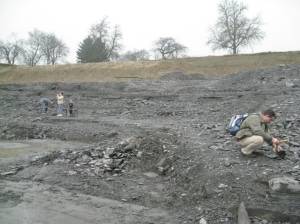
Looking for fossils in Holzmaden

I can add fossil hunting to my list of achievements. One of the high-points of the weekend was a trip to Holzmaden, where some fantastic Jurassic Period fossils have been discovered over the last century. There is an open quarry there and members of the public can extract their very own fossils from the bedrock. We collected a nice set of ammonites and belemnites, although how they are going to get from Germany to Ireland is anyone’s guess. 

Fountain in Wiesbaden

Other highlights were a trip down the Rhine and a relaxing day in the beautiful city of Wiesbaden. The public park next to the casino in Wiesbaden is particularly attractive. I was also struck by the friendliness and helpfulness of all the people I encountered during my trip. It’s definitely worth a visit.

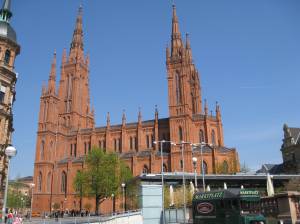
Marktkirche in Wiesbaden