Yesterday, all the roads around us were closed off to allow a one-day rally to take place. It was quite an event, with dozens of souped-up cars powering their way around these quiet roads; revving and backfiring and braking and changing gears with furious intensity.
Many of the cars were part of an era now long gone: Ford Escorts, Talbot Sunbeams, Opel Kadetts. A few Honda Civics and Toyota Corollas made it through too, but the older cars, particularly the Escorts, were there in great numbers.
Single shots don’t convey the speed and might of these cars, so I used the “Slow Shutter” app on my iPhone to take photos. It takes multiple photos over a short period, then merges the photos into a single image. I used a “Light Trail” setting to get the desired effect, putting more emphasis on the last photo in order to get a clear primary image. It wasn’t the easiest thing to do. To achieve the desired effect, I had to start filming one or two seconds before the car passed by. Too early and the car would still be too far away. Too late and the car would have disappeared before filming stopped. Nevertheless, I got a few good shots from the event, making it all worthwhile.
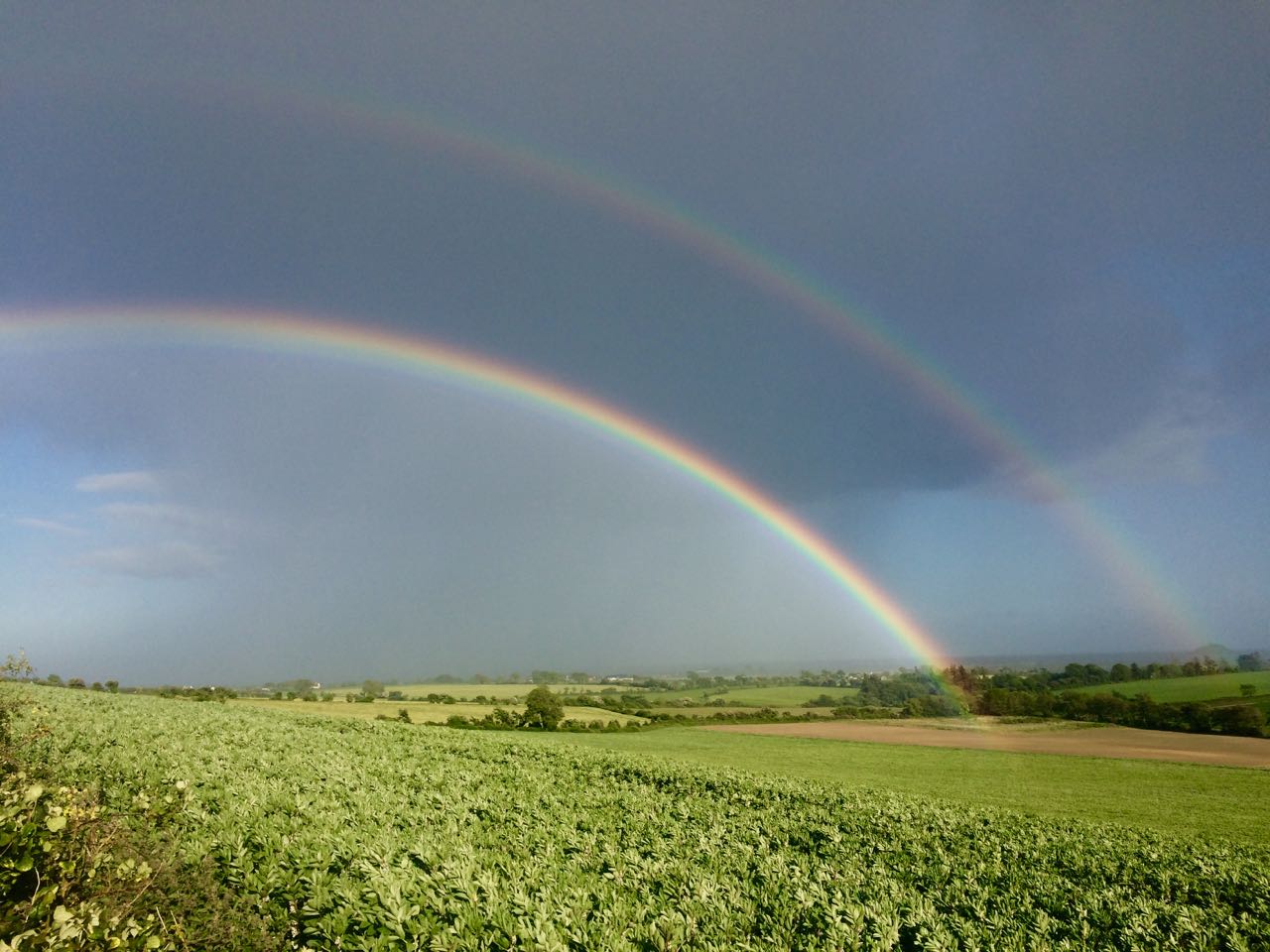
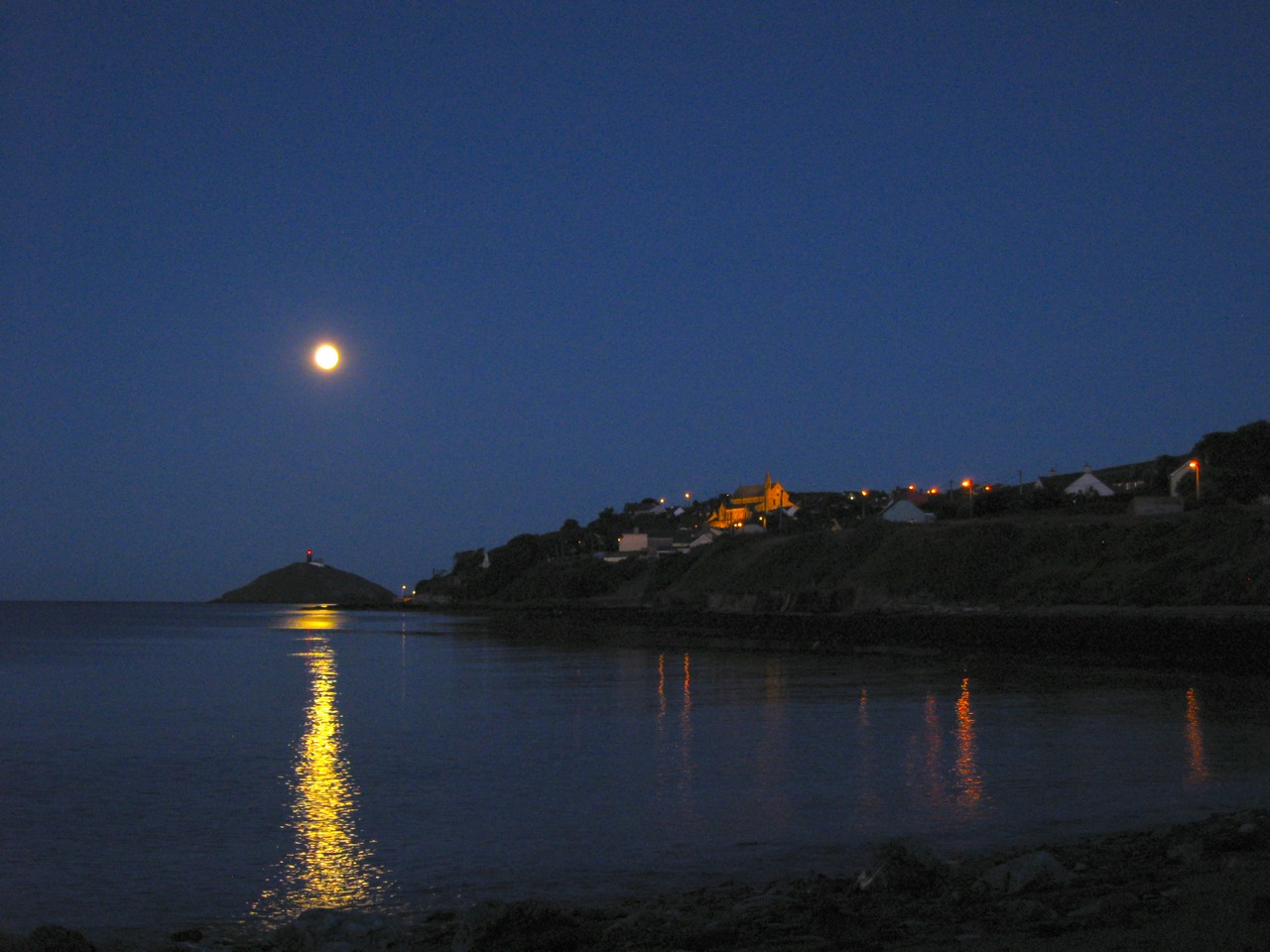
I’m just back from two very enjoyable weeks in Southern Germany. This time, we travelled through France; starting in Cherbourg and passing by Rouen, Paris, Metz, Strasbourg, Karlsruhe and Stuttgart: a journey of 13 hours. On the way we encountered violent rainstorms, beautiful rainbows and a wonderful “supermoon” as it rose over the fields of Verdun.
A big highlight of the trip was our trip to the Mercedes Benz Museum in Stuttgart. It’s a wonderful place to go, even if you are not a big car lover. Daimler AG has an amazing history. In 1885, they developed the first automobile: a contraption that looks more like a horse carriage than a car; and in short order they were manufacturing everything from motorcycles, to tramcars, busses, vans and trucks. It’s a company that is still going strong after 130 years: an incredible achievement.
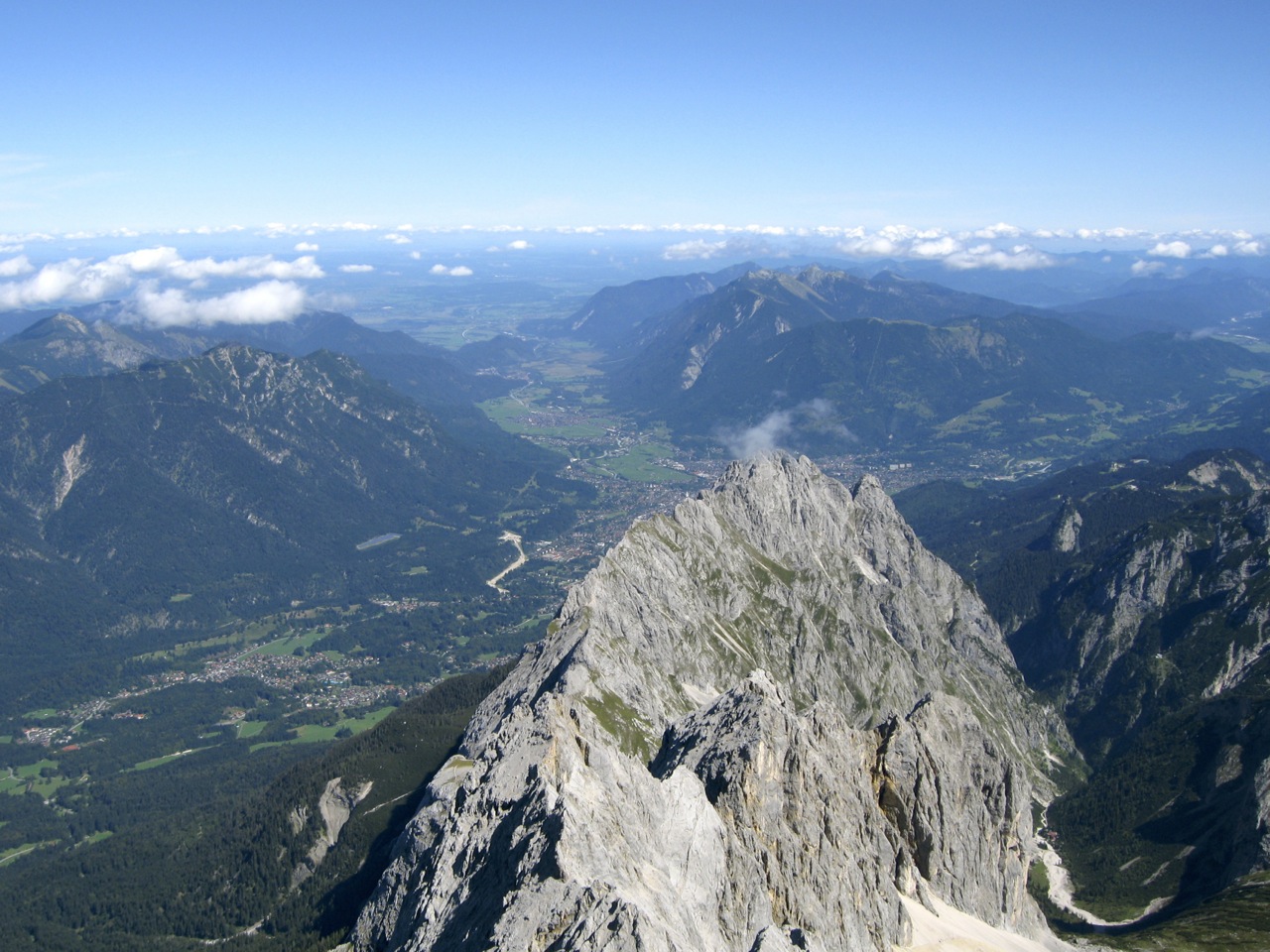
Next up was Ulm, the birthplace of Albert Einstein and the city with the world’s tallest steeple, the view from which is superb, if a little unnerving. As for Einstein, his family left Ulm while he was still a baby and the apartment itself was destroyed in the War. All that remains of Bahnhofstrasse 20 is a nondescript memorial not far from the railway station.
A day later we were relaxing by the shores of Lake Constance, the great alpine lake shared with Austria and Switzerland. We spent the day between Überlingen and Meersburg, finally taking a ferry back to Friedrichshafen. Above us, a lonely Zeppelin meandered across the lake – a relic of a bygone era.
The weekend gave me a chance to go up in a glider: taking off from Berneck, high in the Swabian Alps. It was wonderful, and not a bit uncomfortable. In Germany, kids as young as 14 can get a gliding license. It’s often the first stop on the way to becoming a pilot.
Next up was Nuremberg, a city of great fascination to a history enthusiast like me. It was here where Hitler’s great rallies were staged, and here where the remnants of his monstrous regime were picked apart for all the world to see: his henchmen called to account for their crimes. I wish I could have spent more time here, as the city itself has so much to offer, from a grand medieval castle to a fascinating transport museum among many other things. Next time.
The next day I went to Tübingen, a famous university city just south of Stuttgart, home to many intellectual heavyweights such as Kepler, Hegel and Alzheimer. With its many alleyways, nooks and crannys, it’s wonderfully picturesque and captivating.
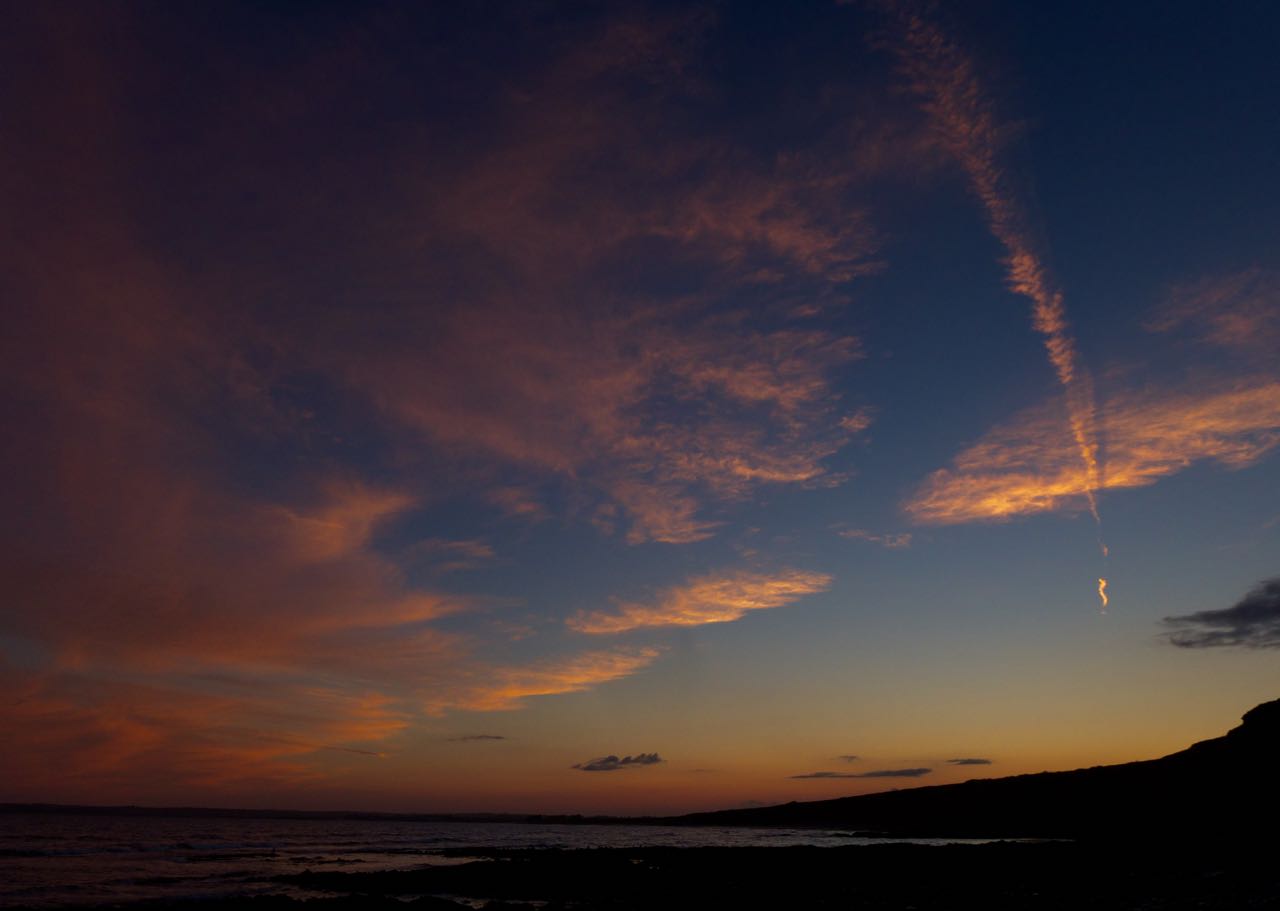
And then it was over and I was driving back across the German and French countrysides, heading once again for home. The night we left Cherbourg, I caught the most arresting sunset of my life to date. A fitting ending to an marvellous trip.
Over the past few weeks, I’ve been experimenting with a different type of time-lapse shot: one where I take just one or two photos a day, and then bring all them together into a short movie.
The subject was an oilseed rape field close by the house. I noticed it was coming into bloom, so I decided to follow its progress as the entire field turned bright yellow over a two week period.
The resulting video captures the changing weather of our country. Every day brings something new, as rain gives way to scattered clouds, with the occasional sunny day thrown in every so often. Another reminder of the beauty of our countryside.
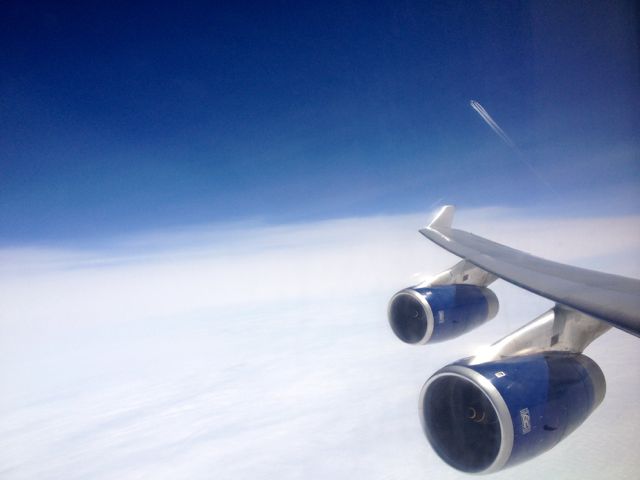
I took a flight to San Francisco yesterday, and I had the good fortune to be beside a window during the flight. The views outside were wonderful.
Flying over Scotland, I chanced on a jet flying close to us.
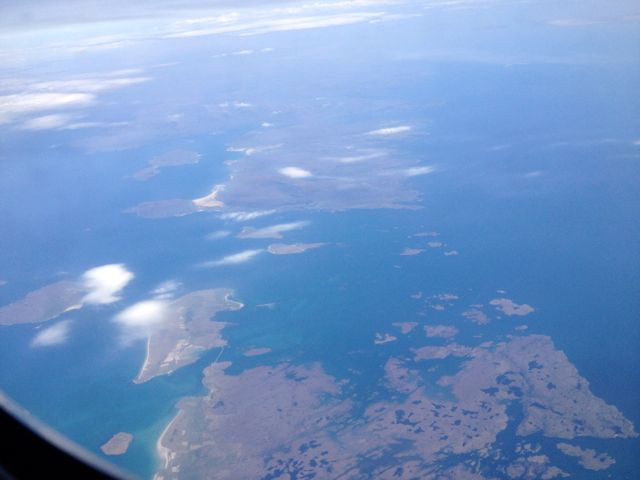
Scottish Hebrides. The last land visible before heading out over the Atlantic.
The most important city in Ireland. Clearly.
Arctic wastes over northern Canada. We flew straight over Iceland, but unfortunately it was covered in cloud, so I saw nothing. A pity, as it flew over Katla and Reykjavik.
This was taken over the Columbia River in Washington. I love watching the vast circular fields. From this distance, they look like small wafers of silicon.
This is Mount Shasta, a 3,000 metre high volcano dominating the landscape in Northern California. It last erupted in 1786, so it’s still active.
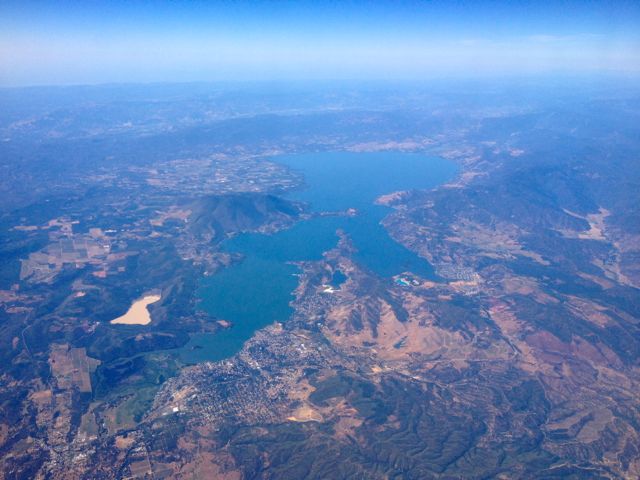
This is Clear Lake, in the hills close to the Californian coast. I thought it was Tahoe!
I took a sneak peek of the San Mateo Bridge when we were landing. It’s 11 km long, connecting one side of the bay to the other.
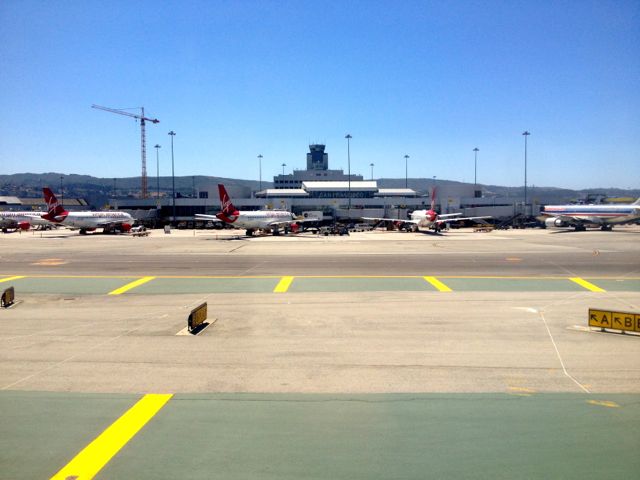
Final arrival in San Francisco Airport. As expected, immigration was a pain. It took an hour to get through customs, and then I realised I had left my coat on the plane, which resulted in further delays.
We had a anxious time earlier this week. One of our cats hitched a lift in my car when I was heading to work on Monday morning. The cat made a run for it about 100 metres from the house, but did know how to get home. That evening, despite frantic searches all around the neighbourhood, the cat was still missing.
The following day, we decided to concentrate the search in the area she went missing. Almost immediately we heard her calling out and within minutes she was safely back home.
While conducting the second search, I filmed this time-lapse. It was a beautiful evening, with a fog bank swirling close by Ballycotton island.
Yesterday, we had strong showers and hailstorms, so I set up another time-lapse as a fairly intense system passed us by in the distance. Luckily, our cat didn’t have to face that.
Instead of visiting the St. Patrick’s Day parades, we did the annual Ballycotton to Ballinrostig cliff walk. It’s the only occasion in the year when the coast is opened up to the public. In clement weather it’s one of the country’s most beautiful hikes, travelling over fields, cliffs and rolling hills with the sea to your left all the while. The walk takes in the beaches of Ballycroneen, Ballybrannigan and Inch. This 19km walk is one to be savoured every step of the way.
The conditions today were perfect. Plenty of sunshine, no winds and crystal clear visibility in all directions. As you can see from some of the shots below, the real winner were the skies: they were incredibly varied and detailed: a photographer’s dream.
The walk from Inch Beach to Ballinrostig is the most challenging part of the journey for the weary traveller. The soup and pint at the end make it all worthwhile.
I took a brief time-lapse movie at the end of the walk. This video details the slowly rolling clouds from Inch Beach. I hope you like it.
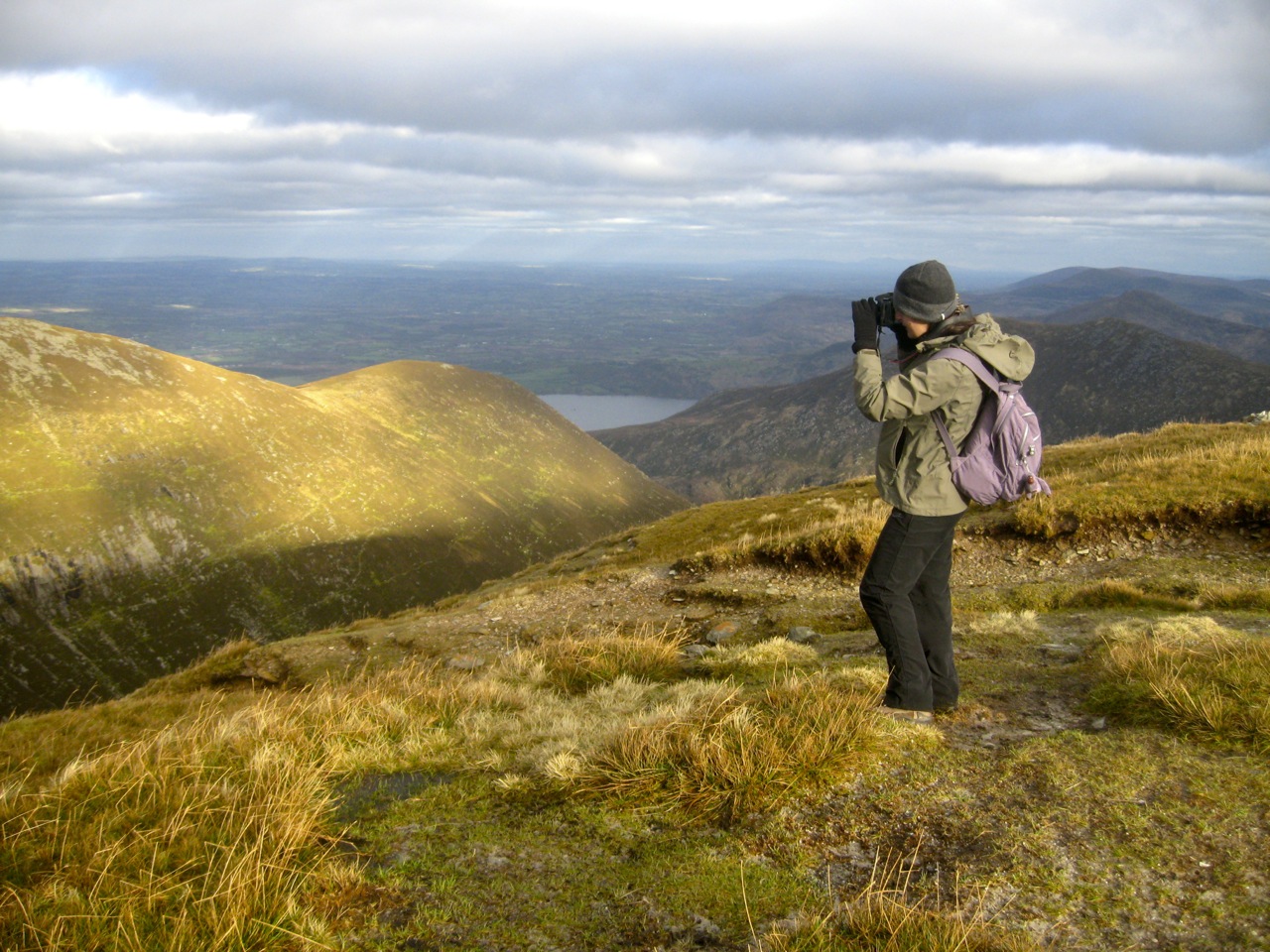
Today I climbed Temple Hill in the Galty Mountains. While Temple Hill is neither the highest, nor the most challenging peak in the Galtys, the walk is enjoyable with a rewarding view at the top. It’s a good introductory walk for novices too – the pathways are well marked, the ascent is mild and not too muddy. All in all, something of a gem in the Galty mountains.
Visibility was good, but temperatures were below zero and there was a slight breeze. An extensive sandstone cairn at the top provided some comfort from the bitter winds.
While at the top, I set up the tripod and took a time-lapse movie looking over at Lyracappul. It’s about 20 minutes of footage squeezed into just 37 seconds.
Every Saturday, Granddad obliged us to go on walks with him down to Gyles’ Quay, a mile’s walk from our house. We would do anything to avoid these walks, hiding in wardrobes or scooting under our beds, fervently hoping he would give up and go without us. It never worked. Inevitably we were discovered and soon we had our coats and boots on, all the while grumbling against the injustice of it all.
The Gyles’ Quay walks formed the backdrop to our childhood. Granddad would tell us about life at the turn of the century. He would regale us with stories about the Titanic and the two World Wars. Occasionally he would bump into friends he grew up with – we would while away these interludes playing with Major, a small mongrel dog who always accompanied us on these journeys. In truth, we always enjoyed these walks, especially since there was a treat of a chocolate bar for us at the end.
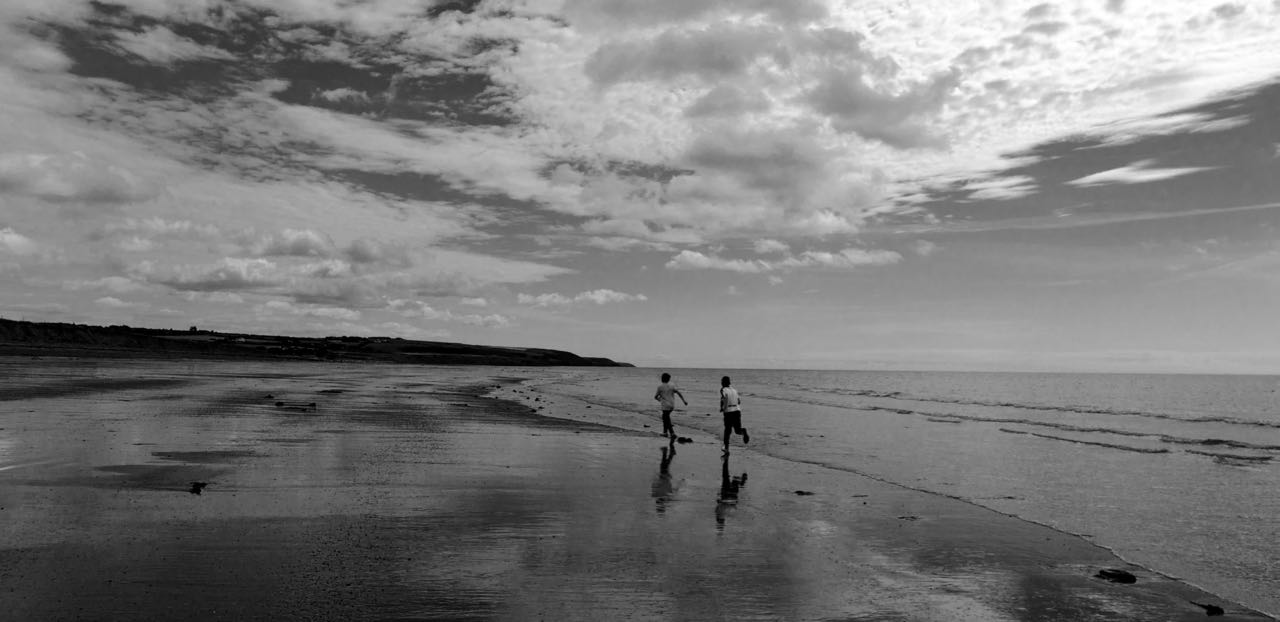
Today, I visited Gyles’ Quay with my 10 year old daughter. I talked to her about Granddad and Major, the old people we would meet, and how I nearly gave my Granddad a heart-attack, running in front of an oncoming train on one occasion. I was amazed how much I remembered from those years. To her, it was like a window opening into the past. It was a memorable walk for both of us.
Little has changed in the intervening thirty years. For sure, there are more houses on the opposite bank of the river. The railway no longer carries passengers between Waterford and Rosslare. Otherwise, it’s the same place. The smells, sights and sounds are as they were. The plants and the trees, the old lighthouses, Waterford Castle, the tiny fresh water spring bubbling up from the road by Halpin’s farm – all frozen in time. This is my childhood. My trip down Memory Lane.
There’s something about Cork City on a damp Saturday morning. It’s as if the city itself is recovering from the night before. There is a fragility and a softness to the place. It’s a town in dire need of a cup of strong coffee.
A few hours later and it will have its act together. By then, the moment will be lost.
This weekend I was mostly playing around with my new camera. It’s a Panasonic Lumix LX7 and it has a gazillion different functions and features. Do you remember the days when most cameras had two functions: Wind and Click? They got rid of the first one, but they replaced it with 15,000 new ones, including “Quick AF”, “Multi-Expo”, “Flash Synchro”, “Wind Cut” and “Debt Cancellation”. (I made the last one up. Would be good, though).
So I took some photos. Don’t ask me to repeat these, since a) the functions are buried somewhere around page 100,334,456 of the manual, and b) I possess the memory faculties of a distracted goldfish.
Macro photos
Here I was trying to experiment with close-up items and a short depth of field. The camera does not need any special lenses. I haven’t quite got the hang of it yet.
Toy Effect
This feature is offered in “Creative Control” mode: an option that gives your photo an Instagram type feel. This picture was taken near Blackrock Castle in Cork. The effect tends to highlight objects in the centre of the photo, dimming them towards the margins.
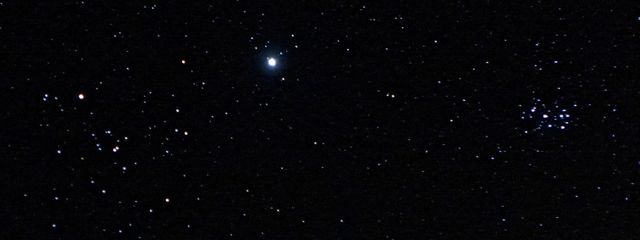
Astro Photos
This photo was taken using Shutter Speed Priority. Using a tripod, I set the shutter speed to 8 seconds and pointed the camera at one of my favourite parts of the sky. As a complete novice, I’m quite happy with the outcome. The photo, incidentally, was of the Hyades in Taurus, the planet Jupiter in the middle, and the Pleiades to the right.
Time Lapse
This video is a composite of 50 photos taken this morning, while the sun was rising. The time-lapse feature is somewhat limited, in that you can only take 50 photos, and it cannot be converted to video without resorting to video-editing software, such as iMovie. As a result the sequence here finishes somewhat abruptly.
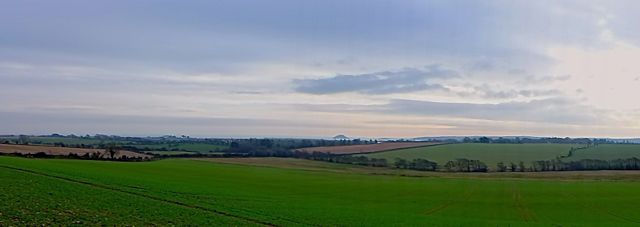
Panorama
The Panorama feature is quite impressive. You aim at the start point of the picture and as you move across the scene, the camera takes multiple exposures, quickly stitching them together into a coherent image when you have completed shooting.
Impressive Art
This feature is part of the “Creative Control” mode. It accentuates bright colours while giving the clouds an oppressive shade. The output here is quite striking.
More to learn
I still have a ton to learn – depth of field, exposure, white-balance, ISO, auto-focus and high-speed movies to name but a few. It’s clear that as far as photography goes, this Toto is not in Kansas any more.
The verdict
This camera is compact, lightweight, yet sturdy. It’s packed with more features than I could possibly imagine and it’s pretty daunting learning about it all at the beginning. If I had one gripe, it is the batteries: the camera runs out of juice a good deal faster than I would have expected. A spare battery is a necessity if you are doing any worthwhile photography.
These things considered, I like it a lot. It suits where I am, having slightly outgrown the world of basic point-and-click. Now that I have had it for a few days, I now feel I’m glimpsing the world of grown-up photography. It’s exciting, to say the least.










 Passive Impressions