Archives for category: Ireland
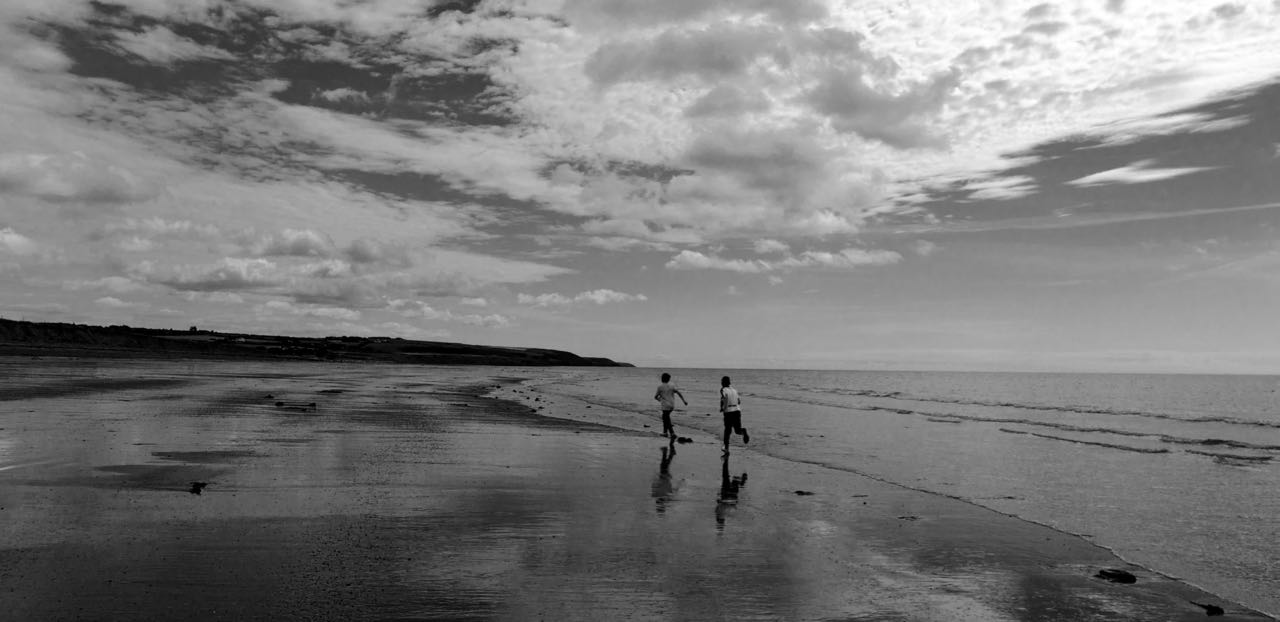
Image via Uniform Velocity

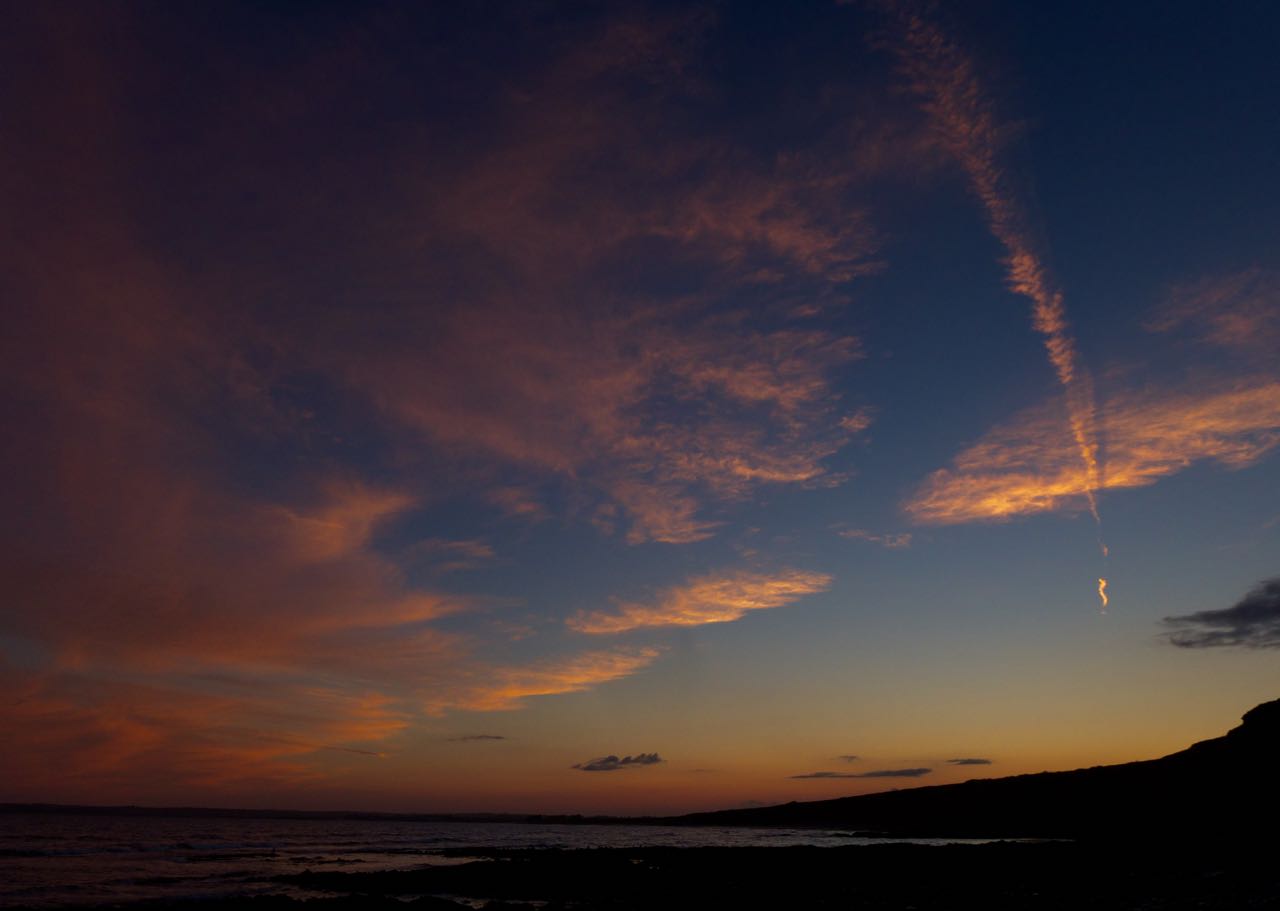
Image via Uniform Velocity

According to the Irish Times today, 42% of men in Ireland never use sun protection.

This is madness. We shouldn’t take the sun for granted. It is a killer, as 5,000 Irish people are finding out each year. All it takes is one small mole on your body to go a different colour or shape, and you could be in big trouble. Once a cancerous mole reaches the lower layers of the skin, the cancer can quickly spread around the body, virtually guaranteeing your early demise.

Most of us Irish have the wrong skin. It’s doesn’t tan, it burns. It’s replete with vulnerable moles and other blemishes. And, after prolonged exposure, it can kill you.

The answer? Stay out of the sun as much as possible and wear high factor sunscreen. Oh yeah, and have someone check out the moles on your skin. You might thank them one day for saving your life.

This is a video from an incredible day on the Skellig Islands two weeks ago. These rock stacks off the coast of Kerry are home to huge numbers of sea birds including gannets, puffins and razorbills. Skellig Michael hosts a small monastery built in the 700’s, while Little Skellig is the world’s second largest colony of Northern Gannets. Both islands are astounding in their beauty.

If you are ever in that part of the country I would urge you to check it out. Trips are arranged over the phone by contacting the operators in advance. The boat trips are weather dependent.

And now, the weather forecast…

Irish Summer

Don’t you just love it?

On Sunday I participated in an annual charity walk from Ballycotton to Ballinrostig in Co. Cork. It’s a pretty special occasion because it is the only time in the year that walkers are permitted by the local land-owners to hike the route. As the video below will testify, the scenery is quite stunning. It’s not the easiest of walks – you have to negotiate quite a few barbed-wire fences – but the end is definitely worth the effort. The weather on Sunday was unseasonably good, which helped greatly. 

So here is the video. Enjoy!

Over the last few weeks I have been reflecting on the dramatic end to the Irish boom years. The papers and radio programs can talk about little else these days. It seemed to me that we Irish lost control of ourselves, embarking on a no-holds barred journey of utter hedonism and a devil-may-care financial splurge of epic proportions.

And yes, there were excesses. I remember once meeting the wife of a builder in Co. Clare, who told me that she changed houses every 2 years. At the time, they were both living in a 4,000 square-foot pad, and they would probably build a bigger one as soon as she got bored with it.

In a more general vein, there was the epic investment in foreign properties and towering office blocks; the multiple holidays per year to far flung locations such as Mauritius and the Seychelles; the arms races between neighbours and the ubiquity of stretch limos ferrying debutantes and first holy communicants to their dates with destiny.

But despite all this, the boom years were good years: a chance to forget the day to day struggles and to approach that stage of self actualisation heralded by Maslow. Many people were permitted to set up new businesses in a wide variety of fields, from coffee shops to tree surgery to exotic footwear. The quality of everything – food, clothes, furnishings – jumped dramatically. People were better able to provide for their families and to enjoy meals and outings with their friends. Services were set up to help people to improve the quality of their lives. People could indulge themselves in their hobbies and interests. Many people worked harder than they had ever worked in their lives, fanning the flames of an entrepreneurial ethic within Irish society. For a short few years, the wolf was no longer at the door, and it felt good.

So screw it. Let’s not regret the boom years. Let’s figure out how to get ourselves back to such times as quickly as possible so that we, our families and the less fortunate in society can benefit from a bit more cash in our pockets.

As Spike Milligan once said, “money can’t buy you happiness, but it does bring you a more pleasent form of misery”.

On the day after Christmas Day, I climbed Carrauntoohil, the highest mountain in Ireland.

Carrauntoohill

Carrauntoohil is located in Co. Kerry, not so far from the towns of Killarney and Killorglin. It is part of the Magilicuddy Reeks, the loftiest of the mountain ranges in Southwest Ireland.

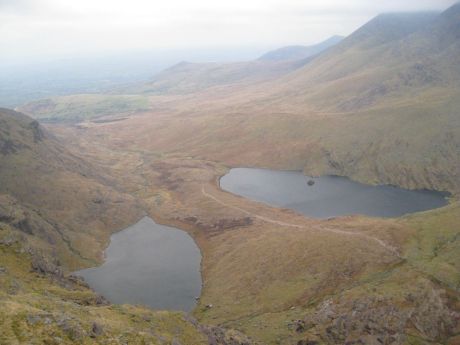
To reach Carrauntoohil, you must first negotiate your way through the Hag’s Glen, a massive U-shaped valley strewn with ancient moraine. The most usual route to the top is via the Devil’s Ladder, a steep and now quite dangerous route.

Hag's Glen

We didn’t go that way. Instead we ascended via the far more impressive Shay’s Gully route. On the way up, you can see ahead of you the clear remnant of an ancient glacier now long disappeared.

Ascending Shay's Gully

It was a long slog, but we reached the mountain peak in good time. It was like a train station at the top! St. Stephen’s Day – what we in Ireland call the day after Christmas Day – is an incredibly popular day for mountain climbing. Literally hundreds of people take the journey, and there have been more than one casualty on this day, on this mountain, in the past.

At the top

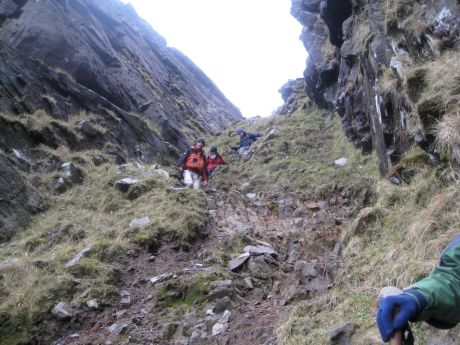
It was absolutely freezing at the top, so we didn’t stay for too long. We descended via Heaven’s Gate: a steep yet manageable and highly picturesque natural stairway to the bottom of the valley.

Descending via Heaven's Gate

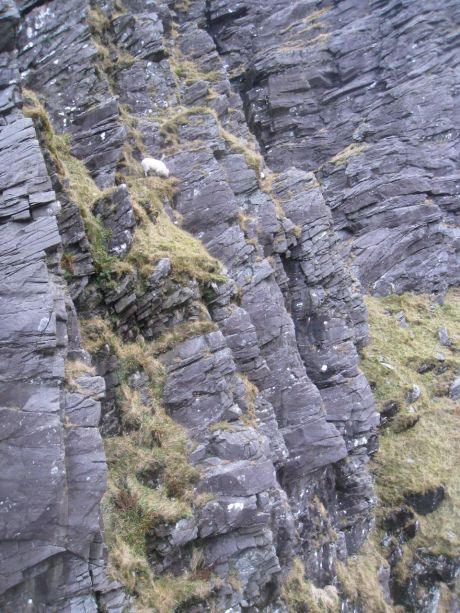
I took this picture of a sheep on the way down. And you think you’ve got troubles..

Sheep on cliff

A big thanks to Barry who lead us up and back down again. He was a great help to us particularly where we needed to negotiate steep rock walls on our way down.

add to del.icio.us : Add to Blinkslist : add to furl : Digg it : add to ma.gnolia : Stumble It! : add to simpy : seed the vine : : : TailRank : post to facebook

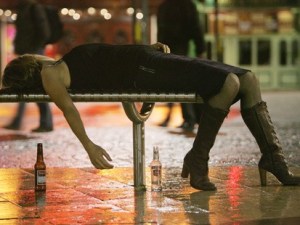
A typical night out..

We Irish are a nation of piss-heads.

First a few facts.

We Irish top the European binge-drinking league by a country mile

Drinking per capita has increased 17% from 1995 to 2006. 

In 2003, it was reported that chronic liver disease and cirrhosis was the cause of death of half a million Irish people.

Alcohol is a factor in one in three deaths on Irish roads. 

Over one in four of all injury attendances in the accident and emergency departments are alcohol related.

Enough for ya?

As I was saying: We Irish are a nation of piss-heads.

So, guess who Irish Government relies on to convince the nation that we are drinking too much? 

The Drinks Industry.

Screwed up, isn’t it?

Phelim McAleer is a film-maker who has produced a documentary challenging the climate change consensus. He appeared on an Irish political program this evening to  debate with a climate scientist, Dr. Kieran Hickey. Now I haven’t watched much of this guy’s documentary yet, but even so, his argument was full of glaring logical fallacies.* 

1) A key plank of McAleer’s argument by the sounds of it is that because the scientific consensus got DDT so badly wrong that they must be wrong this time. 

Rubbish. Even if the scientists did get DDT wrong (and I’ll bet there’s a bit more to this story than meets the eye), that doesn’t necessarily mean they are wrong on climate change. Methinks there is some selective thinking going on here. What about other scientific consensuses he omitted to mention? The connection between HIV and AIDS? Cowpox vaccination and Smallpox? Microbes and cholera? Smoking and lung cancer? Indeed, when it comes down to it: Gravity, Genetic theory, Plate Tectonics, Quantum Mechanics and Evolution are all scientific consensuses. It’s just a classic case of poisoning the well

2) Scientists have an agenda. 

The allegation here is that climate change is a big liberal conspiracy. This is an odd one, because the biggest vested interests in the climate change debate have always come from the other side! Get this: the combined revenue of the top 5 oil companies last year was 1.5 trillion dollars. 1,500,000,000,000 dollars. 1.5 million million dollars. That’s more than the entire GDP of Canada. Climate scientists were persona non grata in the White House for most of the last 8 years of the Bush presidency. If it’s a big conspiracy the financial backers must be an odd bunch indeed. Just because scientists are (according to you) bad people, it’s doesn’t make them wrong, Phelim. 

3) Climate change is a fad.

Apparently Phelim was taught in school in the 1970’s that the Ice Age was approaching in our lifetimes. In between there have been lots of fads, many of which have never come true. This argument attempts to conflate fads with real science, which is just ridiculous. Many of these fads never had any sort of consensus scientific backing. They were just media baubles – minority views that caught the imagination of the press for a period of time. Climate Change originated in the 1970’s as a seriously minority view. There was an activism bandwagon on climate change in the 1980’s which was often shone more heat than light. Cultural fads like this come and go, but the difference in this case was that real science began to weigh in over the past 20 years or so. This has swung the pendulum away from pure fad and into the realm of fact. An analogue is Wegener’s continental drift model that began as a minority view, but became in time accepted as a valid scientific theory when the science began to validate many of his arguments. Fads are not science. They lie on the margins, waiting to be validated or disproved. A lot of hard work needs to take place for a fad to become science, and in the case of climate change, this work has been carried out, with the argument pointing in no uncertain terms towards a deeply worrying future for us all. 

Here’s my biggest gripe with the whole thing. Debates are good when one person’s opinion is pitched against another person’s opinion. So if you bring the audience around to your point of view, you’ve won. Well done. A big prize to you. However, when you have a debate against a scientific consensus, then it doesn’t work so well. Even if the audience all agree with you, even if they carry you around on their shoulders in adulation, that doesn’t make your argument right. Science is not determined from public opinion. It has nothing to do with public opinion. It’s based on evidence, and the only way to challenge the science is to use the tools of science against it. These challenges do happen, but they don’t take place in public debate forums. No, they happen in scientific journals, conferences and papers, where each piece of evidence is scrutinised and debated until, you guessed it – a consensus emerges. So, even if the science is wrong in this case, Phelim, what is your alternative? Film-making?

* If you have never heard much about logical fallacies, I recommend you to take a look through this site. It may be the most educational hour or so you will spend this year.

Forget about your big rugby and soccer internationals. If you really want to see sport at its rawest and most intense, you can’t beat an under 5’s hurling match.

The ball gets hit out, and immediately 20 pairs of legs are chasing it around like a swarm of bees attacking a mischevious teddy bear. There’s always one though, idling in the centre of the pitch, completely oblivious to the game, imagining that he is a dinosaur: arms outstretched, a big T Rex lollop as he strides through his jungle. Another group in the corner are pretending they are pop stars, holding their hurleys in a way that would have made Rory Gallagher proud. It’s a goal, and suddenly a budding David Beckham travels the entire length of the pitch, completing his victory run with an authentic knee slide on the timber surface.

The game continues. Rarely does the ball come to rest, as it is harried by a score of hurleys, hitting at it from all directions. It’s a kind of social Brownian Motion, as the red team hit the ball towards the blue team and the blue team counter by scoring a masterfully planned own goal. One player rushes over to me with an important message: “Can I have an ice cream afterwards?”.

It’s getting ugly out there. A kid is knocked down, not by one opponent, but by ten of them simultaneously. Now the ball is stuck in a corner of the hall. Light itself is finding it difficult to escape from the huddle. I pity the coaches as they attempt to disentangle players from the melée.

It’s all over and my boys line up against the wall. Inexplicably, they are unbloodied and unbruised. They have only one thing on their minds: the ice creams they believed I had promised them earlier.

Make no mistake, Ireland’s future hurlers are a formidable lot.

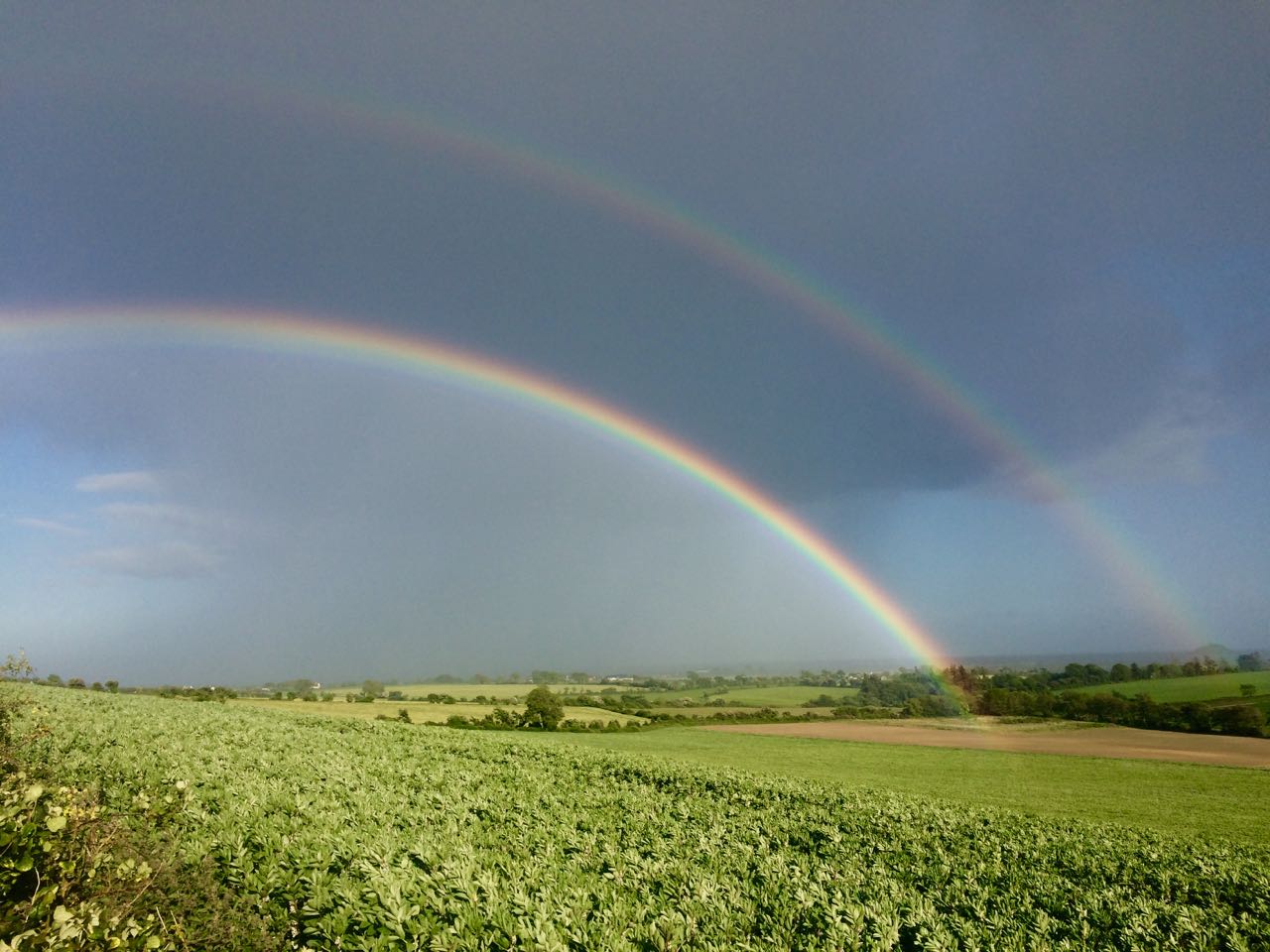
Rainbows. My one abiding memory of my holiday in Kerry this year.

We stayed in Banna Strand, a few miles outside Tralee. There is a marvelously long  beach there, plus a swimming pool and kids’ activity centre so the kids could be entertained whatever the weather. 

That’s not to say we couldn’t travel: there is so much to see in Kerry, it would be a pity to stay in one place all the time. We headed out to Ballybunnion, Dingle, Slea Head, Castlegregory, Killarney, Glencar, Crag Cave, and Fenit Harbour among many other places. All these places may be just names to you, but they are all spectacularly beautiful, especially when the clouds are changing the lighting so often. 

This is the town of Dingle, or to be correct An Daingean – the government changed its name to its Irish form a few years ago resulting in widespread uproar. All over Kerry the name “Dingle” has been erased from roadsigns with white sticking tape..

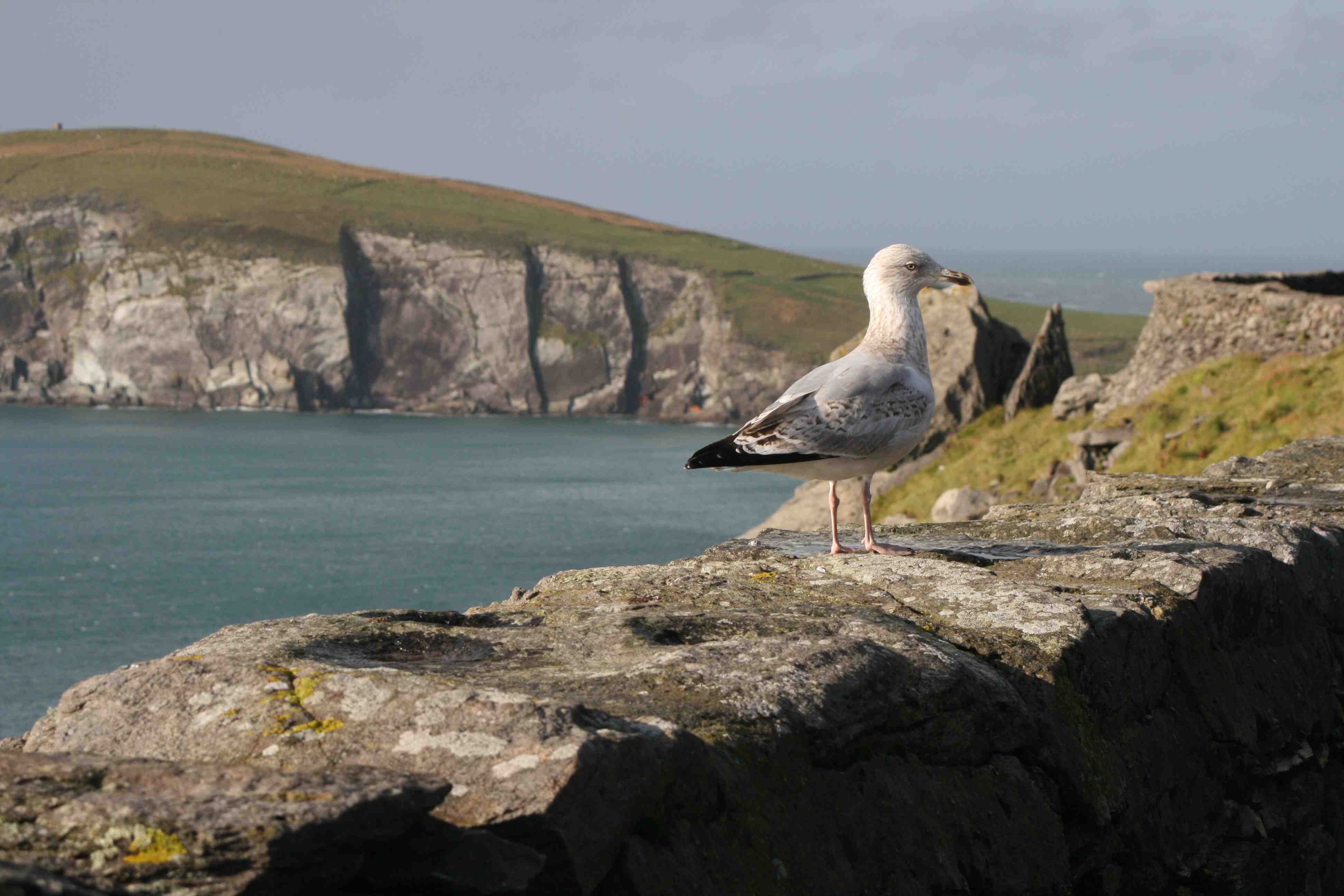
A seagull by Slea Head, overlooking the Blasket Islands. 

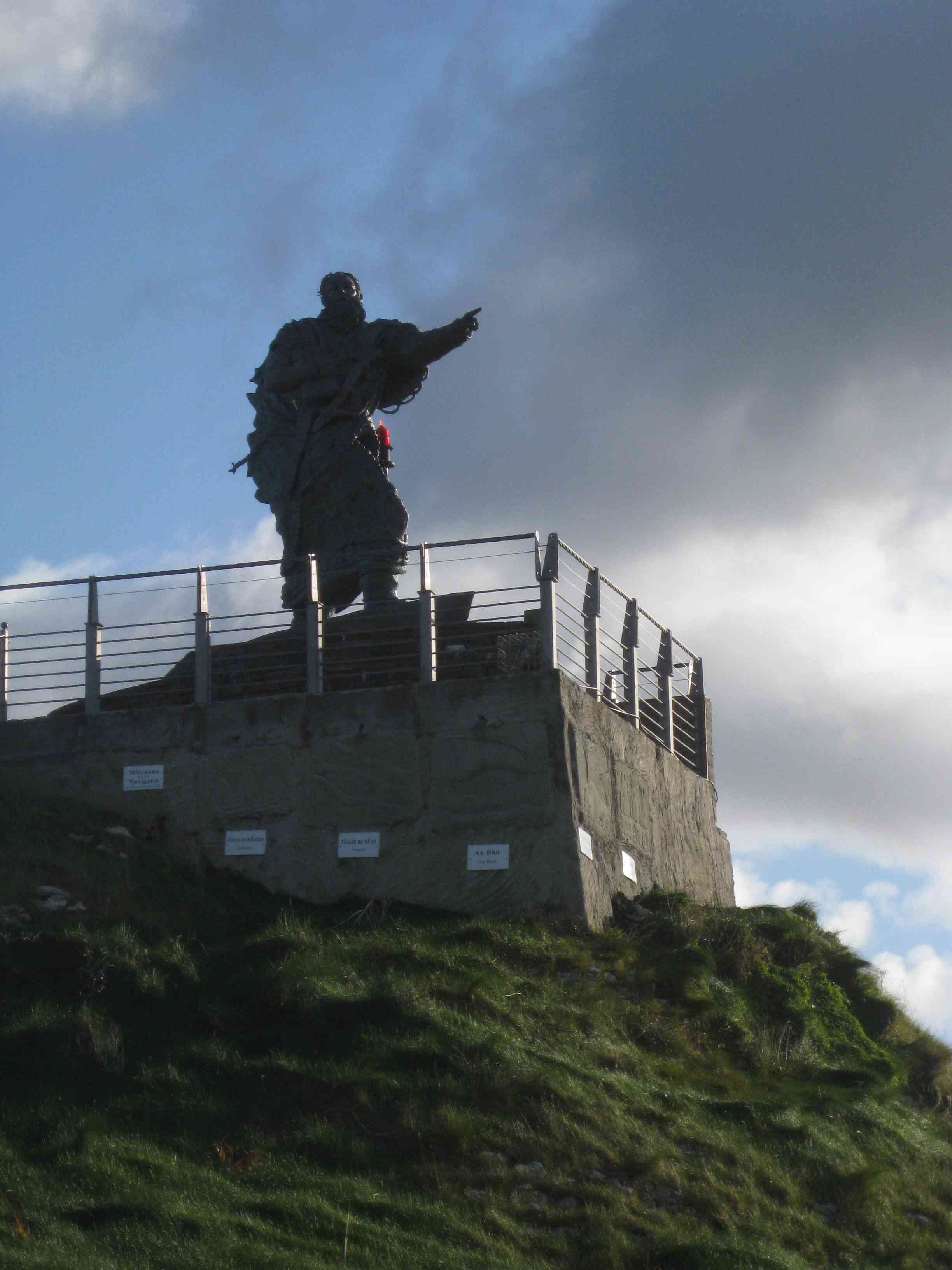
This guy is Brendan the Navigator, a Kerryman reputed to have travelled to Newfoundland and Iceland back in the middle ages.  

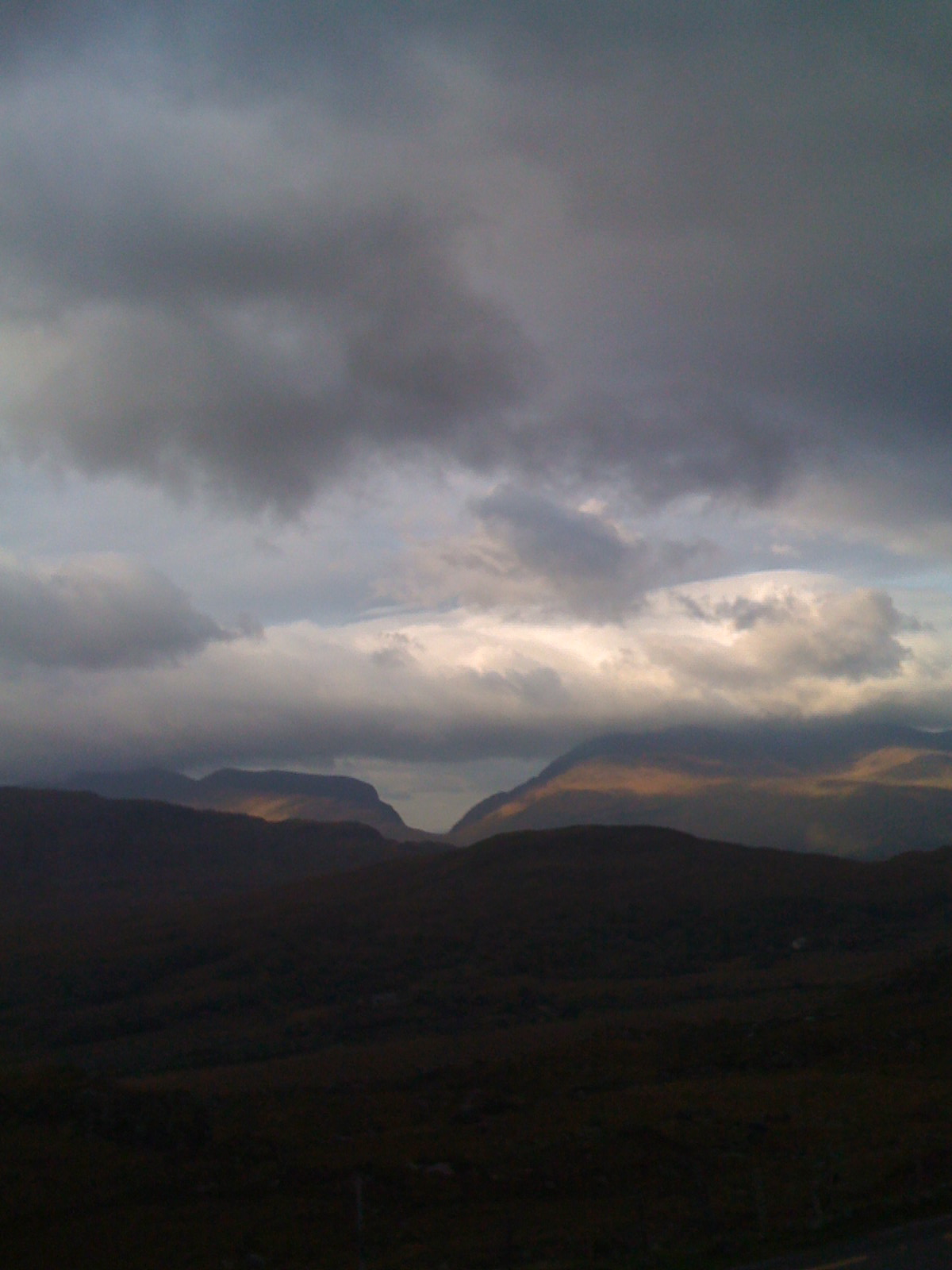
This is the Gap of Dunloe: a deep glacial valley beside the Magillicuddy Reeks (Ireland’s highest peaks). The whole Killarney area is Ireland’s equivalent of the Lake District. 

This is Ballybunnion on a freezing, stormy day.