Archives for posts with tag: Ireland

I love playing around with Google Trends. You can see when particular search terms:”recession”, say, or “bailout”, hit the headlines and world consciousness and how they have fared since then. Here’s a fascinating one, though. I typed “Irish” into Google Trends and I got this profile.

No huge surprise here. Each year, there is a big spike around March 17th for some reason. The bottom graph tells the story of the Irish financial meltdown from 2008 onwards. Curiously, the St. Patrick’s spikes seem to be declining in magnitude each year. Something to worry about, perhaps?

Then I typed in the keyword “Ireland“.

A similar pattern can be seen on the bottom graph, but what is happening in the top graph? St. Patrick’s Day is almost invisible amidst the noise and yet, each year around Christmas, the frequency of “Ireland” as a search term takes a precipitous dip.  I wonder what that is all about?

Incidentally, I can’t quite figure out what the spike in late 2007 was either. Both “Irish” and “Ireland” show a similar increase, and Google isn’t helping me to locate it.

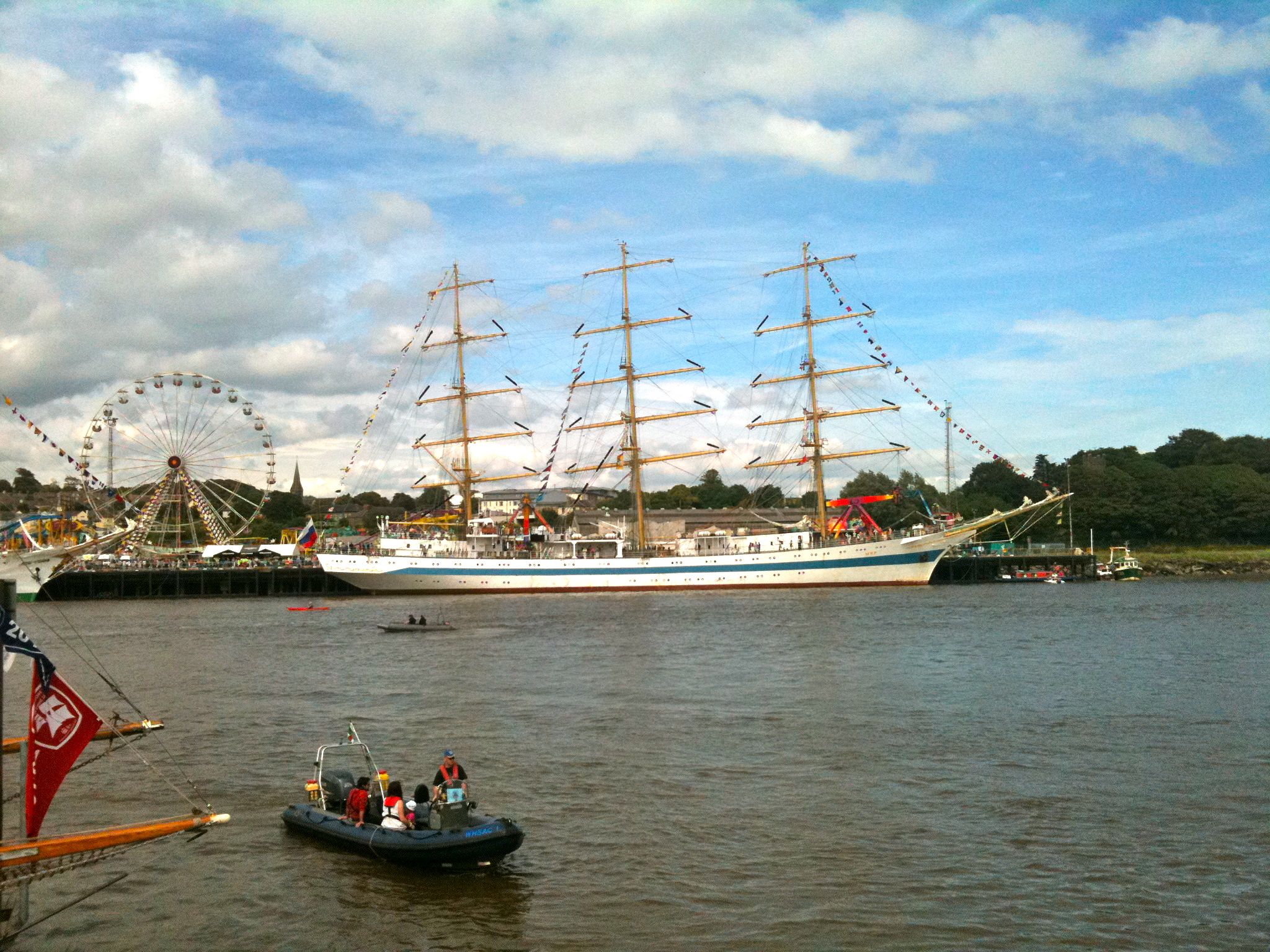
I spent Saturday at the Tall Ships festival in Waterford city. While I can’t call Waterford my home city for obscure geographical and sporting reasons, it is nevertheless the city of my education and upbringing.

And what a terrific city it is.

The Tall Ships Festival this weekend was easily the best organised event I have ever attended. It would not have been possible without the active involvement of hundreds of dedicated men and women and a project management team that were dedicated to the pursuit of perfection in making the occasion as successful as possible.

It was quite clear, right from the beginning, that the organisation was top class. Some examples:

Most of the city was cleared of traffic, creating an enormous pedestrian zone, the likes of which I have never seen. Park and Ride car-parks were in place with numerous shuttle busses and taxis taking visitors to and from the city.

Litter collectors were out in force, ensuring that the streets remained clean and the bins remained usable despite the huge crowds.

Toilet facilities were clean, numerous, and plentiful.

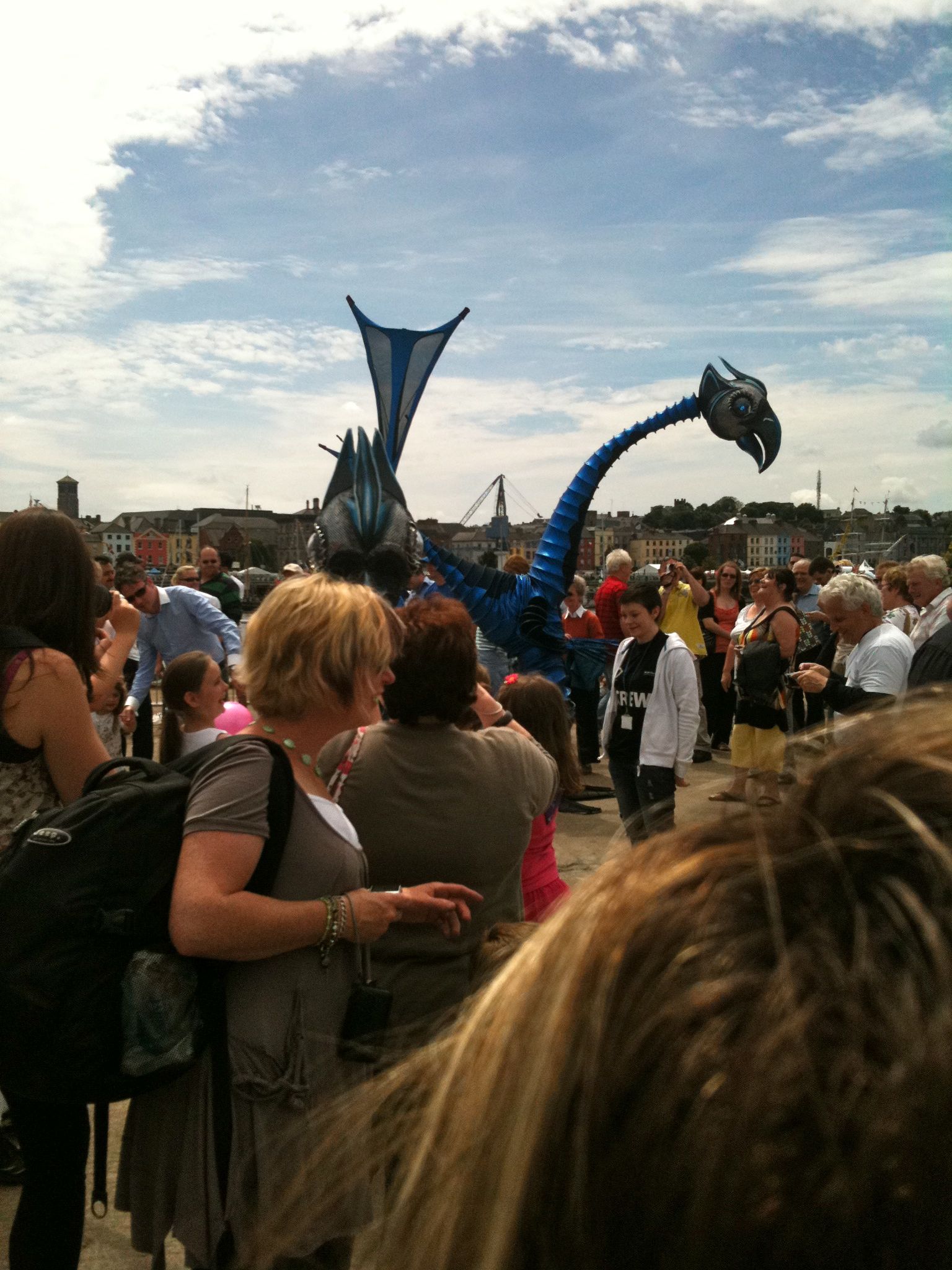
There was a large fun-fair, a crafts village, a food village and a music venue, allowing visitors to enjoy different aspects of what the city had to offer.

Booklets, signage and literature were very clear and inviting.

The variety, quantity and quality of food and drink outlets obviated any major queues or bottlenecks. This also ensured that prices remained reasonable.

Crowd barriers were sensible and unobtrusive. Indeed, security, while probably quite extensive, was very low-key.

There were numerous fringe events and street performances.

The city looked great. The shops and venues were brightly painted and inviting.

Without doubt, many arrangements were in place far away from the eyes of tourists and visitors, such as ramping up hospital staff and emergency staff should the need have arisen.

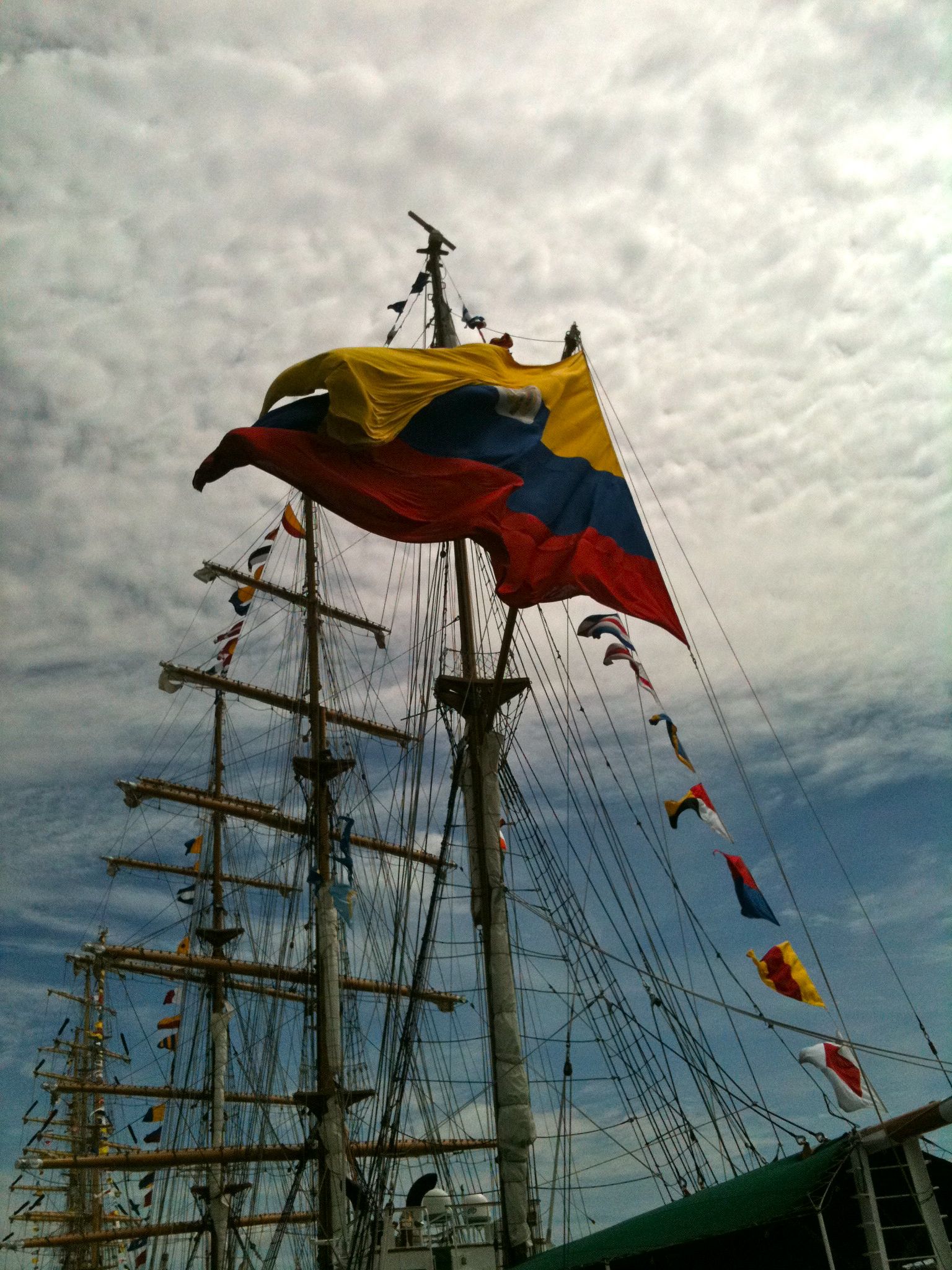
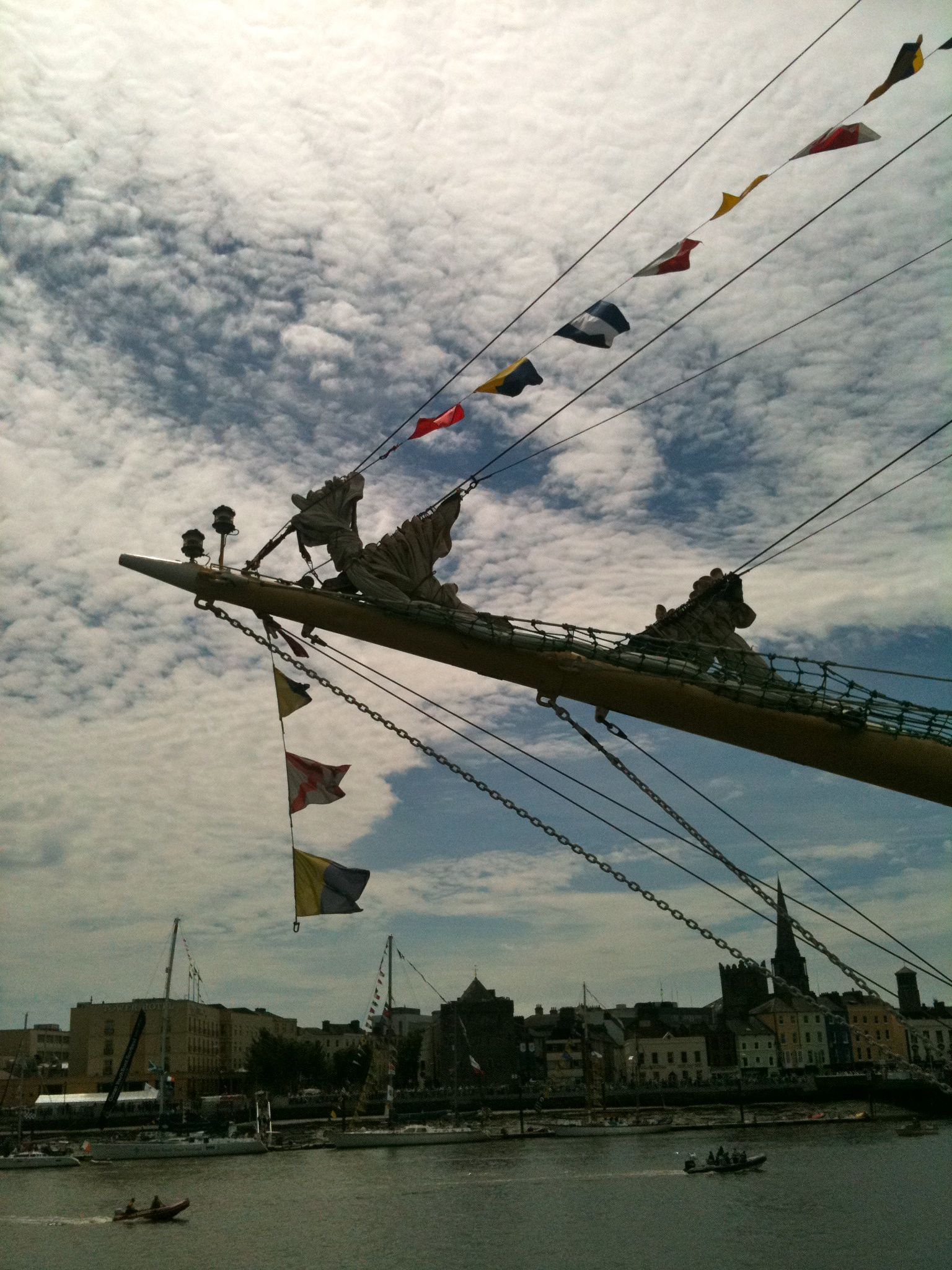
Did I mention there were ships there too?

When it comes to an event like the Tall Ships, Waterford has a natural advantage: a port area slap-bang in the centre of the city. It was chosen to be the first city on the race route, and it’s no wonder it has been invited to host the ships again in a few years time. This was a world class undertaking. The people of Waterford should be proud of what they accomplished this weekend. Future festival organisers now have a gold standard which they must aspire to meet.

We travelled once again to the Saltee Islands today, where we saw a variety of seabirds all nesting and preparing their chicks for the summer. I took this short video of the trip and I might add some photos from Claudia later. She has taken some beautiful shots today.

As for my video, well, it’s short and it has some close-up footage of a seal at the end if you manage to stay the pace. (Sorry for the wind though – will try better next time).

Back in 2007 I was diagnosed with stage 2 melanoma. I had a small, painless, black mole on the side of my neck and like most Irish males, I tried to ignore it. It was only after a lot of prodding from close friends and family that I actually did something about it.

Two operations and biopsies later, I realised that I had dodged the bullet. The melanoma had not spread to my lymph nodes. After multiple trips to the consultants in the intervening years, I have had no re-occurrances, either primary or secondary.

Because of our skin type, Irish and British people are among the most susceptible to melanoma in the world. It is one of the leading killers of people under the age of 30. The incidence of melanoma is increasing worldwide and if it is not caught early, your survival chances are minimal.

This Canadian public announcement tells you all you need to know. Check your moles, avoid prolonged exposure to the sun, don’t wait to seek help if you notice something abnormal.

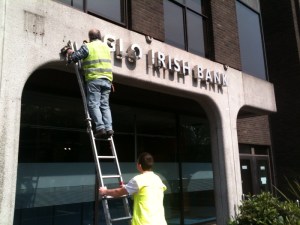
Photo via TheJournal.ieI met a traveller from an antique land
Who said: “Two hundred vast towers of stone
Stand in a deserted town. Near them close at hand,
Half sunk, a torn picture lies, whose clown,
With wrinkled hair and sneer of clueless command
Tell that its painter well those passions read
Which yet survive, stamped on these lifeless things,
The limos that mocked us and the politicians who fled.
And on the pedestal these words appear:
`My name is Anglo, Bank of Banks:
Look on my loans, ye mighty, and despair!’
Nothing beside remains. Round the decay
Of that colossal wreck, boundless and bare,
The lone commercial wastelands stretch far away”.
Poem based on Ozymandias by Percy Bysshe Shelley
Photo via TheJournal.ie

If anyone had asked me up to today what the Irish mainland’s most southern headland was, I would have immediately answered “Mizen Head”. I would have been wrong.

That honour goes to the much lesser known Brow Head, a few kilometres to the east of Mizen*.

Brow Head can only be visited on foot. There is a small car park near the ithmus between Crookhaven and Barley Cove. A 2km walk westwards up the Mallavogue laneway and through some fields, leads you directly to the headland. On the way, you will see the remains of some old mines, constructed in the 19th Century. There is also a signal tower on the headland, dating back to the Napoleonic times. Guglielmo Marconi built one of the first transatlantic telecommunications towers on the headland.

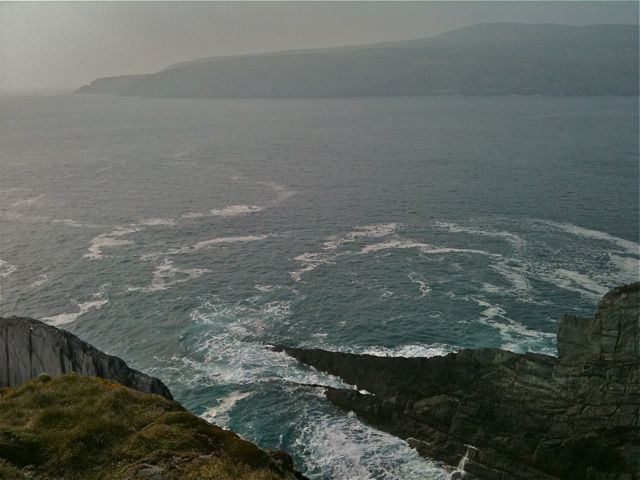
The headland itself is precarious. There are high cliffs on both sides, with sheer, vertical drops in all cases. Brow Head is undergoing active erosion and entire bedding planes are exposed in some places. The wave action is intense, to say the least. We were fortunate to come there during a large swell. The huge volumes of water crashing into and pouring off the rocks were nothing short of breathtaking.

Here’s a short video to give a flavour of the place. It’s a real gem. Hidden Ireland at its best.


* Mizen Head is actually the third most southerly point on the Irish mainland. That’s a good pub quiz question for you, right there).

I saw a Twitter message today that got me thinking. The tweet went along the lines of that if your kid wanted to be a politician you must do everything in your power to dissuade them. You should bribe them out of it if necessary. I can understand where the writer is coming from. Politics is a rough world. It’s a place where lofty ideals often tarnish and shatter in the rough and tumble of power games, bargaining and compromise. The bruising experience of politics leaves many people disillusioned and cynical. It shouldn’t be like this, but it is.

Nevertheless we must pause to consider where we are. We have schools. We have hospitals. We have fire stations and a police force. We eat food and drink water that, most of the time, won’t make us sick. We have rights. We can go to court to protect those rights. We have the right of assembly, press freedom and an electoral system where the powerful have to submit themselves to the wrath of the people who put them there every few years.

We have abolished slavery. We no longer have capital punishment or corporal punishment. Torture, child labour and animal abuse are proscribed.  The voices of women, children, homosexuals, immigrants, atheists, the poor and other marginalised people can no longer be ignored. The society we have today is in many, many respects better than the world our grandparents and their grandparents were born into.

And who, in the end, made it happen? Politicians.

It was politicians who gave people their rights to be heard. It was politicians who argued for child welfare and against slavery. It was politicians who faced tyrannies down and protected our democratic freedoms. It was politicians who wrote the reforms, signed the laws and brought and end to wars. Our society is what it is today because of the work of politicians from our past.

Not all politicians are perfect. Some, indeed, have set back the march of progress and greater freedoms. Many others have little to show for their years of service other than a fat bank account. Yet, some politicians have made a positive difference and those differences have created the society that we have today. The story presented is not an altogether gloomy one.

Now, don’t get me wrong. Society is far from perfect. We still have crime, war, bad health, unnecessary suffering, discrimination, hatred, environmental damage and unconscionable injustice. We have problems in our country that are crying out to be solved. These problems require people of vision. They require people who can look beyond the grubby compromises and roadblocks. They require people who are willing to dedicate their lives to an ideal, mindful that failure awaits at every turn.

In politics, it is not years that make the difference, but decades. We need a cadre of people who are willing to dedicate their lives for a vision. Despite our concerns and our cynicism, we should encourage the most motivated of the upcoming generation to become politicians.

Apologies to regular readers. If you are not interested in local politics click the back button now. Quick! Hurry! I’ll give three whistles when it’s safe to look here again.

For a while now I have restrained myself from talking about politics on this blog, but since the 2011 General Election is drawing near and I feel very strongly about exercising my right to vote, I have decided to get my thoughts together on our prospective candidates, and what I can find out about them via their online presence.

I work away from home between the hours of 8am to 7pm each weekday so I am unlikely to be canvassed at all during this election. I read a lot of blogs however and I’m a Twitter addict, so I just wanted to see how these candidates have done in reaching out to the likes of me. What I have found is rather uninspiring.

Using TheJournal.ie’s excellent roundup of the candidates, here are some of my impressions.

  • Fianna Fáil (Michael Ahern and Kevin O’Keeffe) don’t have much of a social media policy at all. No Twitter, no videos, no blogs, just static web-pages and a Facebook account for O’Keeffe. Their candidate web-pages are devoid of anything that might persuade me to change my mind.
  • Fine Gael is more interesting. All of the candidates have a live video. (Pa O’Driscoll had one but for some reason it has been taken down). David Stanton’s video does not inspire a huge amount of confidence. It could have been a lot better in my opinion. I felt as if I was reading his CV and I didn’t get any feeling for what drives him and his passion for change. This is a potential government minister, so I would have expected a bit more drive. Tom Barry’s video is better, hitting the point on the main points of his candidacy. All three candidates have Twitter streams with Pa O’Driscoll leading by miles in terms of engagement and David Stanton saying aloof from any interaction with the great unwashed. Tom Barry shouldn’t have bothered with Twitter, given tweets such as the following: “Thanks to the canvass crews out over the weekend! Ye are pure marters for the cause out in that rain!” David StantonPa O’Driscoll and Tom Barry all have passable blogs.
  • Now we get to Labour. Sean Sherlock is engaging with people on Twitter but he has no video that I could find. His website is also, how do I put it, parochial. Here is a guy who could possibly find himself in the cabinet and yet he is campaigning on the subject of local roads and rezoning. Honestly, I’d prefer if these guys started thinking about Ireland and less about the parish pump. John Mulvihill has another parochial website, a Twitter stream (not engaging), and no video to give us an impression of what he is like. I am leaning towards Labour in this election but neither of the candidates inspire me with much confidence.

From here on in we are dealing with smaller parties and independent candidates. None of them have ever served as a TD and they have fairly low profiles. So you would expect them to be using every media outlet, including social media, to sell their message. Right?

  • Sandra McLellan, Sinn Féin’s candidate has no website or video or Twitter account, so apart from their policies which I think are woefully ignorant of basic economics and belong to the 19th Century, I know very little else about her.
  • Malchy Harty of the Green Party is a photographer, but he fails to put up a video of himself to tell us why we should vote for him. No blog (just a static web-page) and no Twitter. I will grant that he has a somewhat less parochial vision, but that’s about it. Very little to go on here.
  • Paul O’Neill has a website and a video. You actually get to see what this guy is thinking and what he is interested in doing. No Twitter though, no blogging and nothing in his Facebook page that I can see.
  • Paul Burke also has a static website and a video (I had to do a bit of rummaging to find it) which is quite good except for the fact that “Independent” is spelt incorrectly in the title. I find the policies here a bit wishy washy. He wants change but I don’t get a strong sense of vision around it.
  • Claire Cullinane has a static website and audio stream to help her outline her policies and a Facebook page where we find that she has been educated in the University of Life (hmm). No Twitter and no blogging – just a static web-page. Again, the policies seem quite vague. I’m not sure what I would be voting for.
  • Patrick Bullman has just a static web-page where he outlines his political philosophy. Not much else to go on.

So, what do I know? Fine Gael have definitely tried the hardest to engage with social media, Fianna Fail are a write-off, Labour are somewhat disappointing, and only a handful of independents or smaller party candidates have done very much at all to raise their profiles. While this is not the only information I will take into account when making my vote, it is interesting nonetheless.

Update: In an earlier version of this posting I wrote that Tom Barry didn’t have a blog and that based on his Twitter comments he shouldn’t have bothered to write one either. I subsequently found his blog and I need to, how do you say – eat my words. You live and learn I guess.

The day turned out to be wet and misty, so instead of our planned hillwalk we ended up walking the Glenshelane Forest Trail near Cappoquin, Co. Waterford. “Glenshelane” translates into “Valley of the Fairies” and with its meandering streams and moss covered trees there is something magical about the place (or at least the parts that have not been the subject of recent tree-felling).

By accident, we ended up at a place called Melleray Grotto. It’s a strange place. Nestled beside a bridge across the Monavugga river, the grotto has a large shelter and car-park in addition to the usual statues of Mary and St. Theresa. According to the signs and leaflets there, three children saw multiple apparitions of the Virgin Mary there in 1985, the same year as the moving statues phenomenon in Ireland.

The children reported seeing Noah, Jesus and the Devil among other biblical characters. According to them, Mary spoke to them on a number of occasions. The free leaflet provides us with a transcript of what she said: pronouncements like “I Want Prayer” and “The World Must Improve” – not exactly the most inspirational of stuff. She even went on to predict a great cataclysm in 1995. Unless I am much mistaken, this did not happen in 1995, or am I wrong? (Ah, but of course, there was that matter of a divorce referendum…).

I was left with the distinct impression that the whole thing was a hoax or a prank that went somewhat out of control, or perhaps the exploitation of people who might have been in need of professional medical help. Over the period of the “visions”, thousands of people descended on the place, just as they were doing in similar places around the country.

On the seats nearby was a Catholic newspaper that seemed gave the distinct impression of a religion on the ropes; as if they had rounded up the wagon train and all you could see, looking from the outside, were guns pointing at you. Everyone becomes their target – atheists, secularists, liberal Christians, Muslims, anyone who does not sign up to their strict interpretation of Christianity. This is fine, I guess, for preserving intact the worldview of the faithful, but useless as a vehicle for attracting new recruits. The paper is full of anger, bitterness and despair for the future.

It’s a ramshackle place where one’s common understanding of the world takes a somersault, to be replaced by arcane stories and apparent miracles. A place where normal critical thinking takes a vacation. Not so different, I would think, to Hindu shrines half a continent away, with their votive candles, petitions and magical holy water. The pleas and prayers are sodden with desperation and agony. Rather than making people more comfortable about their troubles, I wonder if it only makes things worse by assigning an agent, a conscious cause, to their suffering. If their problems – serious illness or  a bereavement  say – were caused by a conscious agent, then you will never stop asking why and no answers will ever come. That’s not comfort in my book.

The Grottos is an odd, fascinating and somewhat sad place: a distinct throwback to the Middle Ages and an insight into the power and irrationality of human belief.

via NASA Earth Observatory

One of the things about living in Ireland is that we rarely get that much snow. In most areas it usually arrives in the depths of winter – January or February maybe – stays for about a day and then disappears again. Apart from one day last year, my kids have never woken up to snow outside their home. It’s curious because Ireland has a very high latitude on this planet. We share the same distance from the equator as Moscow, Edmonton, Gander and other bitterly cold and ice-bound places on the planet. The reason, of course, is the North Atlantic Drift: a current of warm oceanic water originating off the coast of Florida. The warm waters off our coast and prevailing northwesterly winds normally keep temperatures well above zero for most of the year.

Not so this year. A high pressure area over the North Atlantic has served us with frosty Arctic air for the best part of two weeks now. Snow, almost unheard of in November, covered most of the island with the east of the country getting a particularly thorough battering. My mother in Kilkenny is housebound and my sister in Wales was unable to come home for a wedding this weekend because of near blizzard conditions in Waterford.

Much to the disappointment of my children, Cork was spared from the snow. Snow was threatened yesterday morning but instead we got drenched by icy rain. It froze instantly to the roads, briefly turning the whole city into a massive skating rink.

NASA’s Aqua satellite took this wonderful photo of Ireland on Thursday. You can clearly see the snow clouds pasting the east coast of Ireland before venturing out into the Celtic Sea. The mid-West of Ireland, from Clare to Cork, remained relatively unscathed, while seven-foot deep snow was reported in the Wicklow mountains.

A winter to remember, for sure.