Archives for posts with tag: Ireland

One of the real attractions of Ireland (if we get the weather for it), is our long summers. The sun rises at 5 am and sets at 9 pm with darkness taking its time to arrive, if it does so at all. Our latitude is so high we don’t actually have a proper night for 2 months.

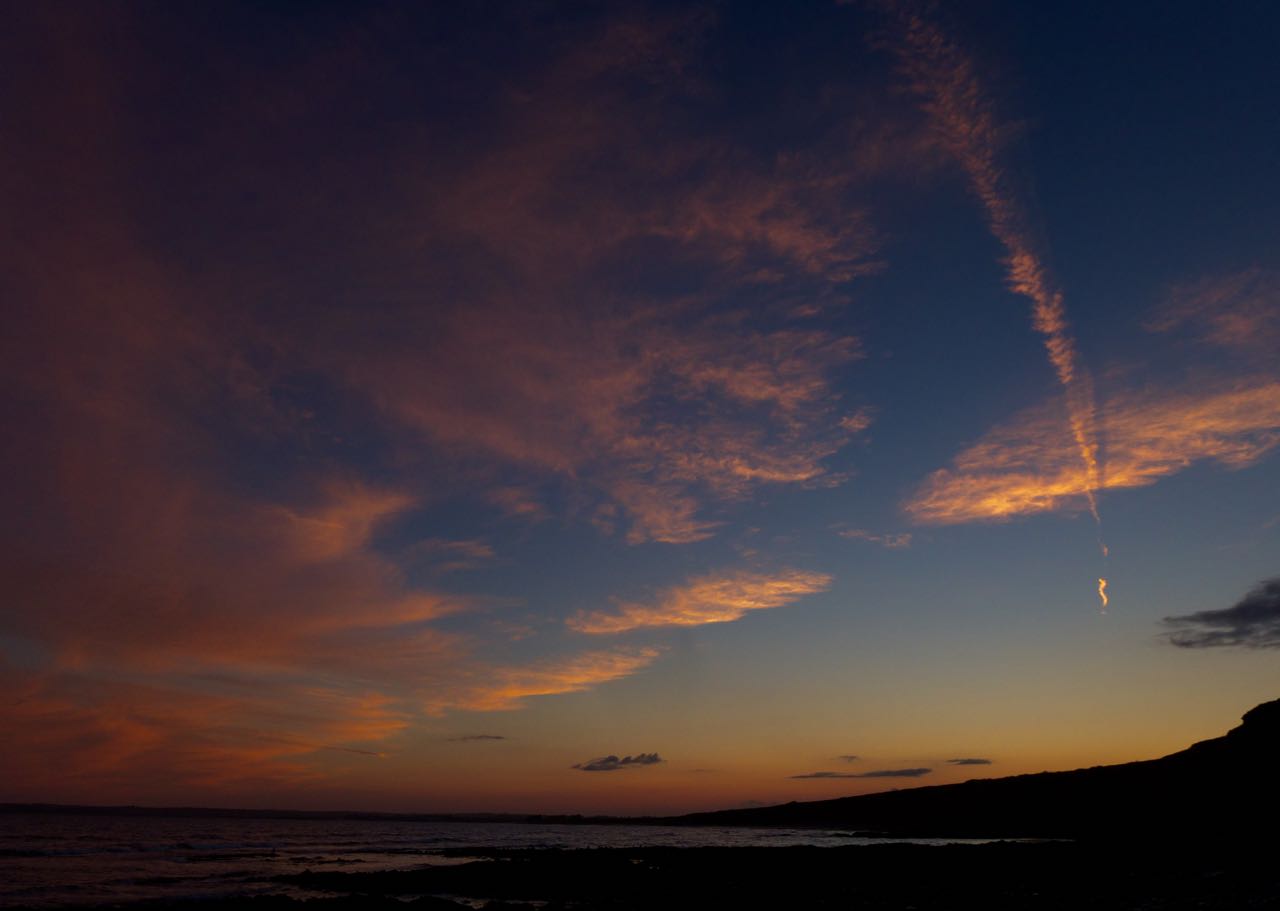
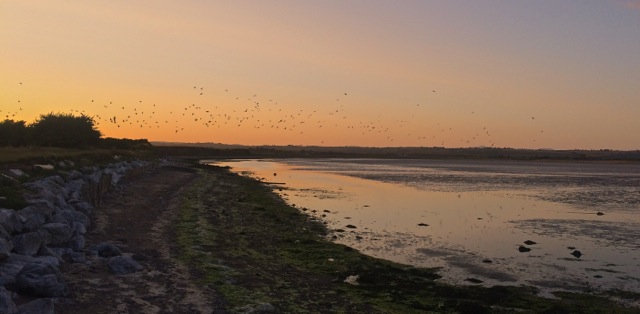
This year has been wonderful. The summer evenings have thrown up a variety of coloured skies and cloudscapes. I took a few photos close to home that give a sense of it all.

20140814 - Ballymacoda Birds

Flock of crows by Ballymacoda beach

20140814 - Rooskagh1

Haystacks

20140814 - Rooskagh2

Sign from the skies

20140814 - Rooskagh3

Giant Haystacks

20140814 - Rooskagh4

Eerie happenings in Shanagarry

The garden has been abuzz with insects over the past few weeks, going about their chores, unconcerned by the to-ings and fro-ings of us humans. I have been particularly taken by bumblebees. Industrious to a fault, full of variety and character, yet highly unlikely to lose their cool and sting. If you get too close to them, they’ll just fly off, or if they are particularly tired, out will come a leg to ward you off. Getting stung by one of them really is a last resort. Other visitors have included butterflies, moths, hover-flies and dragonflies, with the dreaded wasp conspicuous (so far) by its absence.

Here is a selection of shots, taken on my iPhone, which give a sense of the garden’s busy denizens this year.

20140814 - Bumblebee1

Bumblebee on Ligularia Dentata

20140814 - Bumblebee3

Bumblebees on Echinops

20140814 - Common Blue

Common Blue on Lavender

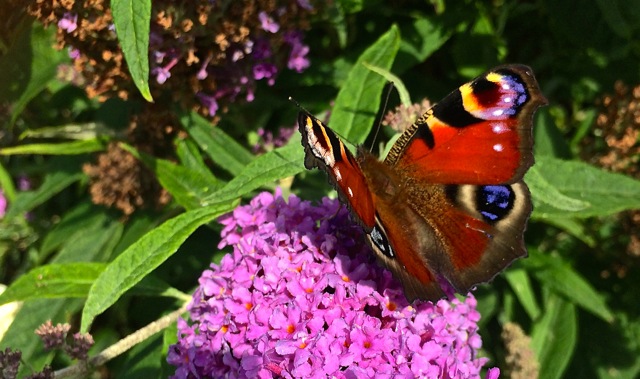
20140814 - Peacock Butterfly

Peacock Butterfly on Buddleia

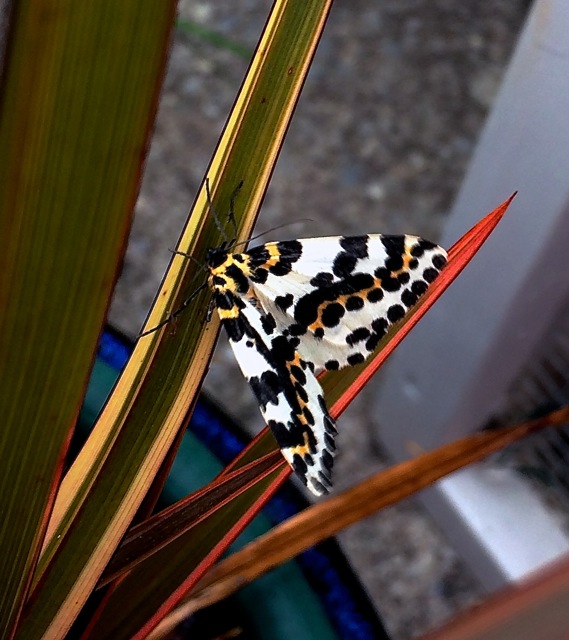
Magpie Moth

Magpie Moth on Phormium

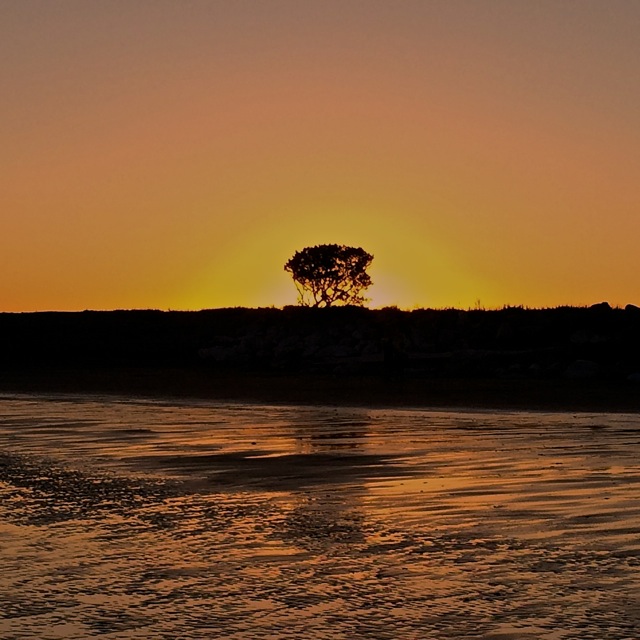
Ballywilling Beach, close to Garryvoe but far more isolated and deserted, is a marvellous place to go for walks, relaxation and photographs, particularly as sunset approaches. Here are some of the photos I have taken there over the past few weeks. I really like how many of these shots came out. I first shared a few of them on Instagram, but I’ve gone back and re-edited them from the originals to see what I can do with different software.

20140814 - Ballywilling6

20140814 - Ballywilling5

20140814 - Ballywilling4

20140814 - Ballywilling3

20140818 - Ballywilling2

20140818 - Ballywilling

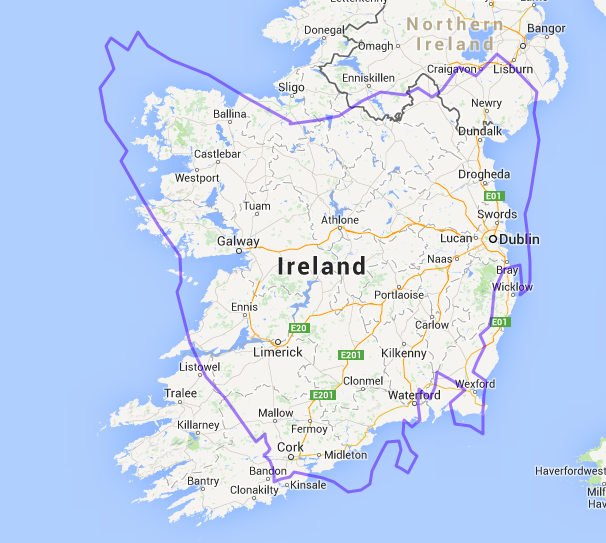
How big is Tenerife compared to more familiar areas in Ireland? Or Tasmania? Or Malta? Since my recent trip to Singapore, I’ve had an interest in such questions. I found a website called MAPfrappe and off I went, attempting to have my questions answered.  MAPfrappe enables you to trace out any area of interest, then displays what it looks like compared to any area on Earth.

So here are some examples: Just click on the maps below to compare with your own localities.

Tenerife

Tenerife would stretch from Limerick to Tralee and back down to Killarney. At 2,034 sq km, it’s about the same size as an average sized county in Ireland.


Malta

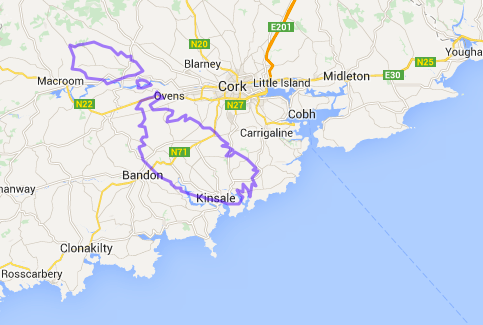
Malta is pretty small, about 27 km long, so it would comfortably fit into most counties in Ireland. In Cork, it would stretch from Kinsale to Macroom.


Tasmania

Woah! That’s pretty big. Tasmania, at 68,000 sq km, has about the same area as the Republic of Ireland. It’s not something I would have expected, given it’s tiny size in comparison to Australia. Then again, most of Western and Central Europe can easily fit inside Australia, so I shouldn’t be that surprised.


Singapore

Singapore is very small, but it has over 5 million inhabitants. It would be like squeezing the whole population of Ireland into an area around Cork, stretching from Midleton to Bandon. I’m not sure if many Cork folks would be happy with that prospect.


Ibiza

Most of Dublin city would accommodate the area of Ibiza. That’s about it though.


Crete


Crete, at 260km in length, would quite perfectly stretch from Dublin to Connemara.

Cuba

This one surprised me hugely. Over 1,250 km long, it would stretch from Kerry across the UK, into Belgium. Incidentally, Jamaica is much the same length as Crete.

Here are a few more comparisons that might be of interest:

Bali, Barbados, Bermuda, Corfu, Corsica, Cyprus, Easter Island, Fuerteventura, Gran Canaria, Hawaii, Jamaica, Koh Samui, Langkawi, Lanzarote, Madeira, Mallorca, Maui, Menorca, Mauritius, New Zealand, Oahu, Phuket, Rhodes, Saint Lucia, Santorini, Sardinia, Sicily.


Today I took a visit to Garinish Island in West Cork. This is a beautiful garden paradise a short boat trip away from the village of Glengarriff. The gardens are a wonderful fusion of exotic plants and beautiful buildings.

At the core are the Italian Gardens, purpose built for the Gardens by Annan Bryce and Harold Peto. The Caha Mountains in the background provide a delightful backdrop.

Garinish Italian Garden


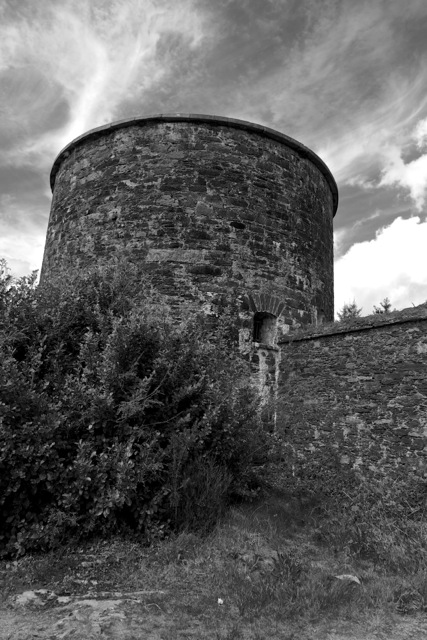
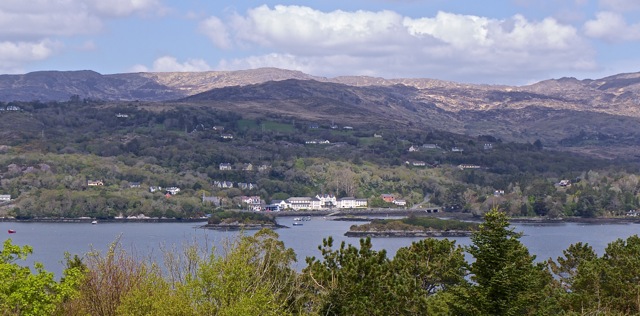
On a hill overlooking the island is a Martello Tower, an old watchtower built to warn of French invasion during the Napoleonic Wars. The view from the top affords a view of the bay across to Eccles Hotel in Glengarriff.


Martello


Eccles View


Garinish is a haven for different plants and trees that would not easily survive in Northern Europe. The climate in West Cork is almost completely frost free, giving sub-tropical plants a fighting chance. Some plants, particularly many species of Rhododendrons and Myrtles, have thrived. I took a few macro shots to explore this further.

I also took a few shots that I converted to Instagram. Prominent is the Roman Temple from which a fine view of the Beara peninsula can be seen.

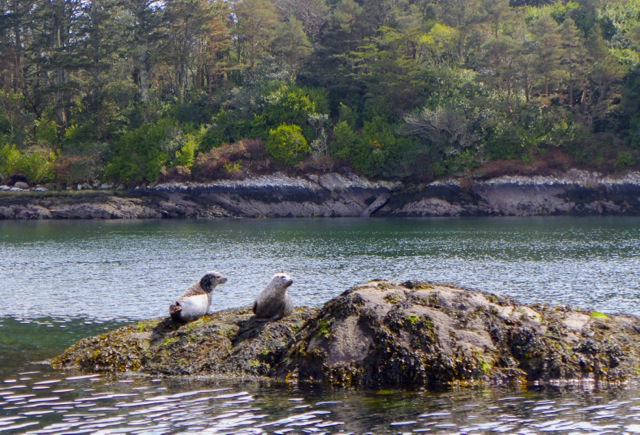
We passed by a group of Common Seals on the way back. They were basking in the sun, relaxing. I knew well how they felt.

Garinish Seals

We Irish don’t look at St Patrick’s Day in quite the same way as other countries. While St. Patricks Day is a welcome break and a chance to prepare for spring, we tend to look at the kitch and global celebration of Irishness with mild embarrassment, as if someone invited us to a party in our honour, but sent it to the wrong people, and we went along with it anyway, rather than spoil it for them.

What is Irishness anyway? Perhaps, when Ireland was a mono-cultural society, defined along rigid sectarian lines, there might have been a case to be made – commemorating a history of oppression and struggle against sometimes massive odds. Nowadays this story holds none of the same resonance.

Ireland today is a relatively modern country and home to a broad range people from all over the world. Our religious identity is disappearing. We are quite well integrated into the wider European community and thus more likely to share most of the values and aspirations of our continental neighbours. Our health and education systems are chaotic and under-funded, but functional. Our political leaders are salesmen. Sport is a national obsession, as is the price of property. A bracing combination of engaging scenery and bad weather keeps us grounded. All thing considered, we don’t particularly stand out, and that’s ok with us.

But, to consider the pomp around St Patrick’s Day, you would think we are wildly special, different by a long shot from all other people on the planet.

Alcohol consumption might be a factor, but we’re certainly not the only nation with a love of drinking. In fact, if our empty pubs and middle-age health obsessions are anything to go by, drinking is rapidly on the wane here.

Arts, music, literature and poetry, yes, perhaps; but it seems this too is overblown. Our artistic heritage is often more complicated, in any case, than it appears at first glance – owing a lot, in many cases, to other nationalities, conveniently forgotten in our self-made myths.

Maybe it’s the love of the craic, the raconteur, the devil may care attitude, the life and soul of the party, or whatever you are having yourself, but it seems that these are more universal values than we care to accept.

It’s all very hazy. We’ve moved from a patriotic love of Ireland and its dominant religion to this nebulous concept of “Irishness”, and we don’t really know any more what it means.

Here’s what I think it should mean. Rather than focusing on one small culturally ambiguous island in the Atlantic, St. Patrick’s Day should be all about displacement. It should be a global celebration of emigration, immigration and movement away from home, both forced and unforced. In a world where mobility is expected and often mandated, it’s good to have a day when we can think about where we came from, and the journeys we have made to get to where we are. This is true, both for us as individuals and our wider historic backgrounds. The Irish, a nation with form in this area, are just as good ambassadors as anyone else.

So there it is: if you live somewhere that is far away from the homeland of your childhood, or even if you feel a connection to somewhere other than your current home, whether that be China, Gabon, Vietnam or Co. Offaly, then happy St. Patrick’s Day. This day is for you.
Yesterday, we headed to the Galley Head area in West Cork, halfway between Clonakilty and Skibbereen. The day was uncharacteristically perfect. The low winter sun offering this battered coastline some light relief.

The winter storms had not yet abated and the waves around the Long Strand (Castlefreke) were enormous, crashing loudly onto the beach. I caught some nice shots during our walk.

Castlefreke 6

We then headed to the Drombeg Stone Circle, close to Glandore. These Bronze Age Menhirs with their portal stones and altar is a reminder of mysterious times long gone. Close by is a wonderfully preserved “Fualacht Fia” – an ancient kitchen. Red-hot stones were added to the water, allowing the water to boil, thus cooking whatever food had been caught during the day.

Old Mobile Phone

It’s been over a week without a phone. I’m coping. I’m not sure if others are.

1) No ‘Where Are You’ messages.

People don’t know where I am! Maybe I’ll arrive at the station on time. Maybe not. They have no way of knowing and I have no way of putting them out of their misery. Put it this way: I’m adding drama to their lives.

2) No Podcasts.

Hurrah! I’m a citizen of Ireland again, listening to Morning Ireland, George Hook and Arena. Instead of interesting shows from the UK and the US, it’s back to living in the goldfish bowl that is Irish media. Boy, will I have a backlog to get through when I finally get a new phone.

3) The constant need to update my status on Twitter all the goddamn time has greatly diminished.

So many pithy thoughts lost to posterity. You’re so upset, I can tell.

4) Photographs, of which I have none.

A whole haystack went on fire yesterday morning right beside the house. A transformer exploded near the house a few days earlier. Both incidences were as dramatic as you get in this part of the world. We even had fire engines. And what evidence do I have of these momentous occurrences? Nothing. I’ll show you a picture of the scorchings instead over the coming days. It’ll be almost like witnessing the real thing. Almost.

5) Remembering things is fun.

It’s amazing the extent to which I have left the phone organise my life. Without it, every deadline is a bit of a guess. I’m now reliant on people looking angrily at me. I so wish there was a button I could press to stop people looking like that. A Happy Face Button – there you go now. Who wants to invent that for me?

6) Back to using Voicemail.

Did I tell you I hated voicemail? Back in the halcyon smartphone days, I could safely avoid it for weeks on end. Now, it is one of the only ways I can be contacted. “Press 3, then 5, then 1 to continue. At the tone, enter your passcode then press hash. Sorry, please enter that 10 digit code again. Sorry, invalid response. Please try again later”. The designers of voicemail are as close to pure, unrestrained evil as you will find in the world today.

Life should return to relative normality next week. If not, please don’t try to find me and above all, please, please, don’t leave me a voicemail.

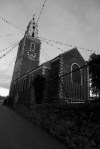
Just as London has Big Ben, and Paris the Eiffel Tower, Cork has Shandon Church. This modest chapel, by no means the largest or most ornate church in Cork, is by far the most emblematic.

I found myself in Cork very early one morning last September. Having a few hours to waste before work, I headed towards St Anne’s Church in an attempt to understand its enigmatic hold over the city.

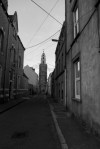
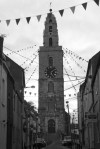
St Anne’s dates from 1722, its famous bells installed in 1750, it’s clock mechanism a hundred years later. The church is built of red sandstone and white limestone, which have come to represent the colours of Cork City and county. The clock faces, notoriously inaccurate, have given the church its nickname ‘The Four Faced Liar’*.  The large gold-plated salmon, ‘de goldie fish’, on the top is a nod to Cork’s booming salmon industry of the time. Situated a short distance north of the River Lee and a stone’s throw from Cork’s North Cathedral, the narrow streets and alleys around it are a throwback to earlier times. The Butter Museum and the Firkin Crane theatre, Cork’s home of dance, rests in its shadow.

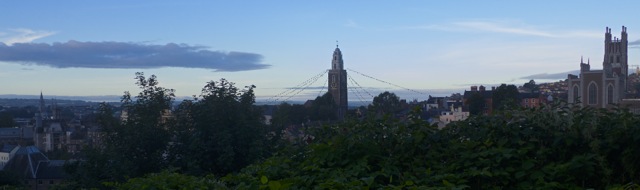
Because of its centrality, its central position and its idiosyncratic design, Shandon is the true heart of Cork City. While the city itself has gone through a transformation in the last few years, with glass and polished marble growing up where dowdy brick and concrete buildings once stood, this symbol of Cork’s heritage remains unchallenged.

Shandon Panorama

* This is the name of a famous Irish pub in New York City, which in turn became the name of a 2010 award winning independent movie.

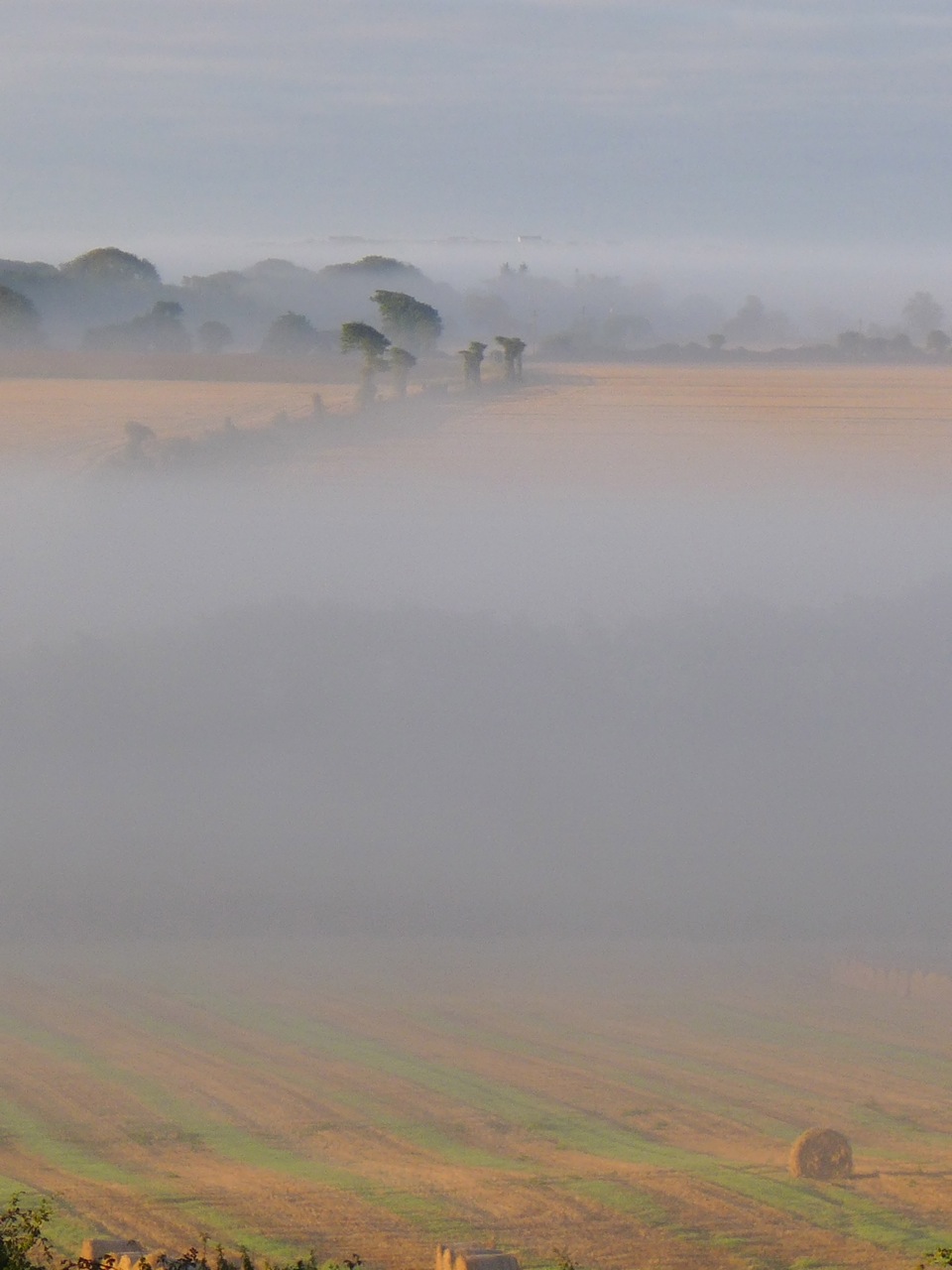
The view this morning.

FieldandFog

(Click to enlarge)