Archives for posts with tag: Ireland
via GraphJam

via GraphJam

Over the past month, media of all hues has been awash with commentary on the upcoming Marriage Referendum. By and large, it’s been a one sided debate. Most commentators I have seen are firmly pro-marriage equality. They are facing off against a much smaller No campaign dominated, in the main, by oddballs.

The rhetoric of the No campaigners is dominated by conservative religious doctrines and anti-gay fear mongering that would seem more at home in the 1970’s. With their talk of cancer rates, marrying your granny and allowing homosexuals to marry (so long as it’s the opposite sex) the only good they are doing is to expose themselves as bigots. They do no justice to their cause. Ironically, they may even be recruiting sergeants to the Yes camp – forcing people who would not ordinarily vote to cast their ballots.

In my opinion, the crank commentators are not the problem. I expect that the referendum outcome will be a solid Yes, however I also suspect that somewhere between 25% and 35% of the population will vote No – a depressingly high statistic given the paucity of charisma and rational arguments from the anti-amendment side.

No, the real battle is not against the extremists. The group the Yes campaign need to pay most attention to is the unaffected, the smug and the unconcerned.

Put it this way: there are still a lot of people in Ireland who are not knowingly familiar with LGBT people. Where they have gay friends, they may not be aware they are gay. To them, homosexual issues have no real relevance to their lives. Their views on homosexuality will, of course, depend on the person, but in many cases I suspect it may be informed by nothing more than lazy prejudices – that two men kissing is ‘yucky’, or that homosexual sex is gross, or we didn’t have any of that when we were growing up, or something of that ilk. And that’s about as much thought as they will have put into these issues. Because of the lives they lead and the friendship networks they have, marriage equality is a non-issue.

I suspect this is quite a large cohort of people. They will go to the polls and vote No, not because the Catholic bishops told them to, or because the Iona Institute had some fantastically compelling arguments, but because they would prefer their world to stay the same.

The real battle is against the smug. It will be a difficult job to change many of these mindsets in the run up to the vote, but appealing towards greater acceptance of different walks of life will help. A positive approach that promotes tolerance and common justice may be more persuasive than constantly chasing the extremists around the pages of social media.
I was about 13 years old when I came out to my dad. I’m sure he had known it for years already and had probably prepared for the worst. He must often have wondered what he did wrong to have a son like me. He had his dreams, but alas, those aspirations would never be fulfilled.

He had to face the truth. I was utterly useless at hurling.

Now, it wasn’t all bad, because I was equally rubbish at football, tennis or golf. In fact, almost all sports eluded me. For a man of sport, in a county where the ability to play hurling was more important than winning the Nobel Prize or landing on the Moon, his first son was an unfortunate freak of nature.

The thing was, my dad was exceptionally good at sport. In his youth, he played Minor hurling for Kilkenny (which made him a minor god in the locality). He loved nothing better than to go to a game, or watch a match on the TV. I remember going to many matches with him during my childhood – and being bored out of my wits – while he savoured every puck of the ball. There was no-one quite like my dad to read a game and explain how a team won or lost. For me, it was just a mass of confusion.

In my teens, he encouraged me to take up golf. Surprisingly, I loved it. I was never much good at it, of course, but I enjoyed the game and I enjoyed being with him. We both loved ideas, so in between shots, we debated endlessly with each other – science, politics, religion, current affairs: you name it. In a time when I was learning how to be an adult, these games brought us both together.

That’s one of my memories of dad. He passed away ten years ago this month, after a long illness that slowly sucked any quality of life away from him. I miss those games of golf. I miss going with him to hurling games listening him talk about the tactics, the heroes and the mistakes. Most of all, I miss him.

Now, with sons of my own – all of whom, incomprehensibly, are very talented sports players – I feel that an important part of him has been passed on. It’s a nice feeling.

In this sometimes stressful year, I often let my eyes do the talking for me. Here are some of my favourite photos from 2014. I hope you like them. Click on any of them to get a better view.

1. Storm Clouds

Favourites 2

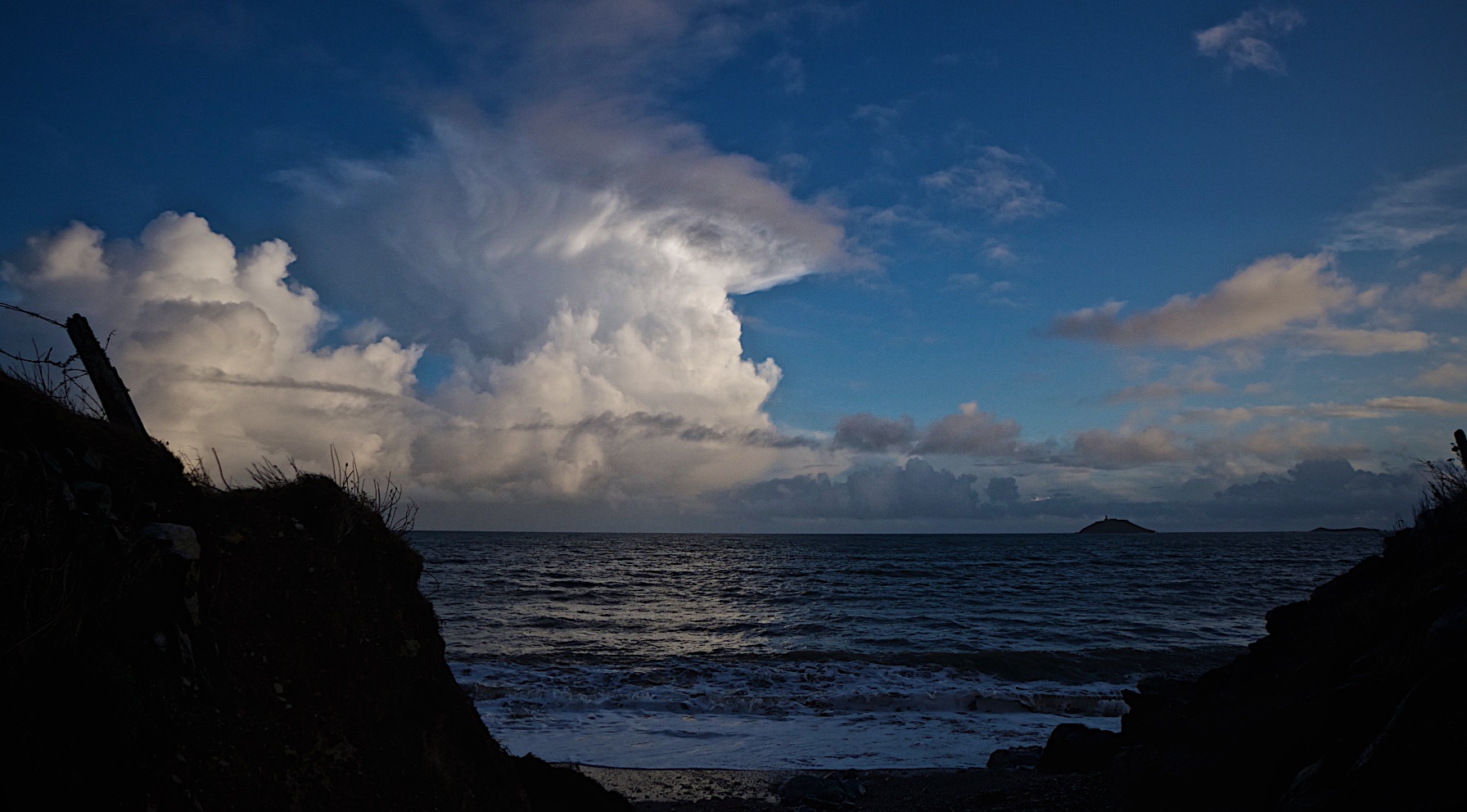
January of 2014 was incredibly stormy, with high winds lashing the coast at least once a week. One compensation was the wonderful cloudscapes such as this one above, taken in Garryvoe, Co. Cork.

2.  Shanghai Surprise

Favourites 4

2014 was the Chinese New Year of the Horse. On my first ever trip to China in February I came across this wonderful display in the city of Shanghai.

3. The Long Walk

Favourites 5

The annual 19km Ballycotton Cliff Walk is one of my favourite hikes, as it marks the approach of spring and the end of winter. This photo was taken on March 16th.

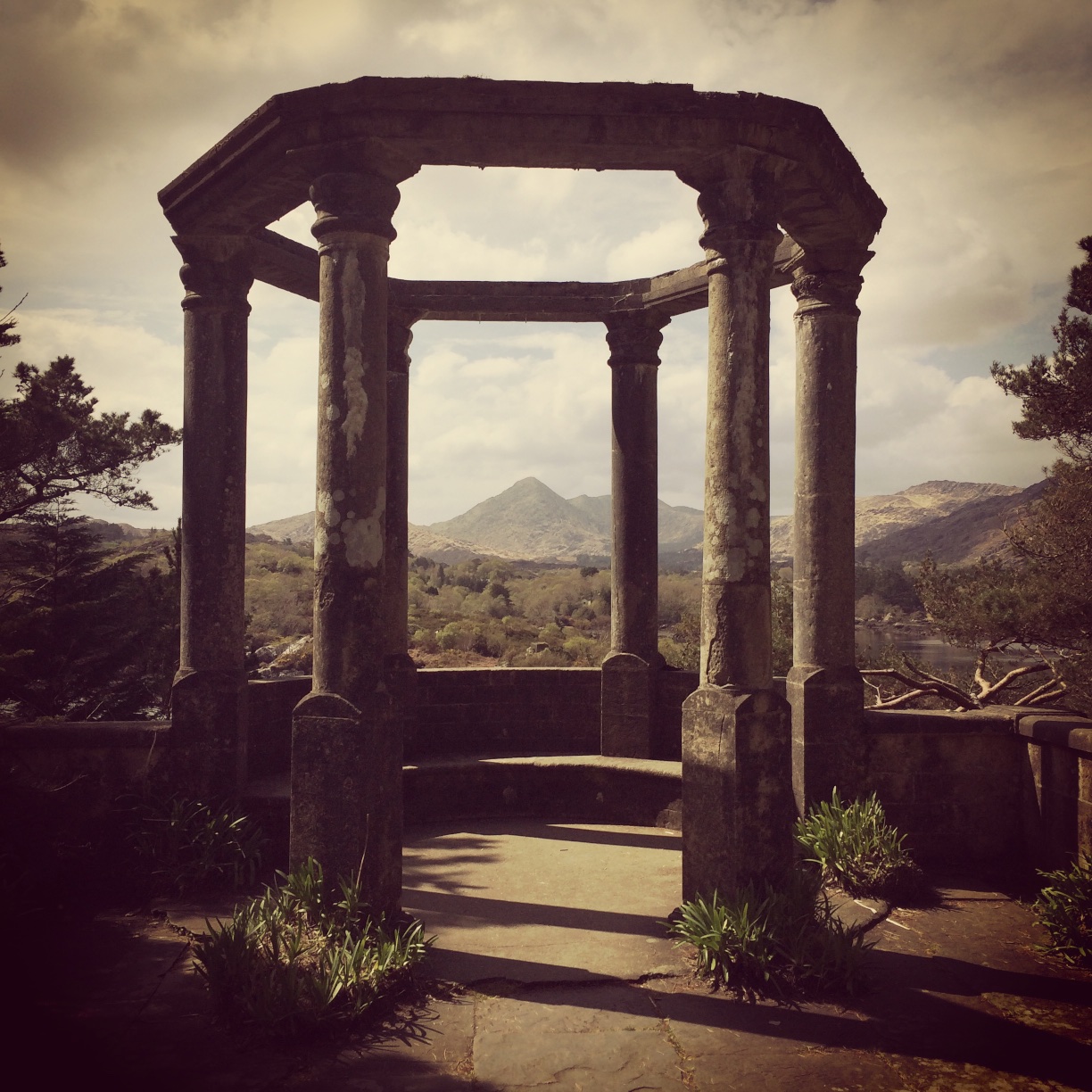
 4. Garnish Island

Favourites 7

The wonderful gardens of Garnish Island in West Cork are full of surprises. This photo, from April, was perhaps early in the year for full bloom, but the flowers of spring always have a special place in my heart.

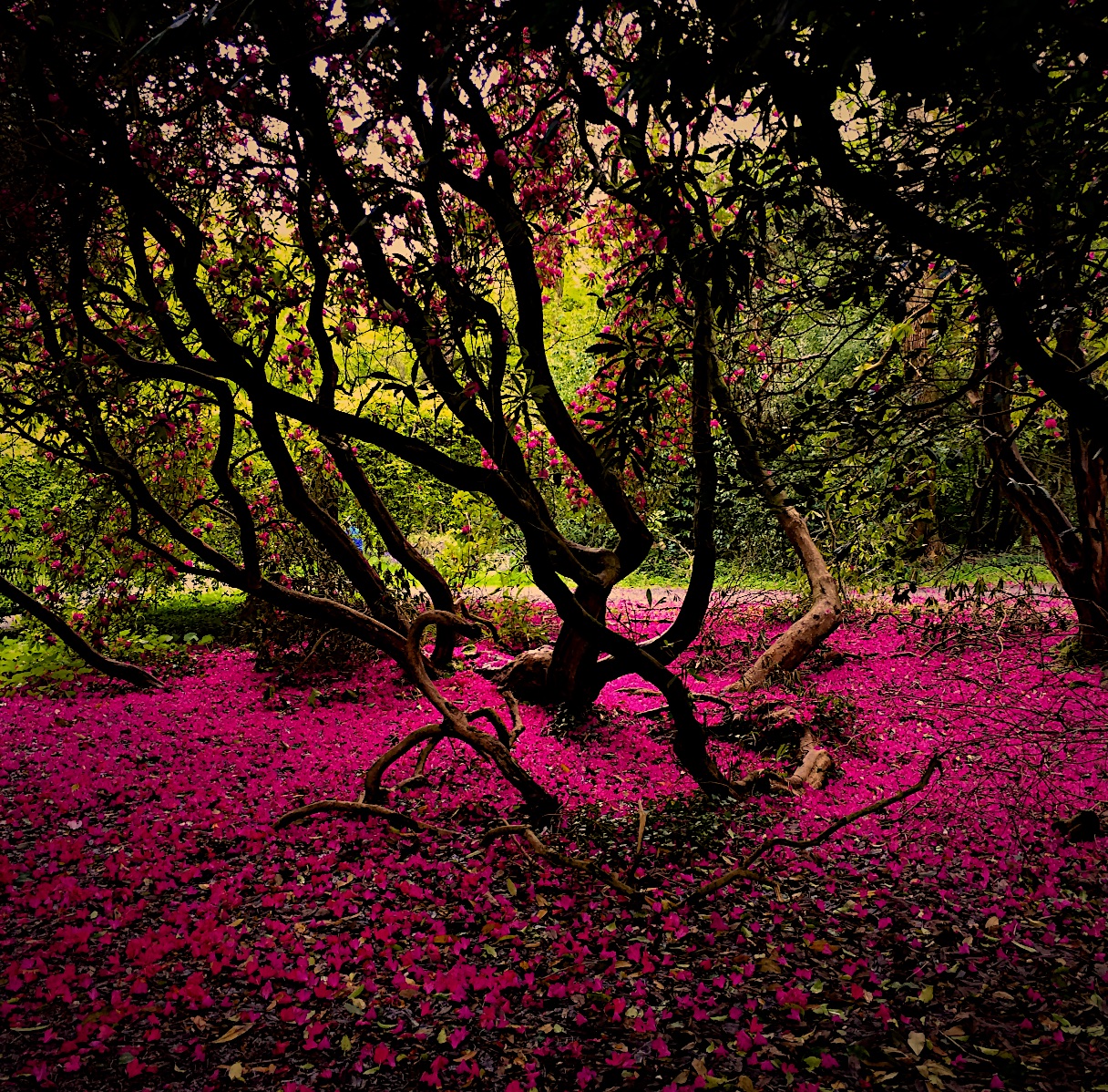
5. Rhododendron Blooms

Favourites

John F. Kennedy Park in Co. Wexford holds plenty of surprises too. During our visit in April I came across this wonderful display as a rhododendron bush shed its flowers.

6. Barley Fields

Favourites (1)

A quick walk up the hill gives me a wonderful view over south Munster, from the Celtic Sea all the way to the Knockmealdowns, the Comeraghs and even the Galtees in the far distance.

7. Leaping Laddies

Favourites (2)

By July, we had finally accepted that this was going to be one of the great summers. That’s worth jumping around for.

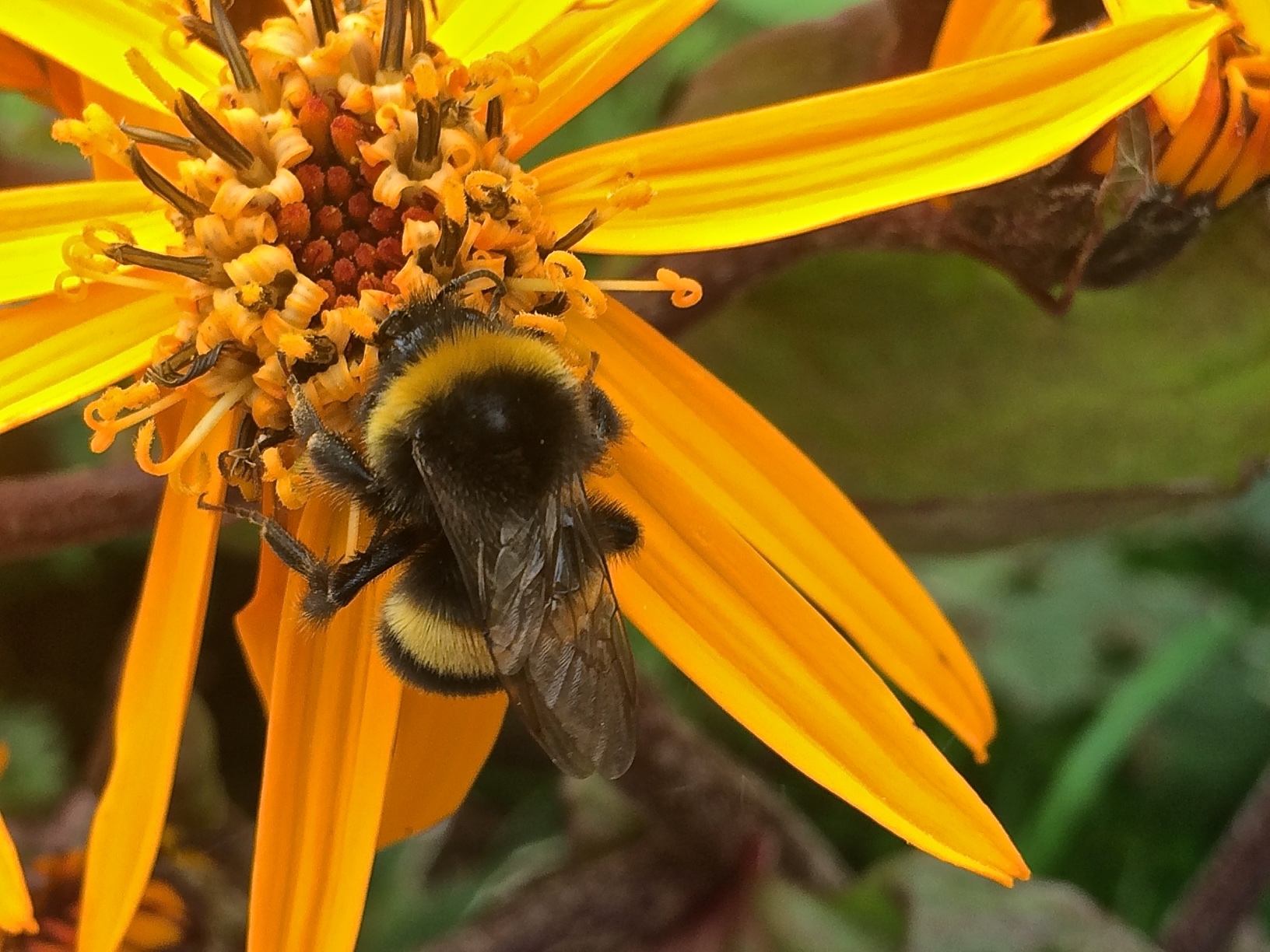
8. Summer Bees

Favourites 8

Bumblebees were everywhere this year. They go about their business with no real interest in us – focused on one thing only: nectar. When they have too much, they fall asleep, putting up a leg if you come too close. Mad about them, I am.

9. Coco the Cat

Favourites 9

Well, the Internet is all about cat photos, right? Right?

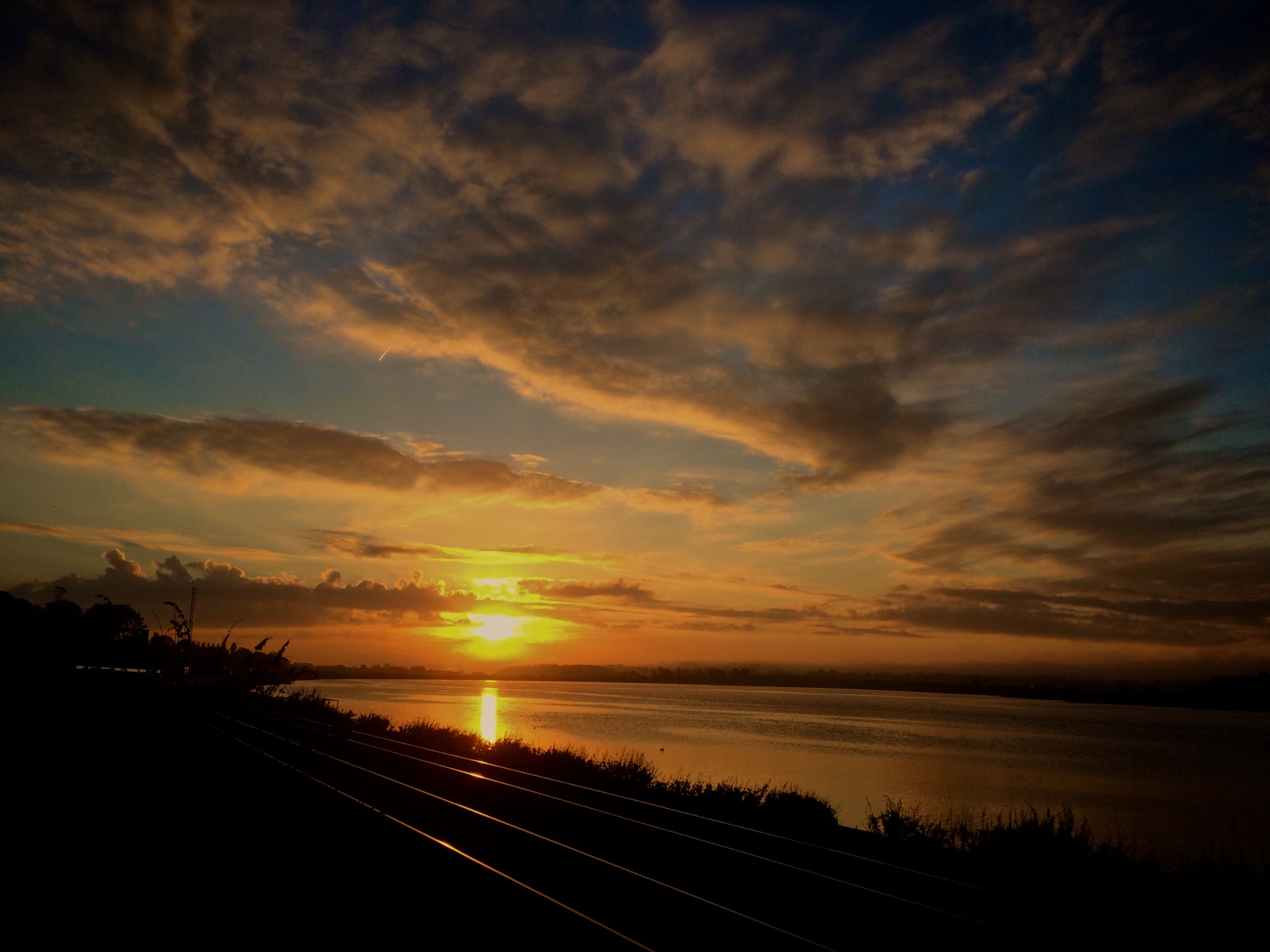
10. Glounthane Sunrise

Favourites 10

With the nights lengthening in October, I caught this morning sunrise in Glounthane, Co. Cork.

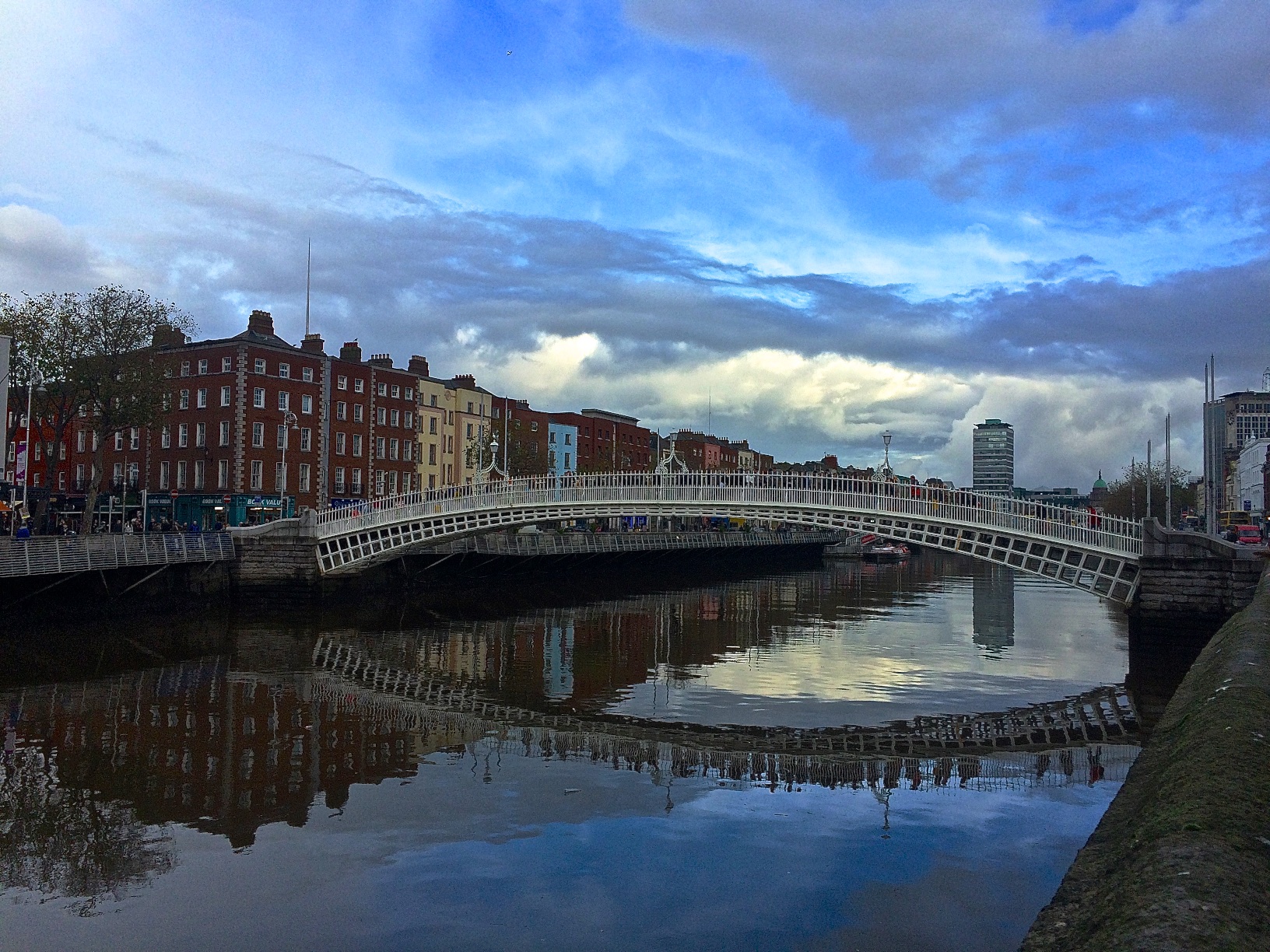
11. Ha’penny Bridge

Favourites 11

I took this during a day trip to Dublin in October. It captures many of its iconic structures quite well, I think.

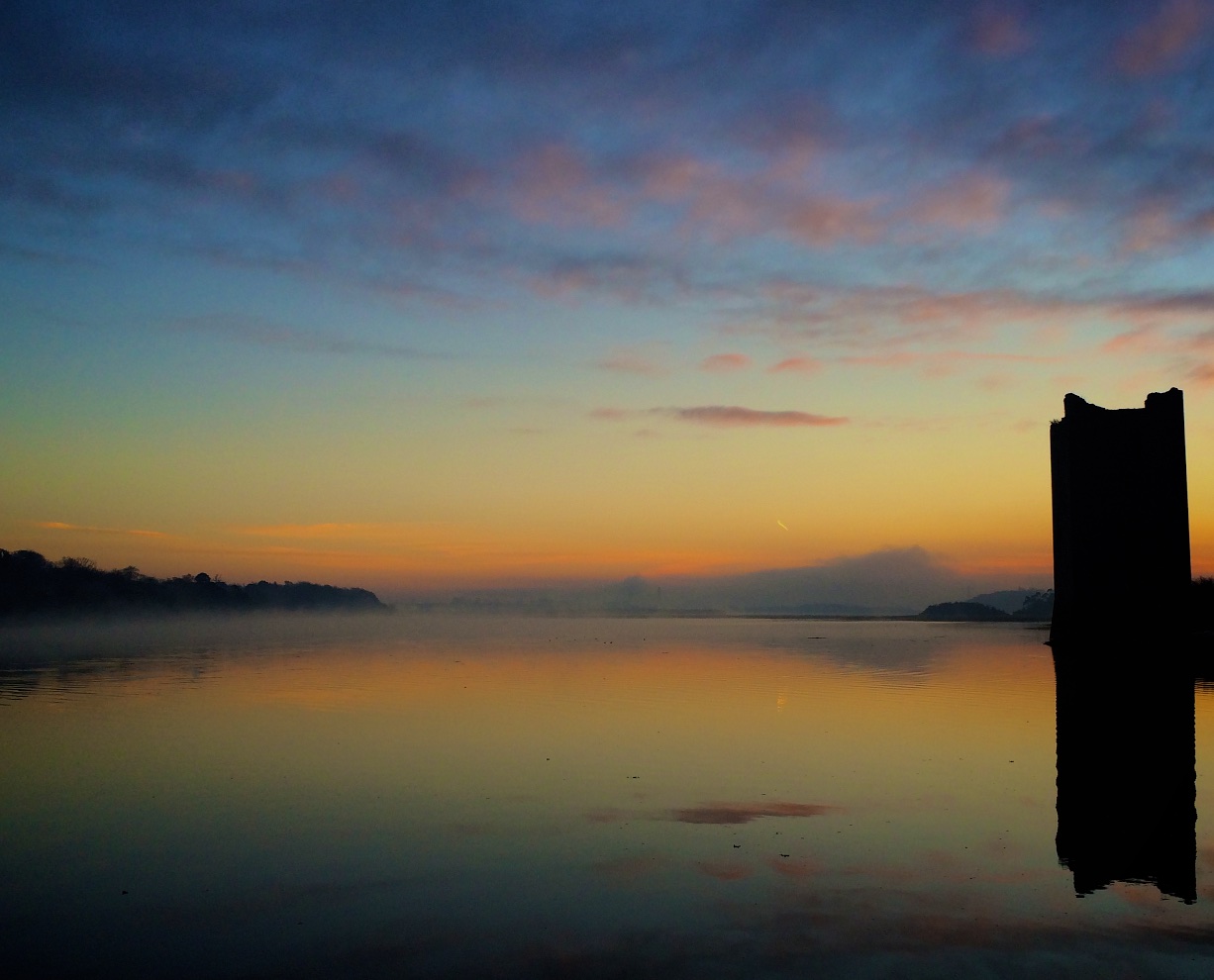
12. Belvelly Castle

Favourites 12

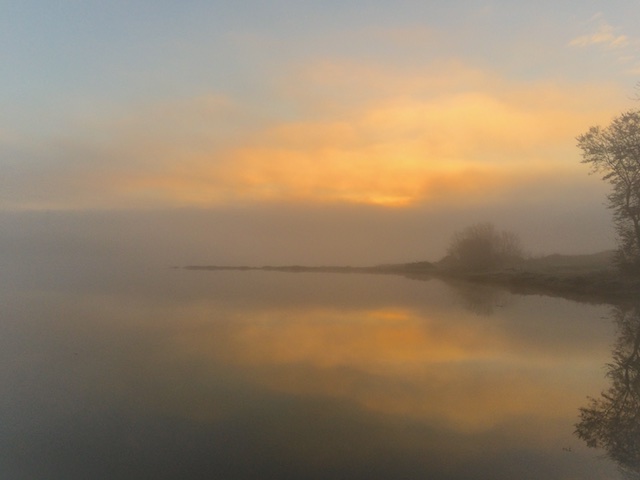
I won’t forget the 26th of November too quickly. I had taken a few days off work and I rose early to discover a fog-shrouded landscape. What followed were some of my favourite photographs of the year. This one was taken from Belvelly Bridge near Fota Island.

13. Midleton Estuary

Favourites 13

After Cobh, I drove to Midleton, where I came across this scene. My parents had a painting at home that reminds me of this photo.

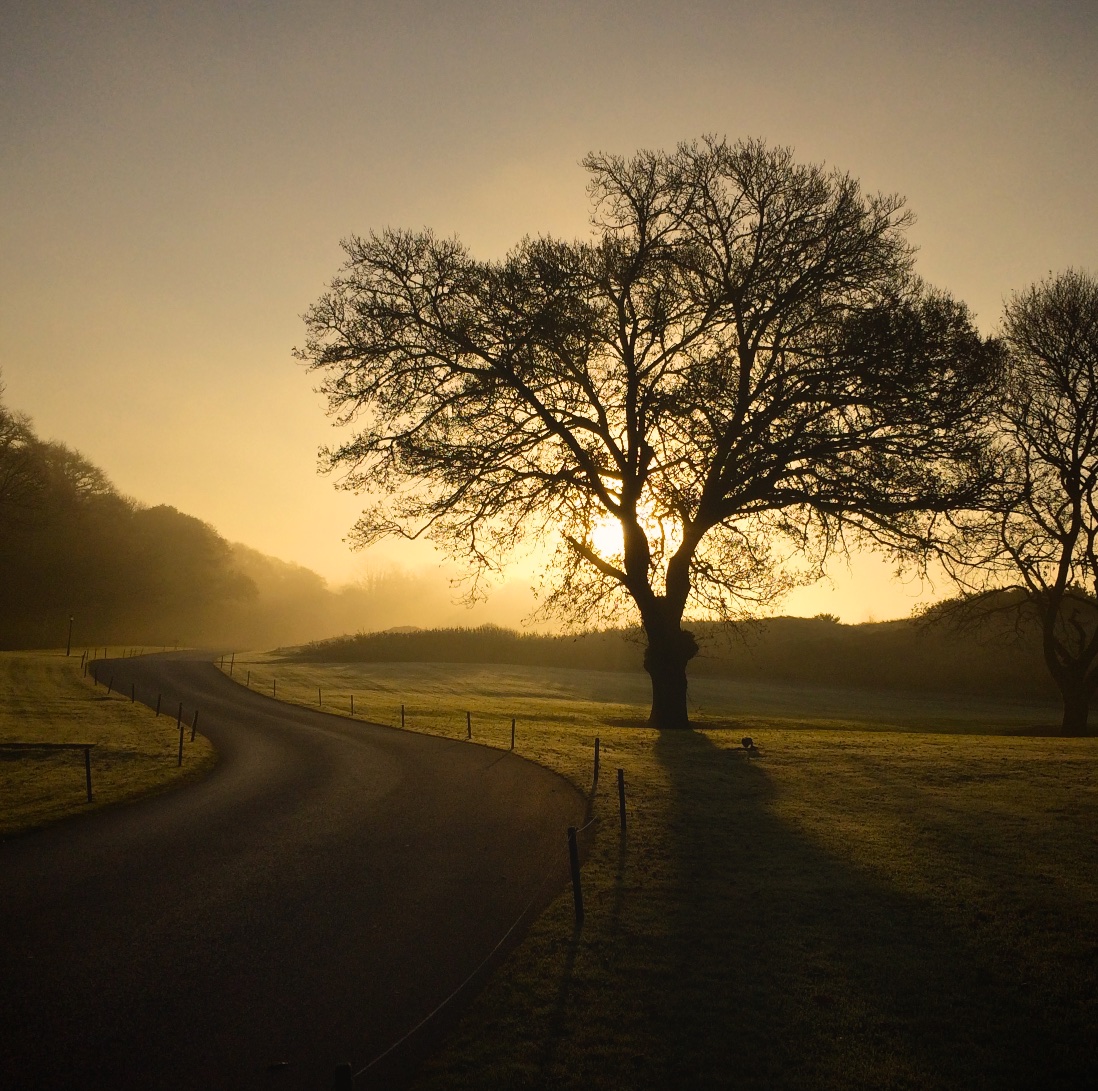
14. Castlemartyr Resort

Favourites 14

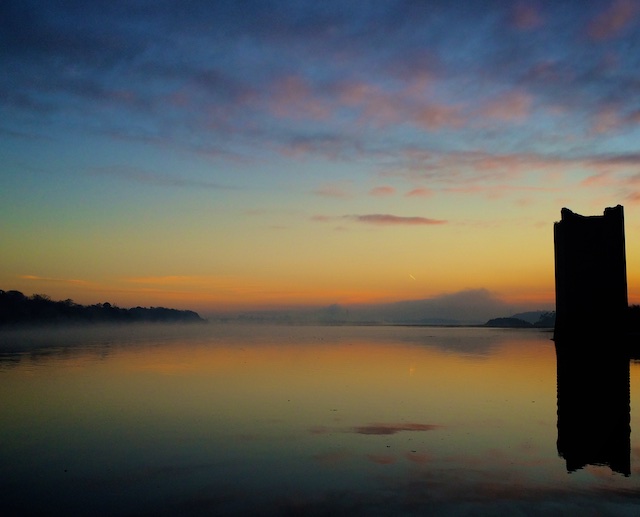
Then on to Castlemartyr Resort, where I took this photo as the sun was rising. Sometimes, you are just in the right place at the right time.

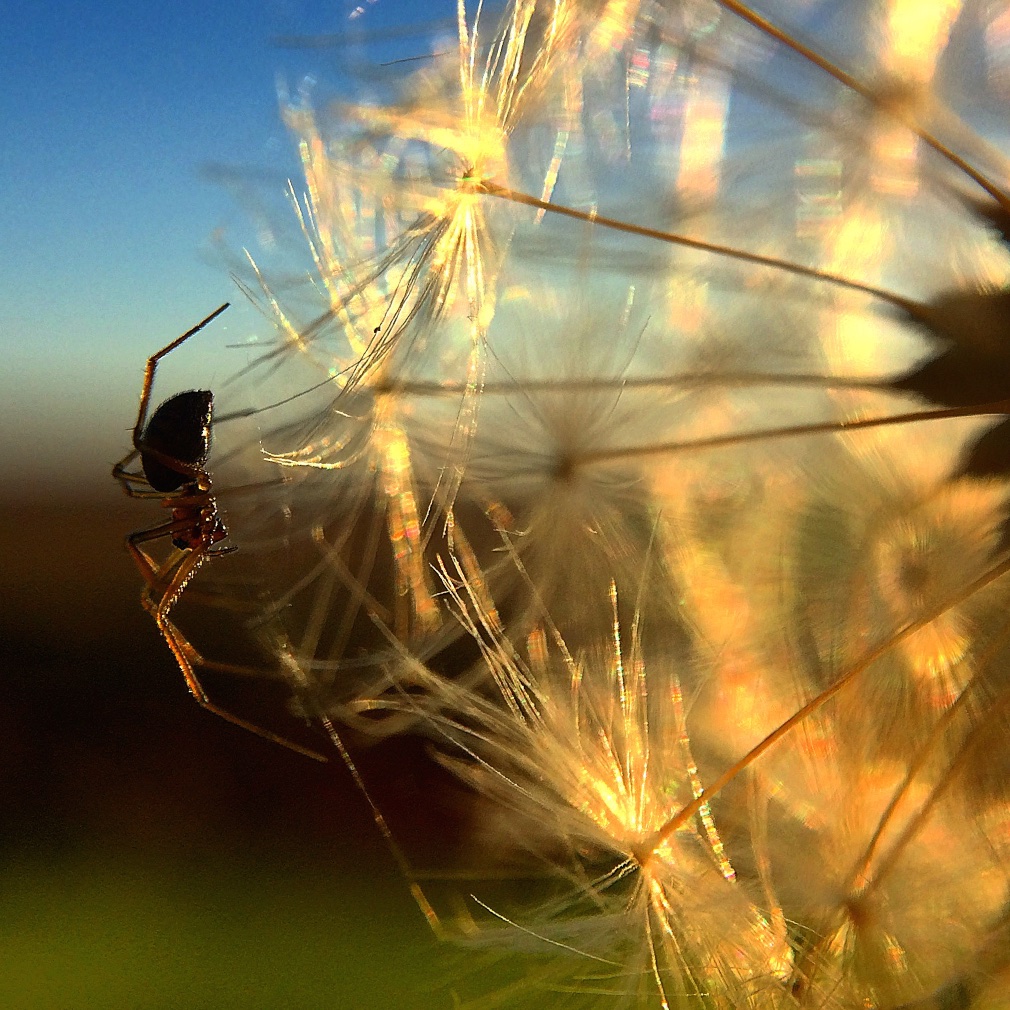
15. Little Spider

Favourites 15

After buying a macro lens for my iPhone in late November, I came across this little fellow climbing around a dandelion clock.

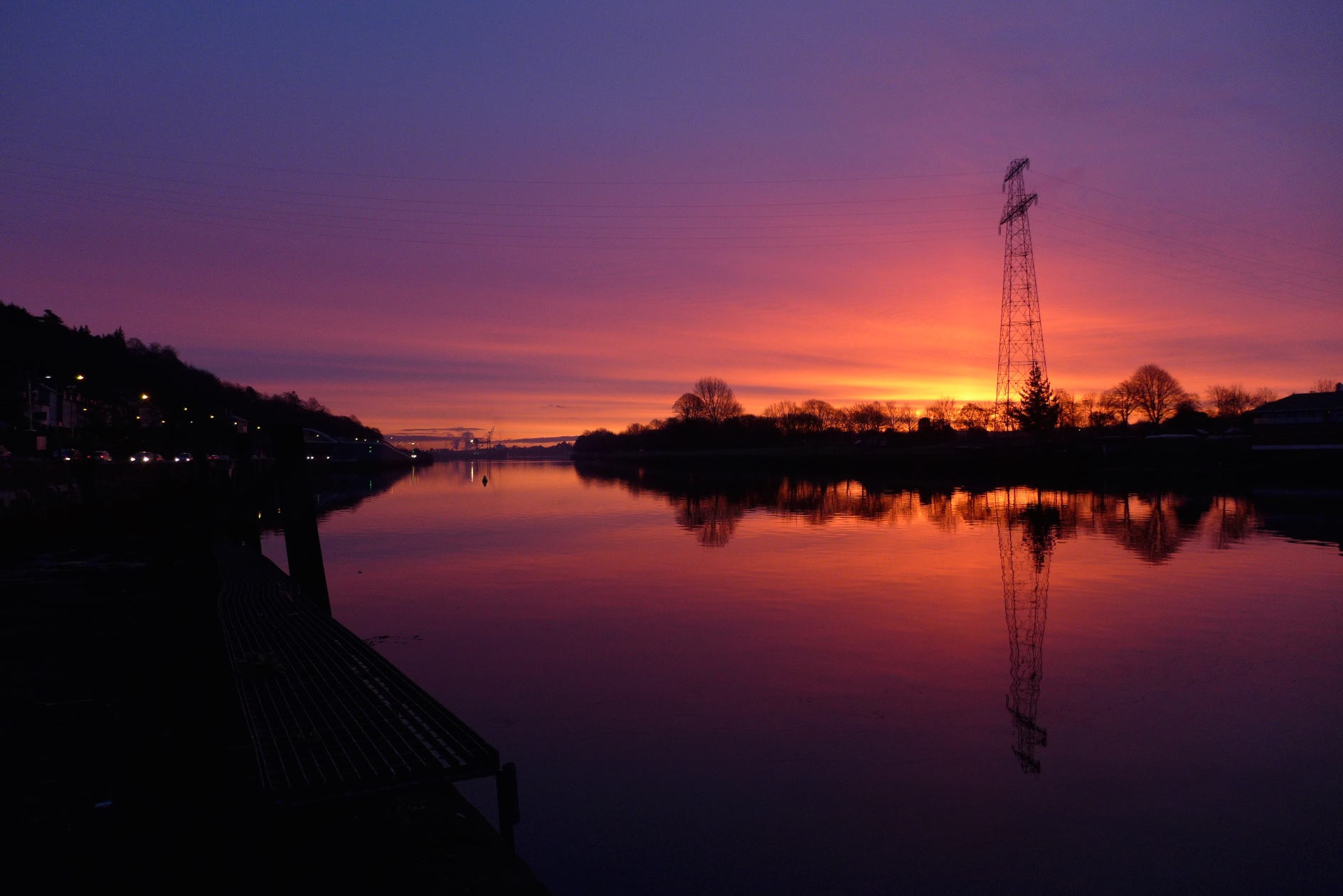
16. Dawn by the Lee

Favourites 17

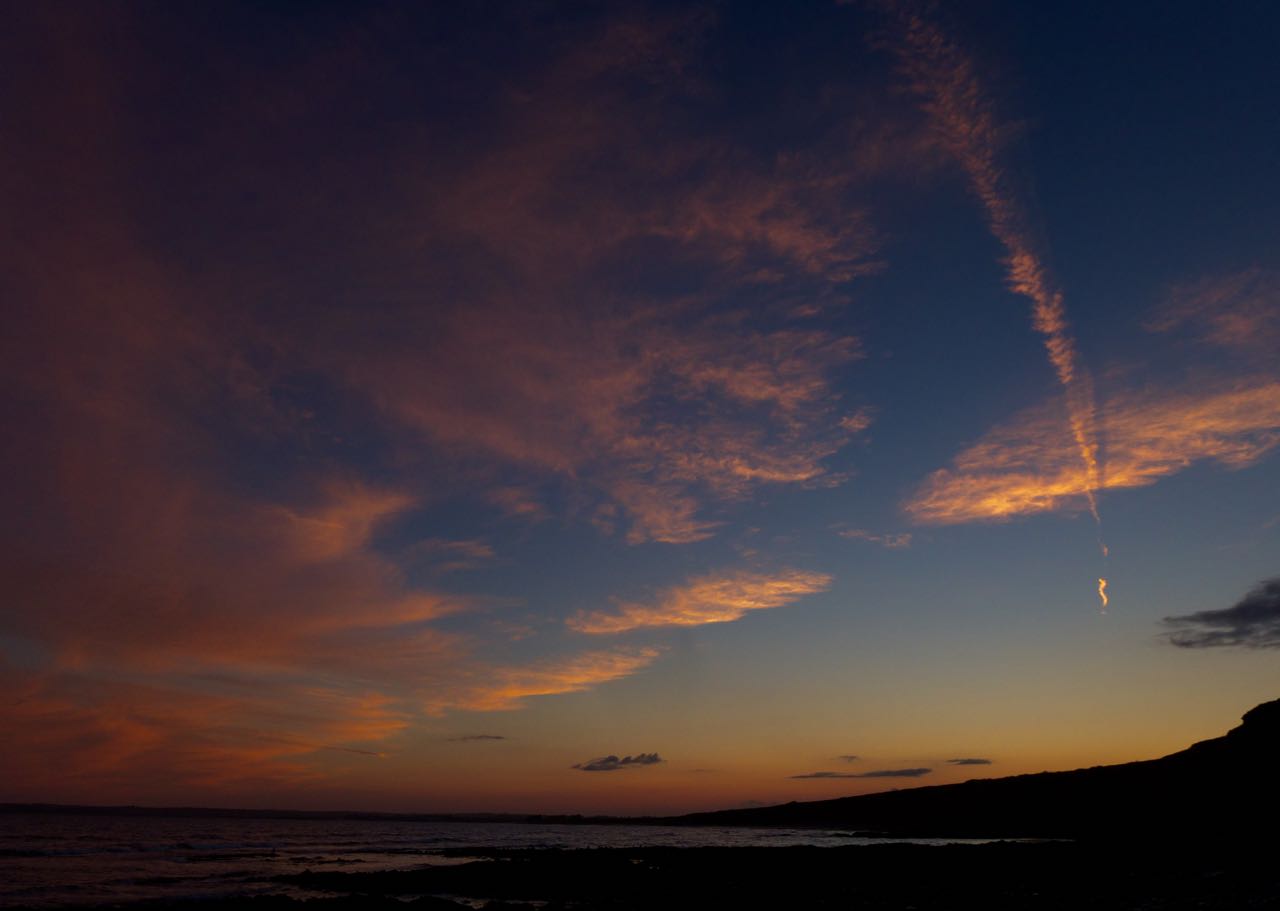
This photo is from the 16th of December, taken during my morning commute. Though the sun had not yet risen, I just had to stop my car and start snapping.

17. Running Along

Favourites 18

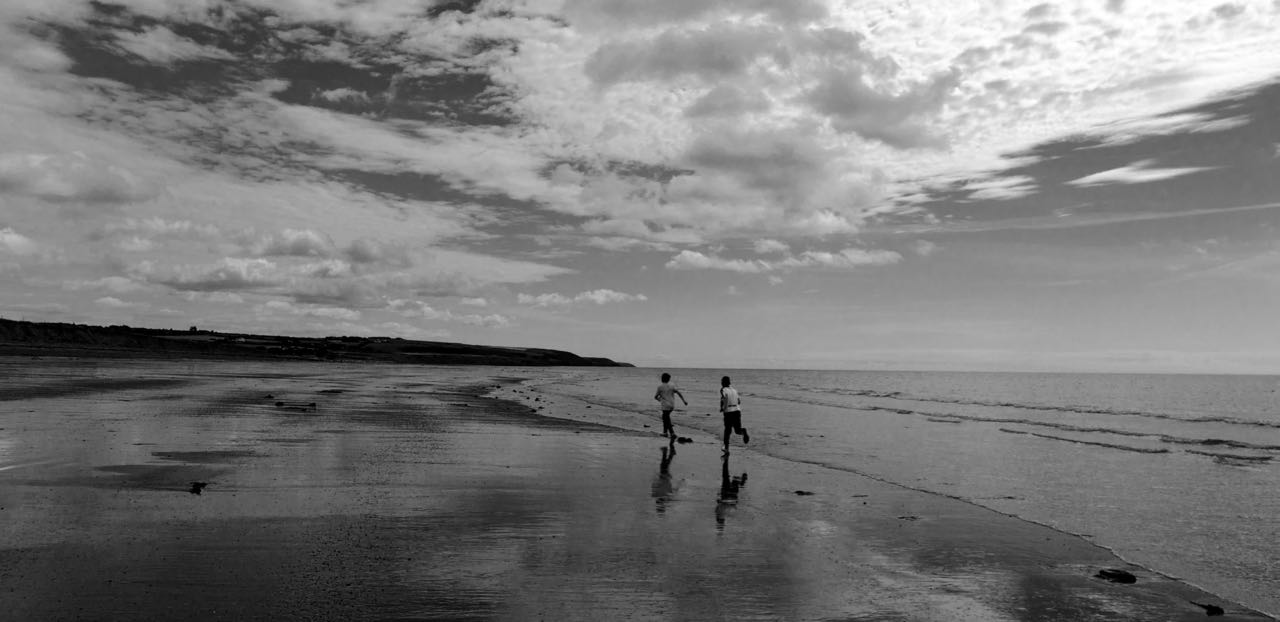
I took this photo on Garryvoe beach just yesterday. It’s like the boys are running from a nuclear explosion.

18. Ballycotton Island

Favourites 19

Taken just this morning, this photo again saw me leaping out of my car. The sun was perfectly positioned over Ballycotton Island. Just glorious.

If any of you are interested, I post regularly to Instagram, and less often to Flickr. Maybe I’ll see you there.

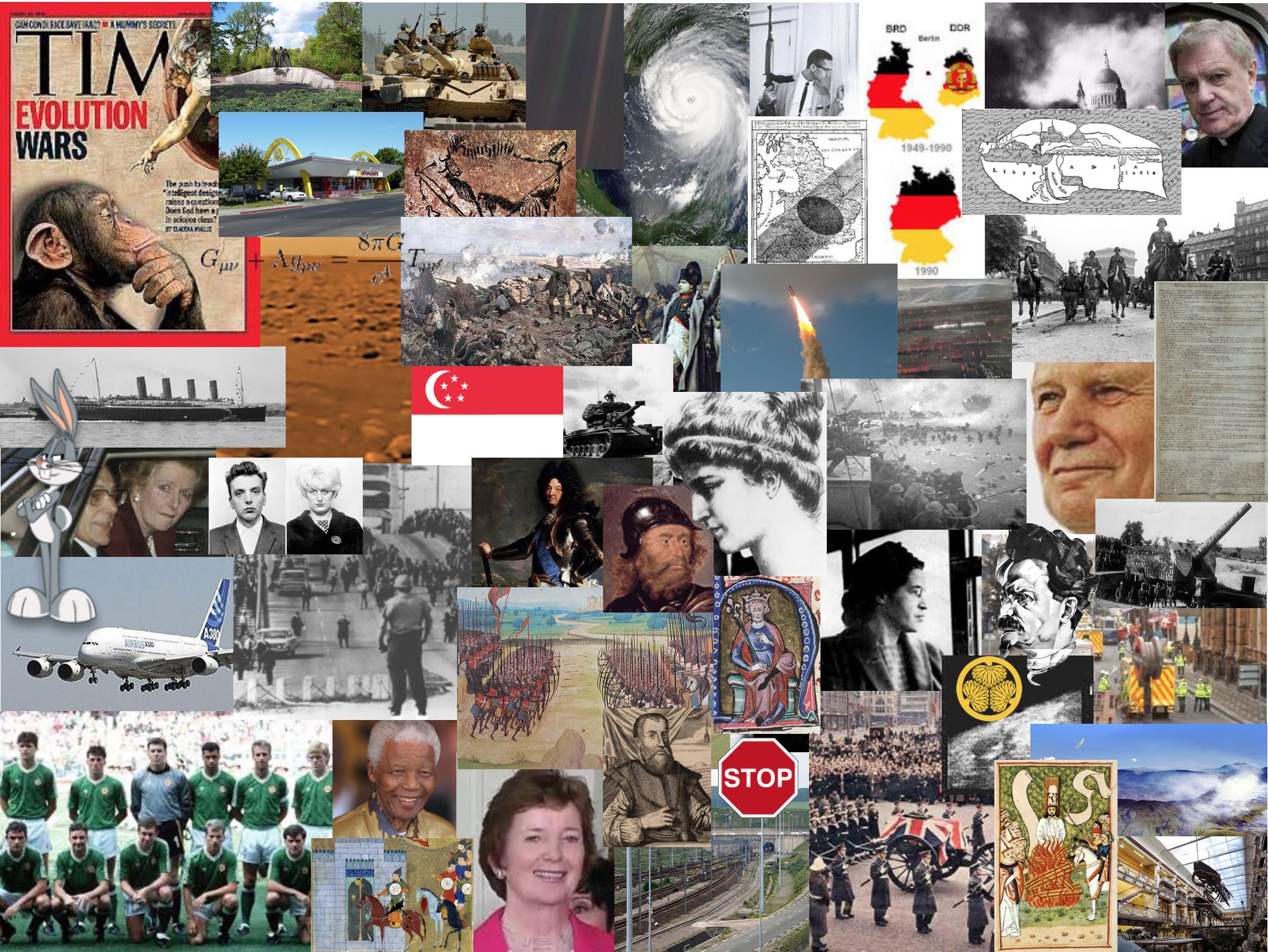
2015 Anniversaries

Ten Years Ago (2005): Hurricane Katrina slams into New Orleans, prompting unprecedented chaos and mass evacuation. The Cassini-Huygens probe landed on Saturn’s moon, Titan. Death of Pope John Paul II. Death of Rosa Parks. The A380 “superjumbo” makes its first flight. London awarded the 2012 Olympic games. The following day, a terrorist attack in the London Underground kills 52 people. Further terrorist bombings take place in Iraq, Bali, New Delhi, the Lebanon and Jordan. The Ferns Report into clerical child abuse, is released. The Kitzmiller vs Dover lawsuit deals a huge blow to Intelligent Design proponents in the US.

Twenty Five Years Ago (1990): West Germany and East Germany are reunified into a single state. Nelson Mandela is released from imprisonment in South Africa. The “Pale Blue Dot” photo is taken by Voyager 1. The Hubble Space Telescope is launched. The Republic of Ireland reaches the quarter finals of the Italia ’90 World Cup. Death of Jim Henson. Iraq invades Kuwait, triggering the first Gulf War. Mary Robinson becomes President of Ireland. Margaret Thatcher steps down as UK Prime Minister. The Channel Tunnel connects Britain to mainland Europe.

Fifty Years Ago (1965): Death of Winston Churchill. Assassination of Malcolm X. American combat troops arrive in South Vietnam. Civil Rights activists, lead by Martin Luther King, march from Selma to Montgomery, Alabama. Mariner 4 takes close-up photos of Mars for the first time. Singapore becomes a sovereign country. Death of Stan Laurel. Ian Brady and Myra Hindley arrested for the Moors Murders.

Seventy Five Years Ago (1940): Nazi Germany invades Denmark and Norway, then Luxembourg, the Netherlands, Belgium and France. British forces abandon mainland France through Dunkirk. British cities and towns suffer through the Blitz. Thousands of people are killed by the Soviets in Katyn, Poland. The Soviet Union annexes the Baltic States. Tom and Jerry, Bugs Bunny and Woody Woodpecker make their screen debuts. First ever MacDonald’s restaurant established in California. Leon Trotsky is killed. The Lascaux cave paintings are discovered. John Charles McQuaid is consecrated Archbishop of Dublin.

One Hundred Years Ago (1915): The RMS Lusitania is sunk by a German U-boat off the coast of Cork, killing 1,198 passengers and crew. The Second Battle of Ypres is fought. Poison gas deployed on the front for the first time. The Allies engage Turkey in the Gallipoli Campaign. Albert Einstein formulates his General Theory of Relativity. The Stop Sign makes its debut in Detroit. Death of Joseph O’Donovan Rossa, founder of the Fenians.

Two Hundred Years Ago (1815): Napoleon Bonaparte escapes Elba and quickly re-takes France. He is defeated in the Battle of Waterloo and exiled to St. Helena. His exile ends 30 years of hostilities between Britain and France. Mount Tambora erupts in Indonesia: it is the greatest volcanic eruption in modern times. Foundation of the National History Museum in Dublin.

Three Hundred Years Ago (1715): The Sun King, Louis XIV of France, dies of gangrene in Versailles, after a reign of 72 years. A solar eclipse passes over London; the last to do so for 700 years. Beginning of the first major Jacobite rebellion in Scotland.

Four Hundred Years Ago (1615): The Tokugawa Shogunate successfully besieges Osaka Castle in Japan, commencing a period of unopposed rule that would last almost 250 years.

Five Hundred Years Ago (1515): The city of Havana in Cuba is founded by Conquistador Diego Velázquez de Cuéllar.

Six Hundred Years Ago (1415): The English defeat the French in the Battle of Agincourt. Pope Gregory XII resigns – the last pope to do so until Pope Benedict XVI in 2013. A brutal precursor to the Protestant Reformation when Bohemian reformer Jan Hus is tried and burned at the stake in Konstanz.

Seven Hundred Years Ago (1315): The Great Famine of 1315 begins, killing up to 25% of the population across Western Europe. The Scottish, under Edward Bruce, invade Ireland. Large parts of Ireland are devastated in the subsequent campaign.

Eight Hundred Years Ago (1215): King John of England agrees to the Magna Carta, establishing common rights and placing subsequent monarchs under the rule of law. Genghis Khan’s Mongols capture and destroy the city of Beijing.

One Thousand Years Ago (1015): King Canute of Denmark invades England. The following year, he became King of England.

One Thousand Six Hundred Years Ago (415): A Christian mob murders Hypatia of Alexandria, a famous mathematician and philosopher.

Two Thousand Years Ago (15 AD): Strabo completed the draft edition of “Geography“: a 17 volume description of the known world at the time.

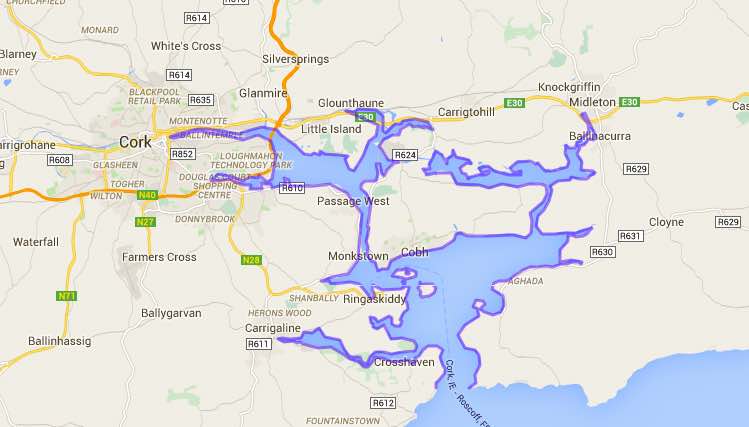
Cork Harbour is often described locally as “the second largest harbour in the world”. For a long time, I’ve been somewhat sceptical of this claim, so I decided to compare its size to other harbours using the MAPfrappe website. With this website, you can quickly compare locations with other sites around the world. I used it a while ago to compare well known islands to Ireland.

First of all, here is Cork Harbour. It’s a natural harbour, dominating a region of 22 km  x 16 km east of Cork City. A very rough estimate of its water-surface area is about 70 sq km, although I am open to correction on this. The land area in the centre is Great island, home to the town of Cobh and connected to the mainland by two bridges, one road, one rail. Less than two kilometres separate the headlands as it meets the sea, making it by any reckoning, a fine, strategically important natural harbour. Its considerable depth in many places allows large ocean going vessels – tankers, container ships and liners – to enter and depart with ease.

CH - Cork Harbour

It’s a beautiful, impressive and fascinating area, full of history and natural beauty. But is it one of the biggest in the world?

According to Wikipedia, its rivals are Sydney Harbour, Halifax Harbour in Nova Scotia and Poole Harbour in Dorset. Let’s see how they compare.

Poole Harbour, Dorset UK

Poole Harbour, UK

Aw look. How cute. Cork Harbour (silhouetted like a horned monster petitioning mariners just outside) wins this one. Poole, incidentally, also thinks of itself as one of the largest natural harbours in the world. I hate to break it to you, guys.

Halifax Harbour, Nova Scotia

Halifax Harbour

Cork harbour wins this one too, even if you were to be generous and start at McNabs island.

Port Jackson / Sydney Harbour, Australia.

Port Jackson

Y’know, I was surprised at this one, because most Corkonians will gladly concede that Port Jackson is larger. It doesn’t look like it here. The main open water areas are at least comparable.

After, these three, the assessment is.. maybe. But then, are there not other spaces that could  rival Cork in size? New York, San Francisco or Rio perhaps?

New York City

New York City

It’s close. Very close. I’d nearly give New York Harbour the edge. Interestingly, the mouth – Verrazano Narrows – is so similar in size to Roches Point / Crosshaven we should really have our own suspension bridge, just for the crack.

Rio de Janeiro, Brazil

CH - Rio de Janeiro

Rio’s Guanabara Bay looks to me like a proper harbour and it’s clearly bigger than our own – in fact you could possibly fit the whole of Cork Harbour into it.

It gets worse.

San Francisco

San Francisco

Oh this is not good. Cork Harbour looks tiny. And they have a suspension bridge at the mouth of their harbour too.

Oh, and we forgot:

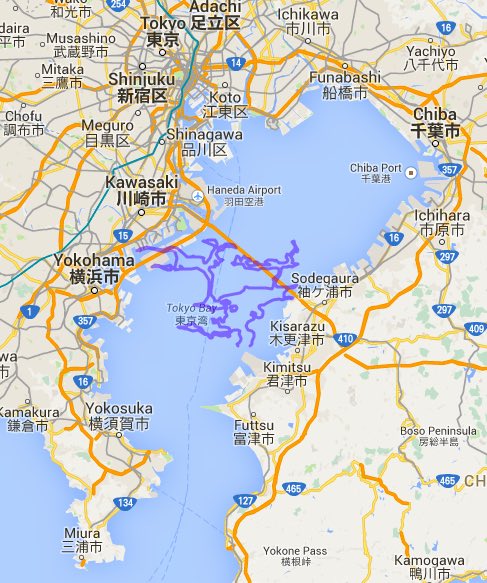
Tokyo

Tokyo

or:

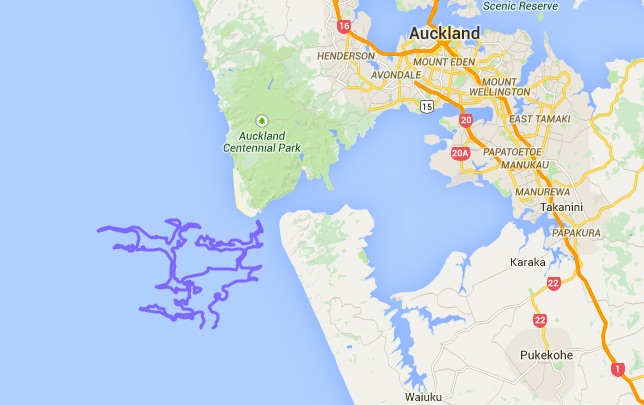
Auckland Manukau, NZ

Auckland Manukau

or, staying in New Zealand:

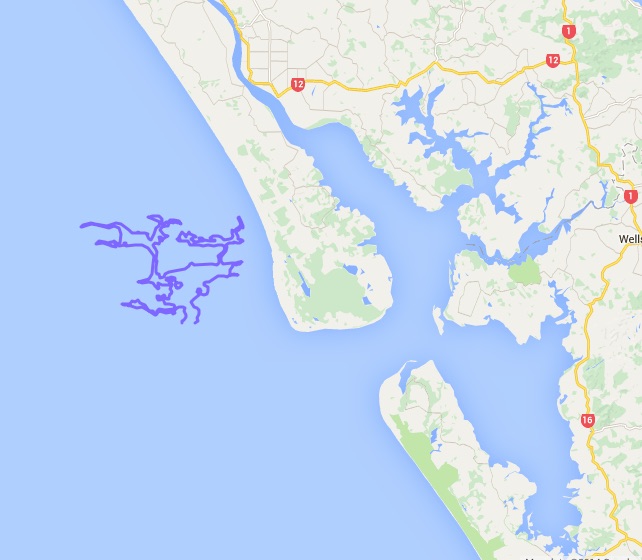
Kaipara Harbour, NZ

Kaipara Harbour, NZ

Whoa. Still though, we’re big for Europe, right? Right?

I give you:

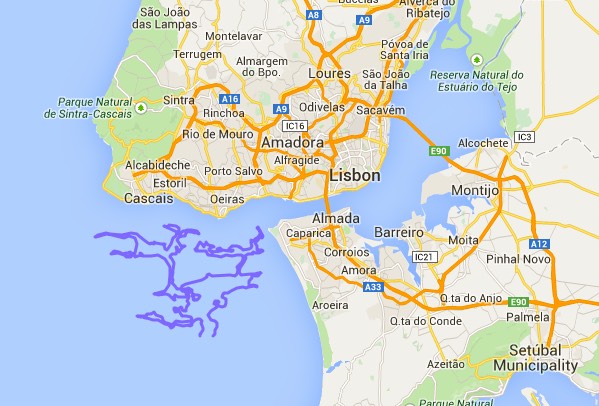
Lisbon.

Lisbon

and:

Brest

Brest

and finally,

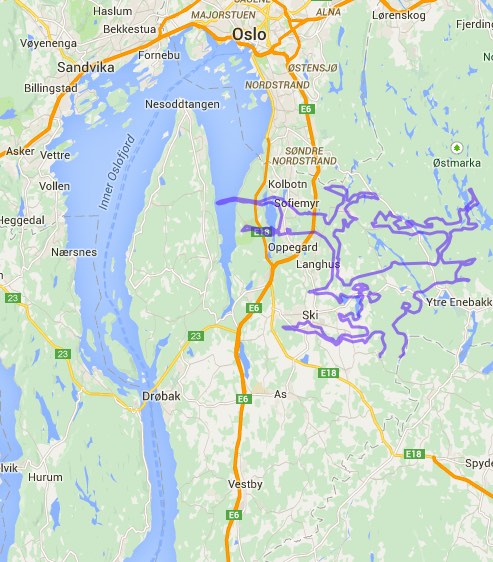
Oslo

Oslo

Folks, we need to take a long, good look at ourselves. Even if we are only the second largest harbour “by navigable area” (a claim I suspect given the sizes of Rio, San Fran and Tokyo, or we want to be pernickety about what harbour really means, we have to content ourselves that the claim “2nd Largest Harbour in the World” is dodgy. Seriously dodgy.

Still beats Dublin, though.

We were treated to a wonderful morning a few days back. Fog and frost covered the fields, the rivers and the hedges. All was quiet. Armed only with an iPhone and Instagram, I visited a few beauty spots and took some photos. Some of them had a good reaction on the Internet, so I have reproduced them here, going back to the originals and seeing if I could improve on them.

View from Belvelly Bridge

View from Belvelly Bridge

Belvelly Castle, Great Island, Co. Cork.

Belvelly Castle, Great Island, Co. Cork.

Fortified House, Ballyannan, Midleton, Co. Cork.

Fortified House, Ballyannan, Midleton, Co. Cork.

Estuary, Ballyannan, Midleton, Co. Cork.

Estuary, Ballyannan, Midleton, Co. Cork.

Midleton, Co. Cork.

Midleton, Co. Cork.

Castlemartyr Resort, Co. Cork.

Castlemartyr Resort, Co. Cork.

Castlemartyr Resort, Co. Cork.

Castlemartyr Resort, Co. Cork.

A STATEMENT FROM Catholic bishops that it would be a “grave injustice” for instant porridge to be sold in supermarkets is being distributed parishes all around Ireland.

A document entitled “The Meaning of Porridge” argues that, “Porridge provides for the continuation of the human race and shur, aren’t there lots of poor craturs in Africa just dying for a bit of Flahavans”? They argue that “to redefine the nature of porridge would be to undermine it as the fundamental breakfast cereal of our society” and that “Children have a right to natural breakfast cereal, not that icky unnatural instant stuff or, heavens preserve us, Coco Pops”. 

The statement outlines the Irish Catholic Church’s definition of what it considers to be “real” porridge, backed up by strict biblical interpretations, i.e. when Lot’s wife was turned into a pillar of salt when she looked back at Odlums and Gomorrah.

Launching the document today at Saint Patrick’s College today, Bishops Liam MacDaid and Kevin Doran said that the document was prepared in the context of the upcoming referendum on the state recognition of instant porridge. “Porridge is, of its nature, a wonderful breakfast meal eaten by both men and women throughout the country. Whoever heard of men making porridge? That’s a woman’s job.” Doran claimed.

“Won’t someone think of the children?” MacDaid spluttered. “Next thing they’ll be sowing their wild oats all over the place. And then we’ll have instant toast and instant marmalade all sorts of feckin’ abominations”.

A new advertising campaign “Hello Ready Brek, Goodbye Eternal Happiness” is planned to shock the faithful into siding with the Bishops.  

This article has been stolen from The Journal.ie and unmercifully mangled into something altogether different, less expensive and tastier. I mean, do you want same-sex marriage instead of porridge for breakfast? Do you? Ha. I thought not.

AngelI was involved in a Cork 96FM radio programme a few days ago, talking about angel belief. Prior to my bit on the programme, a number of women were interviewed. They were deeply invested in their beliefs, many claiming to have seen visions or having received the assistance of angels at important moments in their lives. The women were clearly very religious, many of them describing themselves as “spiritual”, as opposed to paid-up Catholic Mass-goers.

They talked about their encounters with angel healers. According to them, the healers were able to tell them things they couldn’t possibly have known in advance. It was clear that the healers were using cold-reading and warm-reading techniques. Psychologists and mentalists have long discovered that these methods are not at all magical; instead they prey on mental flaws and blind-spots that we all possess. These manipulative and deceptive practices still catch the unwary, hook, line and sinker.

Angel belief has been given a shot in the arm because of a recent pronouncement by the Pope, who recently declared that they exist, whether we choose to believe in them or not. The Pope may well be saying this from a position of belief, however part of me suspects that he is addressing a wider problem within his Church. There has been a notable decline in church involvement by women, who have become disillusioned by the behaviour, attitudes and scandals within the world’s biggest boys’ club.

What strikes me about angel belief is the power of the imagery. I doubt if there are many things more potent than the idea that an authority figure is caring for us and nurturing us. It’s inculcated in us from childhood. When things get bad, we can rely on this image to make us feel better. Mary and Jesus are portrayed as nurturing, parental figures for this very reason. While this kind of belief can seem harmless enough, I have some concerns. Should things continue to get worse, then instead of focusing on the problem, people could be wracked by guilt for having disappointed their “angel”; that, in some way they are being punished for a transgression. This could pile additional stress on what is already a difficult situation. Additionally, such feelings of comfort are temporary and unlikely to solve chronic issues and problems fixable with outside help. Far from being a solution, angel belief could morph into a permanent avoidance strategy. I don’t think that’s healthy.

I am not going to condemn people who believe in angels. What people choose to believe is up to them, so long as they are not trying to foist these beliefs onto us, or put other people’s health and mental health at risk. Angel healing is big business, as anyone who has recently visited a book shop will testify. It saddens me that so many people are locked in a parent-child relationship with an imaginary entity. It allows the angels’ real life proxies – the authors and healers profiting from these beliefs – to be viewed very uncritically by their adherents. Given the subject matter they claim to be experts on and the fact that their only “evidence” is personal anecdote, these people are not quite as knowledgable as they make themselves out to be.

Last Sunday, we went on a boat trip in West Cork. We were hoping to come up close and personal with a large pod of fin whales, but, despite excellent weather on the day, they were nowhere to be seen.  Photos of these magnificent creatures will have to wait for another day.

The trip was remarkably uneventful. Not only did we not see fin whales, but we also failed to spot any sunfish, dolphins or minke whales either. Even the skipper couldn’t hide his frustration on the day, as the previous few days had been marvellous for spotting marine creatures. 

We did manage to see seals, but this time of the year they’re not likely to go too far as the females are heavily pregnant. And no, we didn’t see any newborn seal pups either, in case you’re asking.

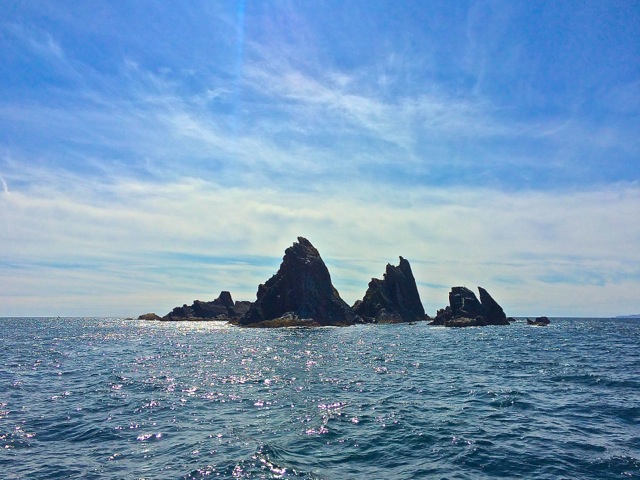
The upside is that I managed to take some nice photos. The coastline around Castletownshend is gloriously photogenic, even if its marine inhabitants were in hiding.

20140825 - Boat Wake

The Stags

The Stags

Seal Rocks

Seal Rocks

So, yet another local politician has put his foot in it. He requested that the only people allowed to work on a new motorway be Irish, with the dark implication that those damned for’ners go back to the countries they came from forthwith. I’m sure, no doubt, we’ll hear that some of his best friends are “non-nationals”, just you wait.

via Mike Licht (CC Licenced on Flickr)

via Mike Licht (CC Licenced on Flickr)

But who are the Irish anyway? Is it people who were born in Ireland? Then what about the kids who were born here, but are not allowed Irish citizenship because their parents don’t come from these parts? How about Six County Nationalists or, God forbid, Ulster Unionists? Can we include them?

What about the thousands of people from all over the world who have acquired Irish citizenship through a lengthy and expensive process? Are they now Irish, or should we try to take their passports away when they aren’t looking? Can we overlook the fact that many foreigners pay tax here, thereby bolstering our public services?

Then there are the emigrants who left the country to better their prospects and now cannot vote in any of our elections. Should we drop them from the list too? Or the sons and grandsons of emigrants who find they can play on our national soccer team if they are good enough? Maybe if they lose the accent can we leave them in?

Maybe the accent clinches it, leaving us therefore with a “South Dublin Problem”.

And what about those people who hold a sentimental attachment to the aul’ sod? Should we ask them to refrain from calling themselves Irish Americans or Irish Canadians lest they dilute the magic of Irishness? Should we divide St. Patricks Day in two – a “real” one and a “continuity” one, perhaps?

Does Irish mean Catholic? Or lapsed Catholic, because, well, you know, actual Catholics are somewhat in decline these days.

Does it mean you need to have a surname like O’Carroll, O’Casey, Boyle or Desmond? Do we stop at the Norman invasions or can we let a few Old English in before we close the doors? Should they at least follow the hurling or the football, or must they have played it up to senior level? How then, in God’s name, should we deal with a women’s rugby team or Irish cricket players? The state of them.

Could we somehow leave Cork people from the list? Surely they want to secede anyways?

Oh dear. I despair. It’s such a hard thing these days figuring out what “Irish” actually means. Maybe we should leave it to the esteemed councillor Fahy to sort it out for us.