Archives for posts with tag: Ireland

Today makes me feel old. Really old.

When I was growing up we had this low level terrorist war going on. Awful stuff. Every day, more bombs, more killings, more coffins. Every day, more excuses, more whatabouts, evasions, mistruths. And hatred. We Irish were hated. Just for being Irish, having that funny accent, suspected of supporting the people who committed these atrocities, even if nothing could be further from the truth. Despite this, and barring a few exceptions, it did not descend into indiscriminate bombings of civilian areas, of mass deportations of civilians, of detention or execution without trial. 
We need to remember this today. How it felt to be despised and feared. Just for being born in the wrong place, having a strange accent or the wrong surname. How targeting us for these things would have made a bad situation immeasurably worse.
You don’t crack such problems with a sledgehammer when what’s needed is a scalpel and a longer strategy. Blaming and targeting a whole group of people might make you feel better, but it doesn’t solve anything at all. We Irish, of all people, aught to remember this today.

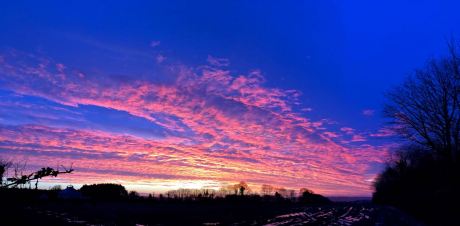
Against my better judgement (as tomorrow is an incredibly busy day for me) – I heard there might be auroras around, so I ventured out to my favourite place and.. I was not disappointed.

Aurora - P1090310

It was a subtle enough effect. With the naked eye you might not have seen much, but with a camera set to 40 seconds exposure, the sky came to life.

Aurora - P1090307

I was expecting to see green, but not red.

Aurora - P1090305

Our atmosphere clearly got hit by something big tonight! A big explosion on the sun is usually the reason for such beauty.

Aurora - P1090310

Most of the time, Cork is too far south to see anything of value. Not tonight.

IMG_9534

I had the morning free, so my daughter and I took a walk around the city to see what was going on. The election count was in full flow in the City Hall but we didn’t stay there too long. The city was waking up, getting ready for the day.

IMG_9500

We headed down to the footbridge by the Grand Parade. In the distance were the limestone towers of Finbarr’s Cathedral, looking out over the city.

IMG_9502

And in the other direction, Father Matthew Church, flanked by the river Lee, modern architecture competing with the buildings of earlier years.

IMG_9510

The English Market was already in full swing. It’s one of Cork’s main attractions – the variety of food stalls and coffee houses is wonderful.

IMG_9497

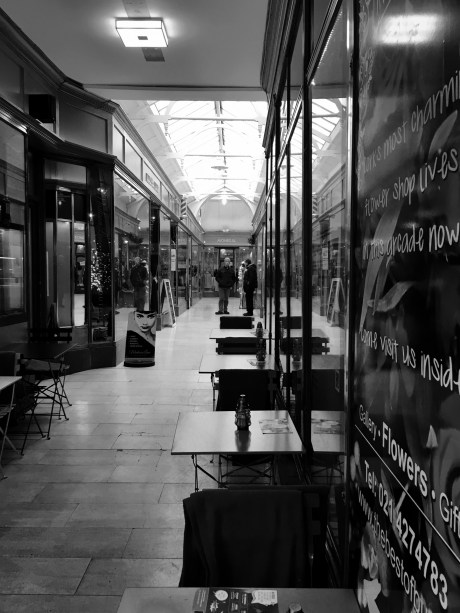
Close by, a small arcade selling coffee and Middle Eastern food. Cork is full of little alleys and side streets.

IMG_9493

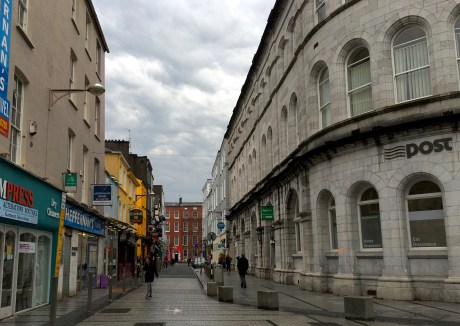
Pembroke Street, joining Oliver Plunkett Street to the South Mall, and home to some great bars and restaurants.

IMG_9519

St. Paul’s Avenue, with a view of Shandon in the distance.

IMG_9548

Finally, we made our way back to the City Hall and out of the city. The muddy river Lee continuing its march towards the sea.

A few days ago, during the General Election, I tweeted this:

https://twitter.com/colm_ryan/status/703543486012911617

It got a lot of retweets because the politicians I mentioned represent the extreme cases of those who are less interested in national politics than they are about pandering to the needs of their own local community. They are caricatures, easily lampooned and despised. To them, it’s all about Kerry and Tipperary, and the rest of the country can take a running jump.

But, honestly, I’m somewhat conflicted about all this. While I despise the gombeen image, I think the local nature of politics in this country serves us very well.

It’s important, I think, that we know the people we are voting for. If someone is effective on a local level, then we get to see through the slogans. We get an insight into the people themselves. We derive something about their character. The voting process can winnow the best of these from the less able. In the main, good people are sent to Leinster House.

Another thing to celebrate is that our political process is rooted in the life and history of our country.  We are never more than 10 feet away from a local politician here. This helps to mitigate the sense of disenfranchisement so keenly felt across the Western world. In Knocknaheeney, a deprived suburb of Cork I drive through almost every day, there was a palpable sense of energy in the run-up to the election. The next Dáil will contain many people who will represent the voices of the deprived, and this is a good thing.

The system can result in narrow-minded councillors topping the polls, but what’s amazing is that, more often than not, it delivers quite good people too. Michael Lowry, Mattie McGrath and the Healy-Raes represent the extreme of our local system, but that doesn’t mean that the system in general is dreadfully wrong. It might actually be the best thing to come from 1916 – something that makes us who we are: democrats by instinct and nature.

Even though the next government is still uncertain, I am quite optimistic about the outcome. Ireland is not built for grand overthrows but evolutionary change is quite possible. Our local system of politics, with its abundant compromises and contact with the struggles of real people, makes such change possible.


A few days ago, I asked this question on Twitter: when you take humanism from Christian teachings, is there anything left worth conveying to kids in school? This was in response to Joe Humphreys’ article in the Irish Times this week, where he wrote that elements of Christian teaching had a value in addressing the religious schooling problem in Ireland.

Joe has written some interesting thoughts on the issue over the past few months. This article wasn’t one of them, unfortunately. His was a ‘baby with the bathwater’ argument that did not address the problem of privilege within the Catholic Church. It sought to bolster the Church’s special place in education without giving solid arguments about why this should be. Appealing to tradition and creating straw men doesn’t cut it.

Many people in Ireland have a love-hate relationship with the Catholic Church. It has been an opponent of almost every progressive reform in the last half century, not to mention having presided over the greatest cover-up (and worst abuses) we have seen in our lifetimes. Many would argue, with ample justification, that the Church’s primary concern is its own survival. Still, we all know nice church people. We know clerics who have said the right things at the death bed of a loved one and taken principled stances on difficult issues when nobody else was addressing it. Even the Pope has his moments. 

Excellent though this is, the Church has no monopoly on such good works. Much of the same can be found within Protestant, Islamic, Buddhist, Hindu and non religious communities, or in any situation where people are compelled to help others. When Christians behave admirably, they are acting from a strong sense of human compassion. Religious principles may inform good actions, but it is not something only seen among Christians. Every day in China, India, Nigeria, Iran and all around the world; you will find good, kind, thoughtful, principled people doing good, kind, thoughtful, principled things, mainly because that’s the kind of people they are.

There is great humanism in Christianity. But back to my question: if you take this basic humanism from Christianity, what’s left?

Honestly – and quite possibly I’m missing some things- but it doesn’t seem terribly impressive to me. There is a strong appeal to prayer, which quite overlooks the fact that praying has a particularly poor record in solving most of the basic problems of the world. There is the belief in a deity who consistently eludes detection in any reasonable sense. There are all the rituals that seek to make this deity happy or at least smooth the way to an afterlife, the outcome of which this deity already knows. Is this even remotely on the same level as maths, history and geography?

It’s the area of sexual morality where the differences with humanism are greatest. Instead of looking at the complexity and variety of sexual practices and sexual preferences, Christian thinking often seems to reduce it down to disgust, shame and a desire to control other people’s basic freedoms. Sex is rarely seen as healthy, positive or worthy of proper discussion. Some Christian views, such as the stance on contraception and homosexuality are positively anti-human in their effects. A side effect of their absolutist views on abortion are to silence the voices of millions of women and to reduce them to a second class within society. It’s difficult to see how such simplistic thinking is at all helpful for children who will soon experience the massive complexities of adulthood for themselves.

I don’t have a problem with dedicated, devoted Christians being part of a new educational dispensation, but I do not think that this should be some sort of compromise between equals. It’s not. Humanism has developed from Christian thinking, but it’s also been able to benefit from the views of many other great thinkers, using science to validate these views. If people insist on educating their kids within their faith, then that is still their right, but I doubt if such an education will be greatly superior. It may even be detrimental if there is a strong emphasis on the non-humanistic parts of the curriculum.

Ten Years Ago (2006)

Twitter is launched. Saddam Hussein is executed. A terrorist bombing campaign in Mumbai kills 209 people. The New Horizons mission is launched towards Pluto. In the same year, Pluto is no longer classified as a planet. Former Irish Taoiseach, Charles Haughey, dies. Opening of the Dublin Port Tunnel. Crocodile Hunter Steve Irwin is killed by a stingray in the Great Barrier Reef.

Twenty Years Ago (1996)

The Docklands bombing in London signals an end to the 1994 IRA ceasefire. Chess champion Gary Kasparov is beaten by a computer. The Dunblane massacre takes place in Scotland. The Unabomber, Ted Kaczynski, is arrested in Montana. An IRA gang kills Detective Jerry McCabe in Co. Clare. Journalist Veronica Guerin is killed in Dublin. Dolly the Sheep, the first mammal to be cloned from an adult cell, is born. Prince Charles and Diana are formally divorced. Fox News TV channel is launched in the US. Death of science advocate Carl Sagan. Divorce is legalised in Ireland.

Thirty Years Ago (1986)

Space Shuttle Challenger explodes, 73 seconds after take-off from Cape Canaveral. A fire at the Chernobyl nuclear facility in the Ukraine causes a nuclear meltdown. Spain and Portugal join the European Union. Swedish prime-minister Olof Palme is assassinated. Diego Maradona scores his “Hand of God” goal against England in the Mexico World Cup; then goes on to score the “Goal of the Century“. Thousands are suffocated after a massive release of carbon dioxide from Cameroon’s Lake Nyos. The M25 Motorway is opened in London. Death of Thin Lizzy frontman, Phil Lynott.  Jack Charlton becomes manager of the Ireland football team. A referendum introducing divorce in Ireland is defeated.

Forty Years Ago (1976)

The deadliest earthquake of the 20th Century occurs in Tangshan, China; over 250,000 people perish. The Concorde supersonic jet takes passengers for the first time. The Apple Computer Company is formed by Steve Jobs and Steve Wozniak. The Cultural Revolution in China comes to an end with the death of Chairman Mao. Police clash with thousands of rioting youths in Soweto, South Africa. The Viking I and Viking II landers arrive on the surface of Mars. Israeli forces free 102 hostages from a hijacked plane in Entebbe, Uganda. The Supreme Court of the United States reinstates the death penalty. The first known outbreak of Ebola occurs in Zaire. An advertisement in Mount Temple Comprehensive School in Dublin leads to the formation of the rock band U2. President of Ireland, Cearbhall O’Dalaigh, resigns after being called a “thundering disgrace”.

Fifty Years Ago (1966)

Nelson’s Pillar is blown up by the IRA in Dublin. Soviet spacecraft land on the Moon, crash-land on Venus and go into orbit around the Moon. Ian Brady and Myra Handley are convicted of the Moors Murders. The beginning of the Cultural Revolution in China. The Beach Boys release Pet Sounds. They think it’s all over… England beats West Germany 4-2 in the World Cup Final in Wembley. The Beatles hold their last commercial concert in San Francisco. The first episode of Star Trek airs on US TV. A coal mine landslide in Aberfan, Wales, kills 116 school children. Walt Disney dies. The Vatican formally abolish their list of banned books.

Sixty Years Ago (1956)

Elvis Presley hits the US Charts for the first time. Pakistan, Tunisia and Morocco become independent countries. The first Eurovision Song Contest takes place in Lugano, Switzerland. The Hungarian Revolt takes place and is violently suppressed by Soviet Russia. Brendan Behan becomes the first person in the world to say “fuck” on a television programme. Egypt nationalises the Suez Canal and is attacked by Israel, France and Britain. Shockley, Bardeen, and Brattain win the Nobel Physics Prize for their invention of the transistor.

Seventy Years Ago (1946)

The electronics company that would eventually become Sony is formed in Japan. Jordan and the Philippines become independent countries. Italy becomes a republic. Senior Nazis are executed in Nuremberg. William Joyce, a.k.a. “Lord Haw Haw“, is executed in Wandsworth Prison. The United Nations meets for the first time – UNICEF and UNESCO founded the same year. Science fiction novelist H.G. Wells dies.

Eighty Years Ago (1936)

Nazi Germany re-occupies the Rhineland. Josef Stalin begins his Great Purge in Russia – an estimated 680,000 people are executed over the following 2 years. The Spanish Civil War begins after an attempt to oust the elected government of Manuel Azana.  Edward VIII abdicates after proposing to marry Wallace Simpson. Construction of the Hoover Dam is completed. Aer Lingus is founded as the Irish national airline. Alan Turing lays down the basis of machine based computing with his paper “On Computable Numbers“. Margaret Mitchell’s novel, “Gone With The Wind” is published in America. The first Olympic Games to be televised live takes place in Berlin. At the games,  Jesse Owens wins the 100m sprint, much to the chagrin of Adolf Hitler. The thylacine goes extinct in Tasmania.

Ninety Years Ago (1926)

Ireland’s first radio service (later RTE) began broadcasting. John Logie Baird demonstrates his mechanical television system. Fianna Fáil political party founded by Éamon DeValera. AA Milne publishes Winnie the Pooh. Magician Harry Houdini dies after a ruptured appendix. The NBC radio network starts operation in the US. Violet Gibson shoots Benito Mussolini three times while he was sitting in his car. The main Chicago to Los Angeles route is named Route 66. Birth of David Attenborough.

One Hundred Years Ago (1916)

The Battle of Verdun, the Battle of Jutland and the Battle of the Somme in World War I – over 1 million men are killed or injured in the Battle of the Somme alone.  The Easter Rising breaks out in Dublin and is suppressed by British forces within 5 days. Many of the ringleaders are executed. Ernest Shackleton and 5 companions complete a hazardous boat journey from Elephant Island to South Georgia. BMW motor company is founded in Germany. Murder of Grigori Rasputin in Russia.

Two Hundred Years Ago (1816)

This is The Year Without A Summer across the Northern Hemisphere as a result of the eruption of Mount Tambora in 1815. Argentina declares independence from Spain. Humphrey Davy introduces the safety lamp into coal mines. The stethoscope is invented by René Laennec. Mary Shelley starts writing Frankenstein. Indiana becomes the 19th US State.

Three Hundred Years Ago (1716)

The old monarchies of Spain are dissolved and Spain becomes a single unified country. The leaders of the Jacobite Rising of 1715 in Britain are executed. The first lighthouse is built in America.

Four Hundred Years Ago (1616)

Willem Schouten rounds the tip of South America and names it Cape Horn. Death of shōgun Tokugawa Ieyasu in Japan. Catholic theologians declare that Copernicus’s idea of the Earth orbiting the Sun is “foolish and absurd“; Copernicus’s book is banned. Deaths of William Shakespeare and Miguel De Cervantes. Pocahontas arrives in England. Construction of the Blue Mosque is completed in Istanbul.

Five Hundred Years Ago (1516)

The disparate kingdoms of Spain are united under the Habsburg monarch Charles V.  The Beer Purity Laws are instituted in Germany, limiting the ingredients to water, hops and barley. Thomas More publishes Utopia. Spanish explorers reach the Rio La Plata. A Dominican monk travels to Germany to sell indulgences for the reconstruction of St. Peter’s Basilica. This turns out to be a very bad idea.

Six Hundred Years Ago (1416)

Execution of Jerome of Prague at the Council of Constance. Jerome was a follower of Jan Hus who had been executed for heresy the previous year. Ma Huan writes his account of the Chinese age of exploration.

Seven Hundred Years Ago (1316)

Great Famine rages across Europe. The Bruce Campaign devastates Ireland. Death of Alauddin Khilji of India – one of the few rulers who defeated the Mongols during his reign.

Eight Hundred Years Ago (1216)

Death of King John of England of Magna Carta fame. Foundation of the Dominican Order.

One Thousand Years Ago (1016)

Death of Æthelred the Unready. King Cnut of the Danes assumes the Kingship of England.

Two Thousand Years Ago (AD 16)

Roman general Germanicus defeats the Germanic army of Armenius in retaliation for the massacre of the Teutoburg Forest in AD 9.

Two Thousand Four Hundred Years Ago (BC 384)

Aristotle is born.


Looking back over all my photos this year, I found it hard to pick out the top ten shots that I was most happy with. It was a great year for photography for me. I managed to travel to a number of far flung places, but, in the end, most of my favourite photos were taken locally.  So here they are. Click on any one of them to get a better view.

Electric Sunrise

This photo was taken in mid-January 2015, in the hills near Glanmire, Co. Cork. I don’t usually stop my car when driving to work, but this was an exceptional dawn event. We often forget how beautiful the sunrises can be here in Ireland.

Electric Sunrise, Glanmire, Co. Cork

Pacific Breaker

I took a work visit to California in March. As always, I drive towards the Pacific coast as soon as I get off the plane. The waves are often enormous. This day was no exception. It was taken by Bean Hollow State Beach, about halfway between San Francisco and Santa Cruz.

Breakers, Cabrillo Highway, California


Rowing Boat, Killarney

Quite a story for this next one. Myself and my friend Ais had elected to do a charity night-time walk up Ireland’s highest mountain, Carrauntoohil, in April. It was a total washout. We just barely managed to reach the top of the Devil’s Ladder before we were forced back by strong winds and lashing rain. We arrived back at Cronin’s Yard soaked to the skin. The original intention was to photograph the sunrise from the top of the mountain, but in the end, we were lucky simply to get back uninjured. The afternoon before the walk, I took this photo of a boat near Ross Castle.

IMG_6263

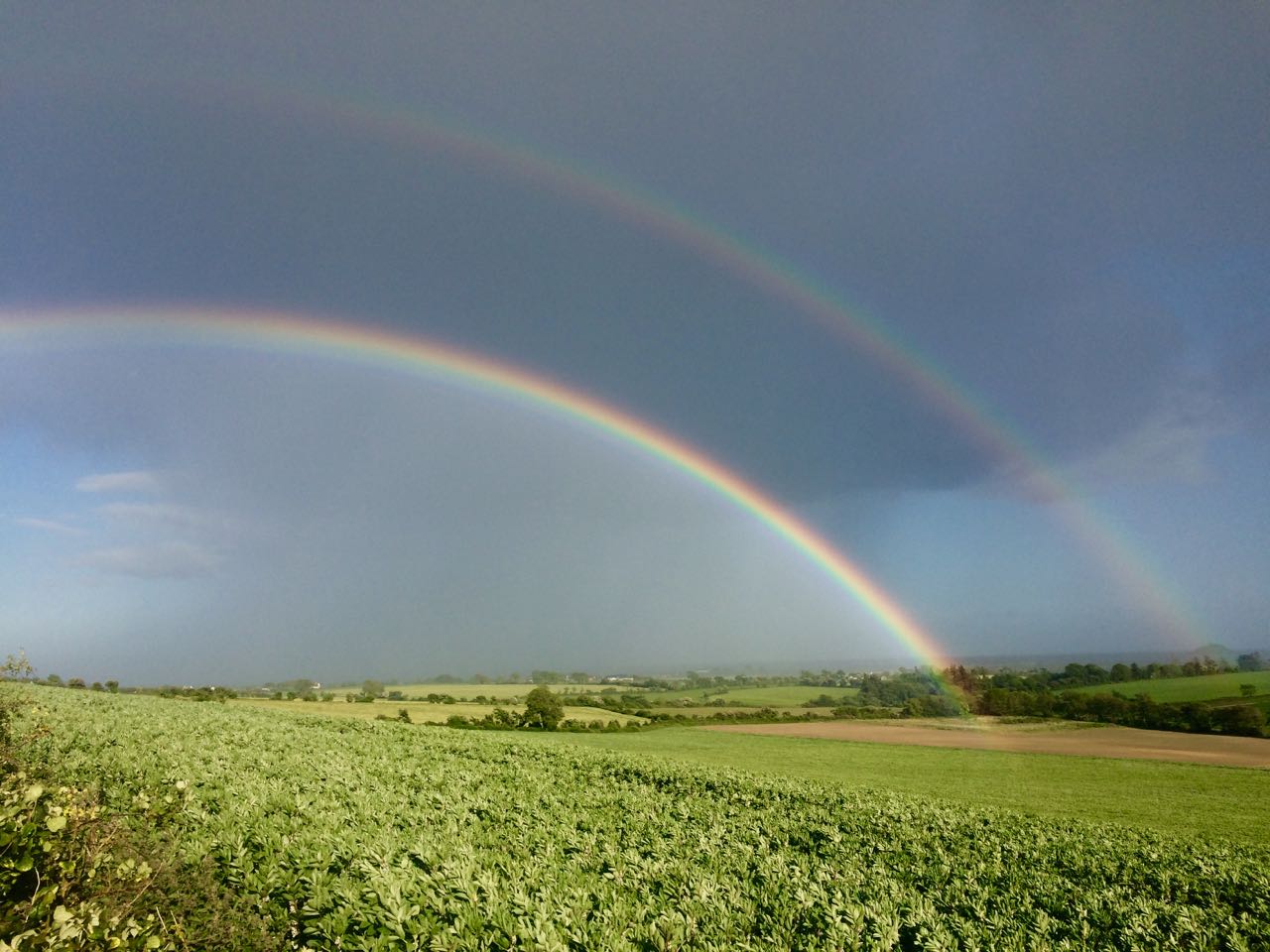
Double Rainbow

This photo from June was taken just yards from my home. The weather was showery that day, with rainbows guiding me all the way from Cork. I don’t think I’ve ever seen a double rainbow so stark as this one.

Version 2

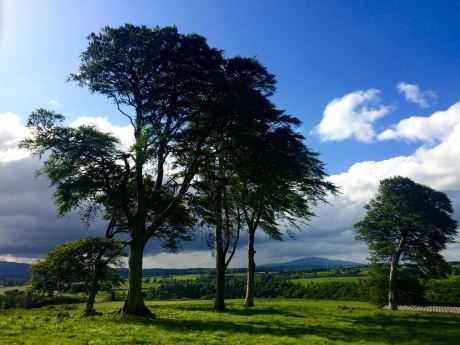
Beech Trees, Waterford

The following day, Claudia and I went on a drive through County Waterford, taking the northerly route across the county from Portlaw to Clonea. It’s wonderfully picturesque; a maze of tiny roads and high estate walls. I took this photo on the walled road out of Portlaw. In the background is the lone hill of Slievenamon, Co. Tipperary.

IMG_9763

Camphire Horse Trials

I’m not at all into horses, but in July I visited the Camphire International Horse trials, nestled in a beautiful part of Waterford on the banks of the River Blackwater. It was a thoroughly wet day, but this didn’t spoil the enjoyment in the slightest. This photo, taken during the cross-country event, was full of action; the horse has just landed into the water after a challenging jump.

Version 2

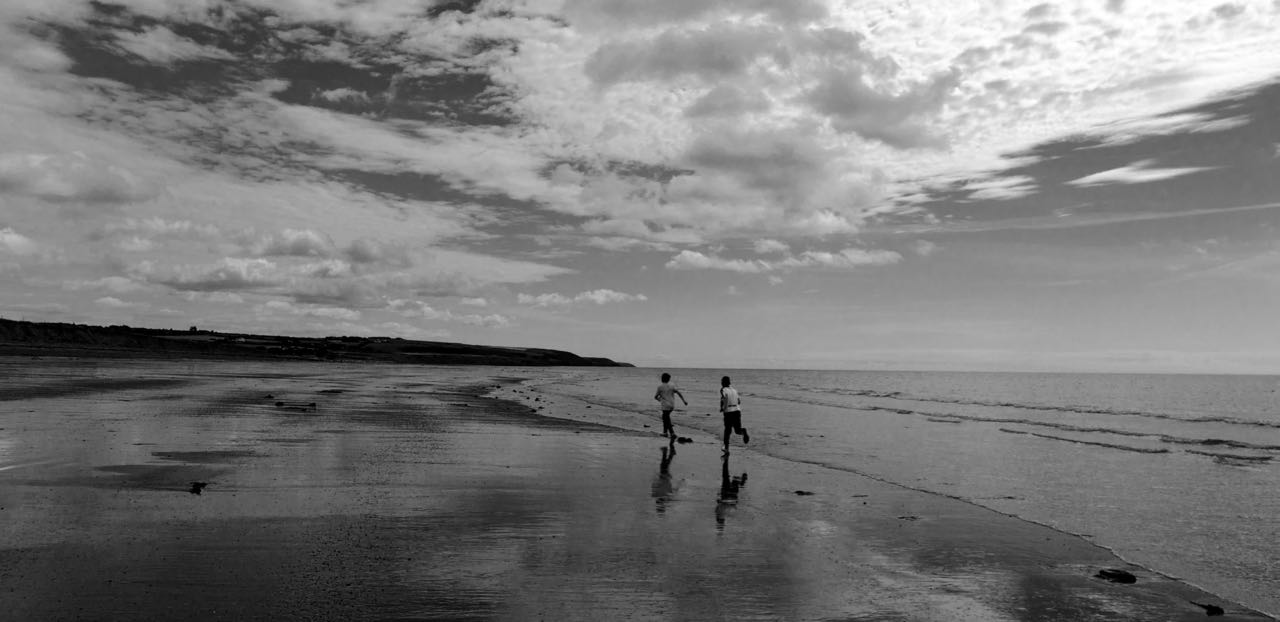
Running boys

I just love this. My two youngest boys full of action. Why walk anywhere when you can run? It was taken on Garryvoe Beach in early August.

Version 2

The Big Sur

A few days later I was back on a plane, again in California for a few days. This time I decided to drive as far south from San Francisco as I could, reaching the Big Sur before sunset. It was a 100 mile drive to get there (and another 100 miles back). But my, was it worth it.

Version 2

Jellyfish Clouds

This photo was taken near home in late August. As the sun was setting, the cloud formation took the appearance of a tentacled jellyfish. It’s quite a panorama.

Version 2

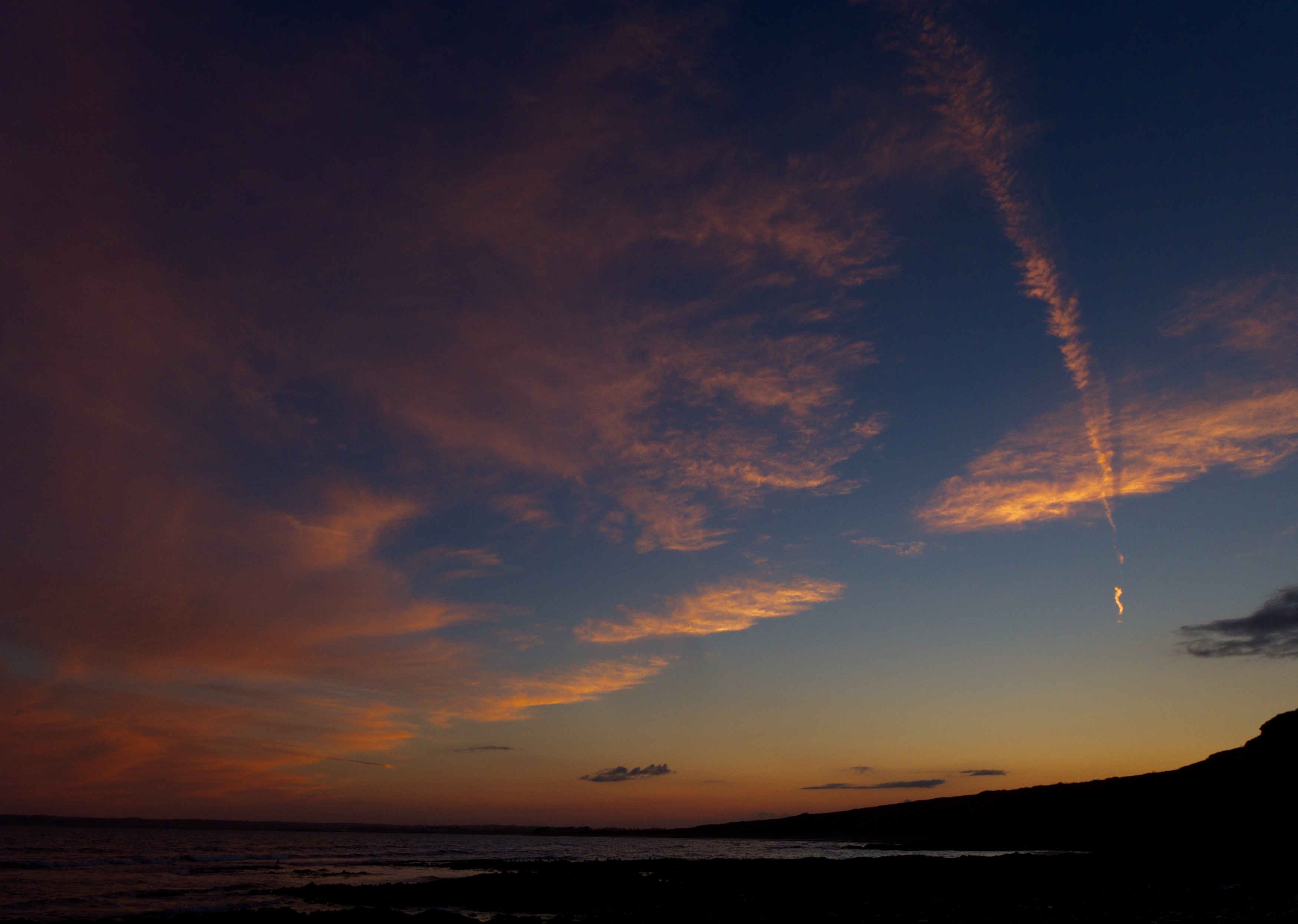
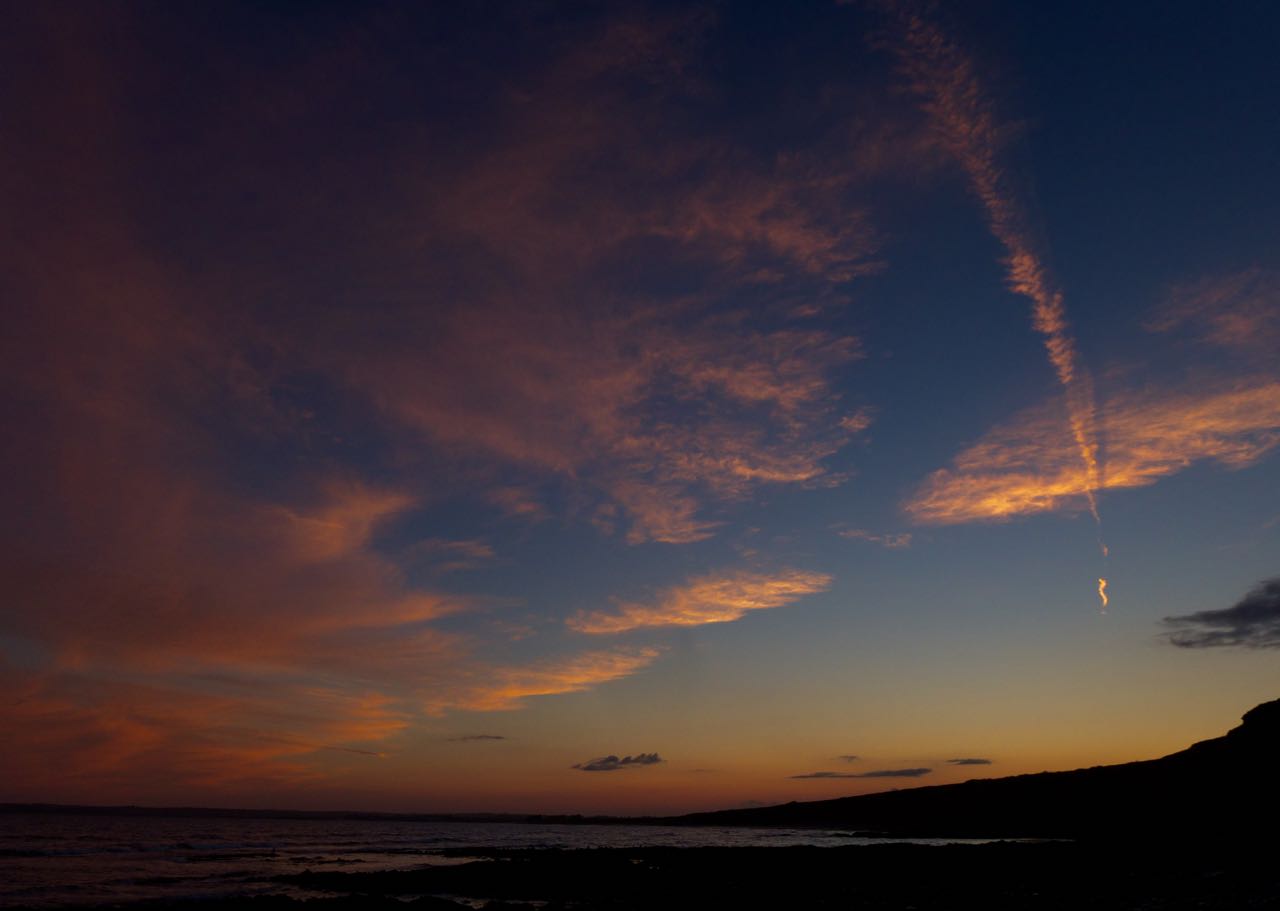
Night Trail

A few days later, I took this evening shot by Garryvoe beach – the contrail of a jet casting an upwards shadow on nearby clouds.

Version 2

A few more

These are the photos that didn’t make my top 10. A pity, because I love all of them for different reasons. There are photos here from Shanghai, the Burren, Bantry House, Mount Congreve, the Galtee Mountains, California, Fota Wildlife Park, Penarth and Singapore, among other places.


My last blog post brings me nicely to a recent debate on climate change on RTE Prime Time (an Irish current affairs programme).

On the panel were Kevin Humphreys (Junior Minister in the Dept of Social Protection), Ray Bates (Adjunct Professor at the Meteorology and Climate Centre in UCD), Oisin Coughlan (Friends of the Earth) and Eamon Ryan (Green Party).

While, I think, two of the panelists (Humphreys and Coughlan) did creditably well to represent their positions, the other two, Bates and Ryan, were awful, and for two different reasons.

Maybe I should get the worst of them out of the way first. Eamon Ryan came across as shrill, ill-tempered and preachy. He butted straight into other people’s talk time, listened to no-one, waved his hands and acted like a small boy in a sweetshop whose parents wouldn’t buy him a pack of bonbons. He might feel really, really, really strong about this issue (and I don’t blame him for that), but his style completely overruled content on the night. Humphreys only had to roll his eyes a few times, and Miriam O’Callaghan to politely reprimand him, for us all to realise that Ryan’s emotions had let him down badly. He should be long enough in this business by now to realise that dogmatism and rudeness does you no favours in a TV debate, nor does it help the credibility of your party.

Screen Shot 2015-12-06 at 1.30.53 a.m.

Eamon Ryan in full flight

On the opposite side, Ray Bates was a model of civility and patience. He was considered. He didn’t lose his temper. Which was unfortunate, because Ray Bates was, by far, the most problematic person on the panel.

Now, to be fair to Bates, he is not what I would call a First Degree Denier. He accepts anthropogenic climate change (ie. we’re responsible for it), but he disputes how bad it’s going to be and how long it will take.

Bates took pains to advertise his scientific credentials. Indeed, He mentioned them a few times. But what I heard was something slightly different than what I might expect most scientists to say. He spent his time picking some IPCC findings that suited his argument: that the margin of error was greater in 2013 than in 2007, or that 2015’s warming was less in the higher atmosphere than the lower atmosphere, or that climate models were out by a factor of 3. Pick, pick, pick. It’s like he was reading all the data, then looking for a small number of anomalies that he could use for the purposes of spreading uncertainty. That’s curious.

So here’s the thing. If you are fairly clueless on the details of global warming like most of us are, you would be left with the impression that all scientists have the same viewpoint as Ray: that they think it’s serious, but it’s not something to worry about too much. He was the only person on the panel with real scientific credentials – others were political and activism based – so that lent his view a certain amount of gravitas in the circumstances.

Screen Shot 2015-12-06 at 1.33.26 a.m.

Prof. Ray Bates – climate models are the best we have, but sure, we can pick and choose.

But the fact is that he is very much out of step with most of his peers around the world. It’s not because they are all have some chip on their shoulder, or he’s not invited to the right parties; it’s because they are reading the data differently to him. The issue really is more urgent than he is making it out to be. After reading John Gibbons’ article about him, I tend to concur with the view that he is somewhat more protective of the Irish agricultural position than a totally independent actor should really be. I think he has an ideological position in this matter – otherwise why such a pro-agri stance? Why use the airtime to water down the findings in favour of the status quo?

I’m unhappy that Bates was the only scientist that RTE could find on this subject, because he badly misrepresented the scientific position on this. RTE needs to start getting away from the climate denier spokespeople – who are always available to talk – and start hearing more from other scientists who can better speak to the likely downstream issues caused by a rapidly warming world.


A few weeks ago, myself and some friends decided to go to the Joe Power show when he was in Cork. We were curious to know what went on at such events, so we purchased a cheapo voucher and headed along to his show in the Metropole Hotel last Friday night.

The audience was quite large: maybe as much as 200 people. It was a mixed bag of people, old, young, men and women. Certainly more women than men with more older people in attendance.

Joe started late. One of his first questions to the audience was whether any of them had been to a psychic show before. Very few people in the audience had been to one.

Joe got stuck in straight away, happening on one of the most serious of subjects imaginable: suicide. The manner and some circumstances to do with the death were discussed with family members. A troubling line of questioning, to say the least. When he was done with this, he asked the father if he had been to hospital or had some trouble down below? When the answer was negative, he told him he might need to go.

Joe then went to other members of the audience, some of whom were responsive to his questions, some less so. Here are some brief (low) highlights:

‘Anyone shot down? Planes?’ he asked, possibly forgetting that few enough Irish people were involved in WWII. (He counselled the audience member not to go on a plane).

He discussed divorce problems with another person and what their sex life was like.

A fire in the house? Yes – 40 years ago. ‘We can go back as long as you want’.

‘Why are there 3 people buried next to each other? A young boy or young man? ‘No, just two – mum and dad’ ‘You’ll probably find I’m right by the way. You might need to look back’.

‘Just to let you know he’s around and he can see what’s going on’.

Brought up some private family issue where a family member went to prison for a while.

Told one man he might be getting 18 months in prison in the future.

Told another man he should get tested, maybe for bowel problems. ‘Get the missus to check around’.

What also struck me was how much stuff he just got completely wrong. Lots and lots and lots of questions never hit their mark. If the questioning wasn’t going anywhere he would simply move on as if it didn’t happen. My top marks on the night went to the people who made his life difficult. One woman blanked him completely, so he quickly moved on – indicating that the reading wasn’t for her. There were a few others where his questions went nowhere.

He would leave his questions deliberately vague, so he’d ask if it was father, or father in law. Dates like 26 or 19 were converted into people’s ages if it suited. Wigs (he asked a lot about wigs) became hair extensions. Because many of the subjects were older, he touched on health issues such as cancer, diabetes and hospital visits, or lifestyle issues such as losing weight, pigeons and gardening. As if willing him to succeed, many of his respondents made his life easy. They would try to answer his vague questions on numbers and hair and accidents with something that happened to them, even though this often had nothing to do with the deceased relative. In this way they were able to connect to him despite the fact that the overall narrative was confused, mixing things happening today with something concerning the death.

Almost always, he would simply say vague things about the dead people, like “he’s looking after you” or ‘he misses you a lot and thinks of you’. I’ve written about this before, but grieving is a process which often involves letting go. I don’t think psychics help this process at all, because the underlying message is that they are still there, still watching. Such talk does not help people move on.

This is what passed as Friday night entertainment. Banality, sadness and voyeurism reigned. There were a lot of cheap laughs at the event, but they were often at the expense of the people involved. We are not entitled to be given this kind of window into their lives. People deserve more privacy than this. Professional counsellors, not public psychics, are a far better solution for such problems.

My advice? Next time there’s a psychic in town, save your money or go to the pub. It’s a better use of your time and money.

A contrail from a passing plane casts a shadow high in the sky.

Click on the photo to enlarge.

Contrail