I’m at an age where thoughts of death – my death – visit me daily. Maybe it’s the morning before I get up. Maybe it’s in my commute to or from work. Maybe it’s before my evening meal, or just before I go to bed.
I’m not religious, so I don’t believe there is some magical soul in my body that leaves at the moment of death, destined for immortality. From all I know, one’s brain and inner thoughts are two sides of the same coin. There are no thoughts without a working brain. If the brain goes, so do you.
And when you go, then all your memories, every experience, everything and everyone you ever encountered, it all disappears. As if it never was.
The Great Transition.
That moment between being and not being. Consciousness and oblivion. The moment the brain stops forever. Knowing and remembering, then nothing: either past or future.
This is our inevitable fate.
Simple.
And yet.
There is something about being. It kind of goes to the ‘why’ question. Why consciousness at all, in this great unconscious universe that doesn’t care if we exist or don’t?
I think the reason we keep on seeing people like Tr*mp and Farage continue to make gains is because of this asymmetric difference between intolerance and hatred on one hand, and empathy and collaborative problem solving on the other. They simply don’t speak the same language as each other.
We are in a world where the desire to destroy the perceived enemy is in the ascendant. There is no interest in rapprochement or dialogue. We can call the Tr*mpers and Farageists idiots all we want, but so long as they are in possession of all this hatred and desire to destroy, it wont make a difference.
Hopefully the pendulum will swing back at some time in the future, but not with a lot of pain having been experienced along the way.
I’m beginning to see the French Revolution as a template to understand these crazy times.
Trump, Musk, Bannon and Vance: bizarre, damaged characters; who in more enlightened times would have been consigned to prison, or the madhouse. Now finding themselves cast as Danton, Saint-Just, Desmoulins and Robespierre.
The sans-culottes: not impoverished peasants, but as the disciples of MAGA: vengeance on their minds. Ah, ça ira!
The Áncien Régime? The technocrats. The educated. All those who benefited from the world order post WW2, where physical might was replaced by intellectual might, allowing masses of outsiders to become insiders, and to thrive under a progressive dispensation.
Louis XVI? The democratic leaders of the older world. Biden, Trudeau, Starmer. Macron.
Winners and losers: were there any winners from the French Revolution? Any at all?
This is still a very unformed thought, but it has prompted me to look at the French Revolution anew. As Simon Schama has written “The French Revolution was, after all, a great demolition”. How are these times much different? Maybe only in scale, and in frightening possibilities offered by modern technology
When I was a child, my grandfather used to bring me and my siblings on short walks close to our house. Sometimes he would meet up with old friends, and they would reminisce over stories of yesteryear. One of his friends was a retired priest. He was a chaplain with the US Army during the Normandy Invasion of June 6th 1944.
On that day and in the days following it, men died in their thousands so they could comprehensively destroy an idea: the belief that, in civil society, only the views of the mightiest should prevail, that undesirables be ruthlessly weeded out and all dissent be crushed utterly, to the point of mass, licensed murder.
And yet today, one day after the 80th anniversary of Normandy, on the same continent, millions are sure to vote for people who wish to promote modern versions of that same malignant idea.
The voices of unfreedom are on the rise. We hear them when they call immigrants scum and refugees spongers. We hear them when they threaten public servants and public representatives with violence. We hear them as they pushing their messages of hatred from the internet into the squares and streets of our cities and towns. These voices are seeking to get into elected office. I don’t remember a time in my life where such voices had such a strong platform.
And yet, millions of others will not vote at all today, preferring cynicism over action at the ballot box. They look at democratic politics as messy, and democratic politicians as corrupt. They see the frustration and the disagreements, the bluster, the confusion and the false promises, so tonight they will decide to stay home and watch Netflix.
For me, the messiness and turbulence is the price we pay for our democratic freedoms. Being free means that we allow others to be free too. Anyone can stand to vote and anyone can vote, so disagreements and salesmanship and outrageous promises and hypocrisy will inevitably occur. Freedom looks like this when it’s working correctly. The seeming chaos is a feature of freedom, not a bug.
If I have to choose between the chaotic underwhelm of democratic freedom and promises of simple solutions underwritten by intolerance and violence, I know which option I will always go for.
I’ve just finished an Interrail trip with my adult children (all students). We started in Amsterdam, then we moved on to Stuttgart, then Prague, Salzburg and finally Venice. We stopped off briefly in Mannheim and Vienna along the way.
Interrailing is the way to go if you want an adventure rather than just a holiday. It’s a vacation that requires you to make spot decisions all the time, and not all of those decisions will be the right ones. Murphy’s Law applies: multiple things can and will go wrong. Each day, you are going to experience something new and different, and each day you are creating memories that will last a lifetime.
I did my first Interrail in 1988, and my second one in 1990. 32 years have passed before embarking on Interrail Number Three. Many things have changed in the meantime: the internet, children, that kind of thing. So this trip was very different to my first two trips in so many ways.
Here are a few tips that might help if you are planning a similar Interrail.
Plan Early
For me, much of the fun of Interrailing is the advance planning, and the build up of anticipation that accompanies a well planned trip.
The first question I asked myself was where we would go. This was a surprisingly easy decision. Cork, where I live, has limited connections to Europe, so we placed Amsterdam as our first destination, and Venice our last. Both cities have direct flights to Cork.
It was then just a matter of filling in cities along the way. I lived in Prague for a few months in the 1990s and I still have a good friend there, so this was pencilled in immediately. I also have family members living near Stuttgart, so that went into the book. The last destination was a matter of geography: what’s a good place to stay between Prague and Venice? Oh, look: Salzburg.
Salzburg
Limit your destinations
Depending on how much time you have overall, ideally you should spend about three nights in each place. Long distance travelling is tiring, so you will need to give yourself at least a day to travel, a day to explore and a day to take it easy. Packing all of Europe into a two or three week vacation would not be much fun, so choose a limited number of cities and make the most of your stays while you are there.
Vienna
Pre-book your accommodation
I have bad memories of seeking accommodation when I arrived into new cities on my earlier Interrails . With tools like booking.com and Airbnb, these days are gone. Book your accommodation in advance and be done with it. This alone will remove the single biggest source of stress from your holiday.
I used a combination of booking.com and Airbnb for the trip. In all cases the accommodation was great: in Prague we ended up close to Charles Bridge and our apartments in Venice and Salzburg were less than 10 minutes from the main train stations: a blessing after a long journey. Both places came well recommended.
Choosing accommodation early also allows you to better manage your cash flow when you are travelling: some of the biggest expenses will already have been cared for.
With AirBnB you can change your mind quite close to the travel date. This is a real plus, avoiding you from being caught with a no-refund booking if plans need to change.
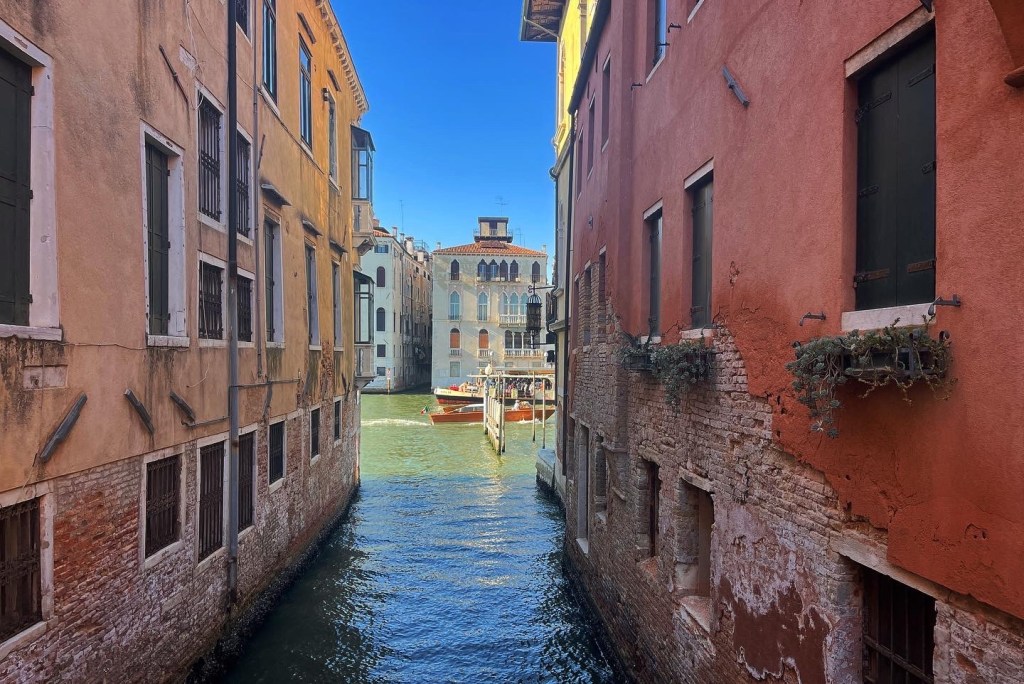
Venice
Plan for contingencies
The nature of Interrail is that not everything will go right, so plan for contingencies. In these post-pandemic times, you need to have good travel insurance. There are other things you can do, such as booking extra luggage if you are flying there, increasing the number of travel days on your Interrail ticket, and bringing along a small first aid kid, tissues and over-the-counter painkillers. Think about how you might handle one of your party getting sick or coming down with Covid: these are real possibilities that need to be considered.
On our trip, one of my sons got a bit too much sun one day. He was sick for a few hours. He then had a few unannounced nosebleeds during the remainder of the trip. He needed a pack of tissues at the ready when it happened.
Amsterdam
Pack light
I think one of our biggest mistakes was to pack too much. One of my sons brought a big 20kg bag, that we aptly named ‘Gigantopithicus’ due to its ungainliness. Because many Airbnbs had their own washing machines, we were able to wash our clothes regularly. We only needed a few days worth of underwear, tops and shorts. One small 10kg bag and another 10kg backpack was more than enough.
Because we were travelling during the height of the summer, I packed no warm clothes; I depended on a very light rain jacket if things got a bit chilly at night.
A good pair of comfortable light walking shoes is very important. We walked well over 130km during our trip. You should also bring charging cables, adaptors and power packs for additional charging during the day.
Along with my 10kg backpack, I brought with me another very small backpack to carry water bottles, cameras, sun cream and sunglasses during the day – whatever I needed during my walk around each city.
I also wore light mountaineering trousers that could be quickly converted into shorts if needed. It had additional pockets for my phone, my passport and my wallet.
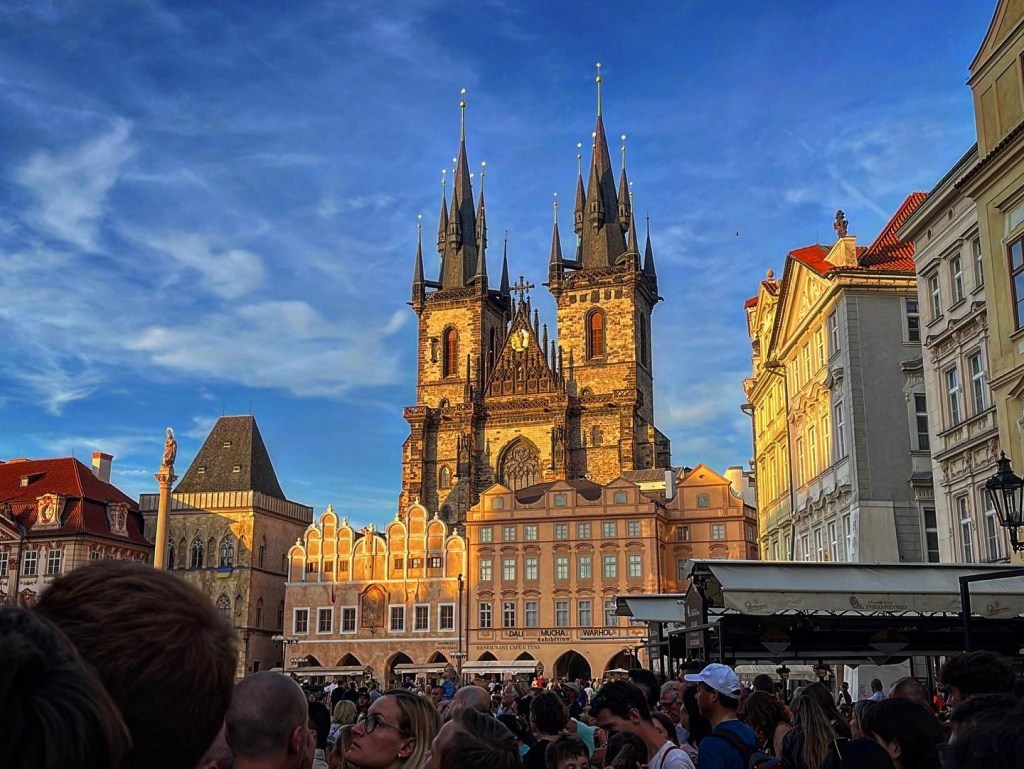
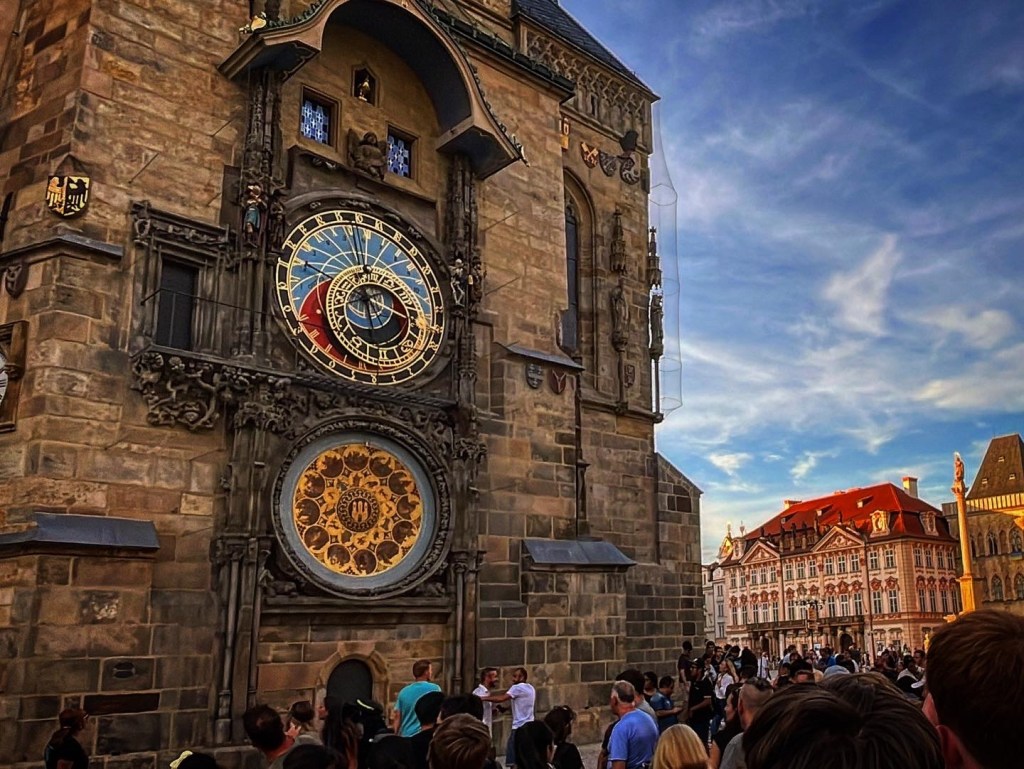
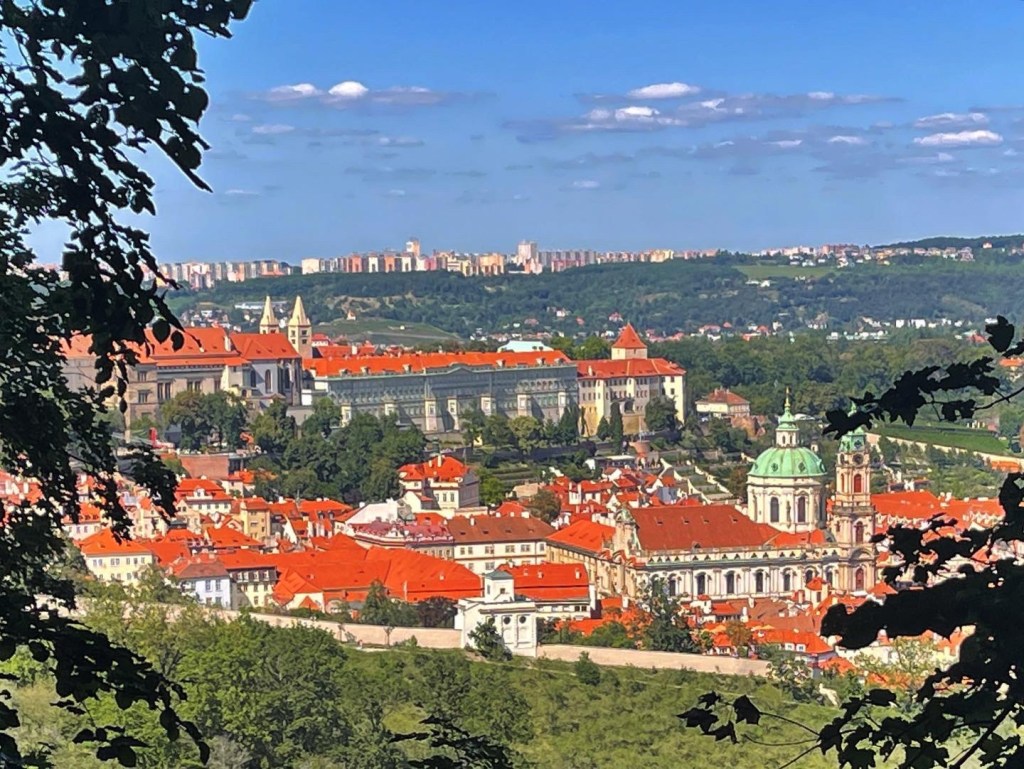
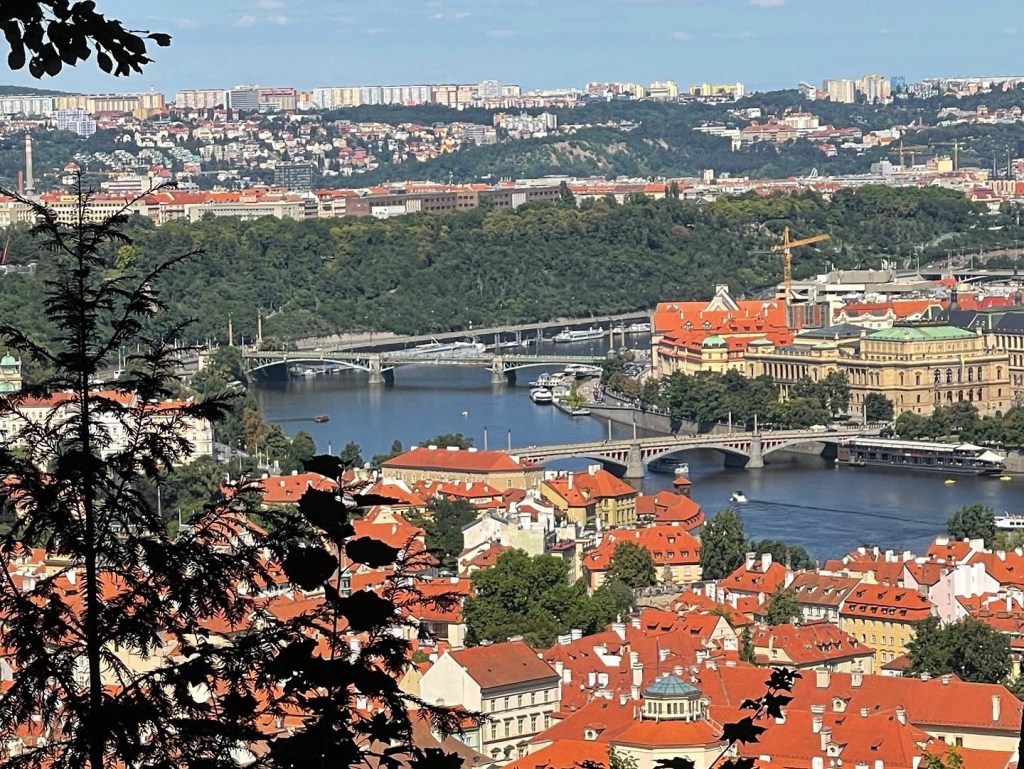
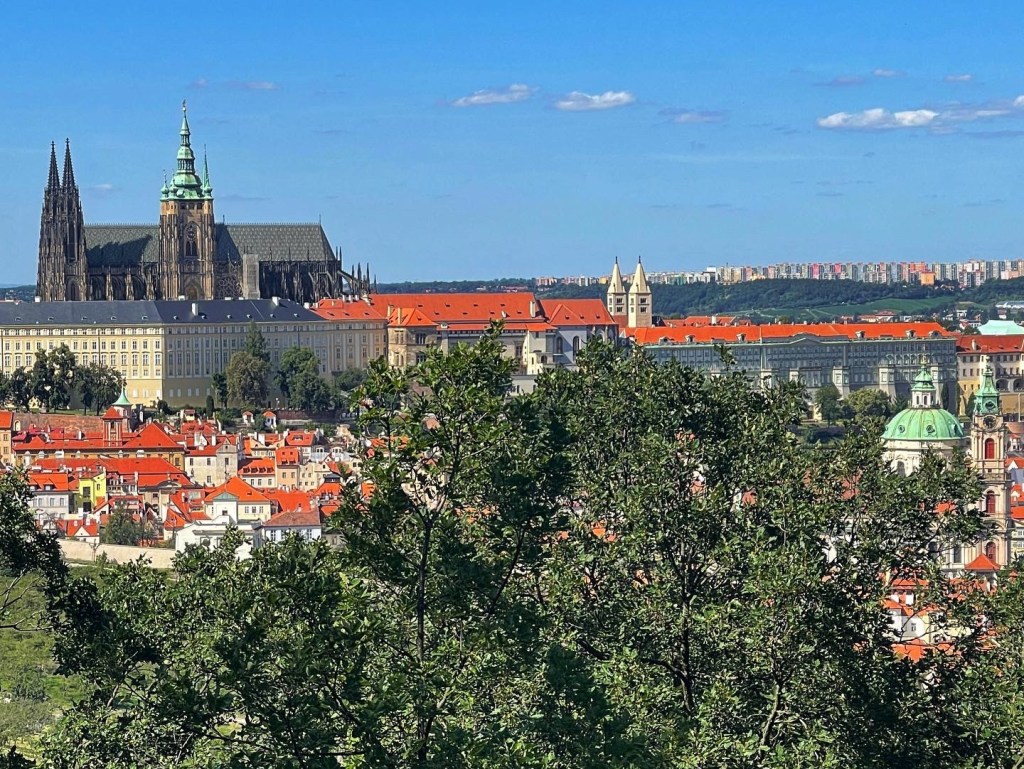
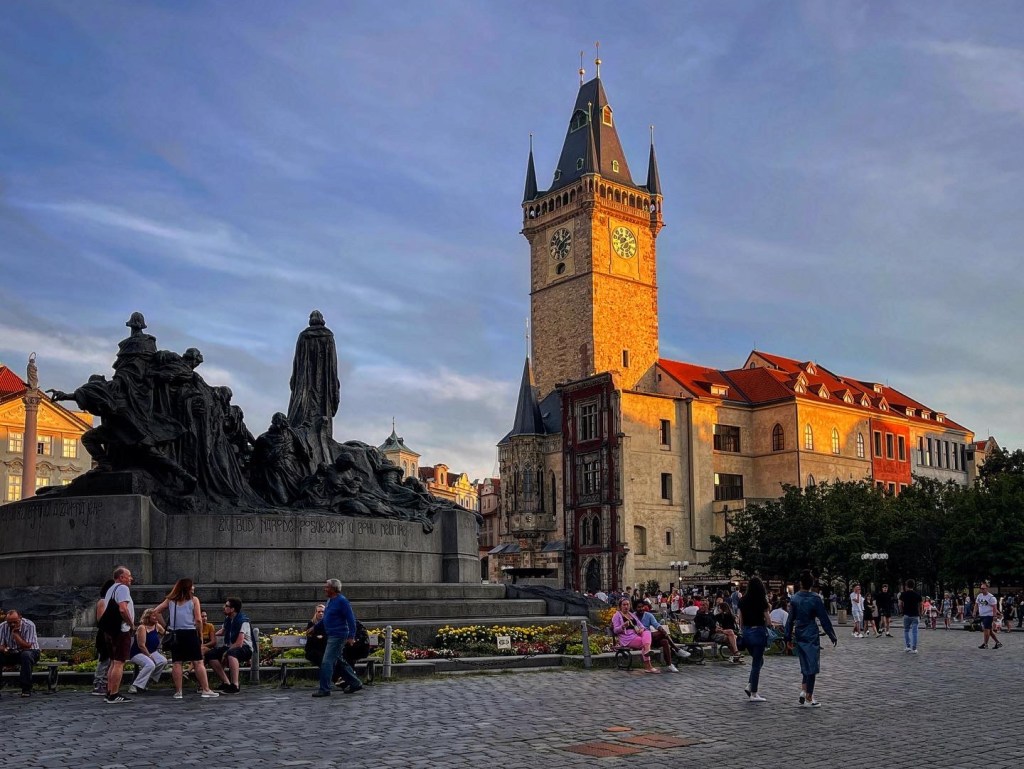
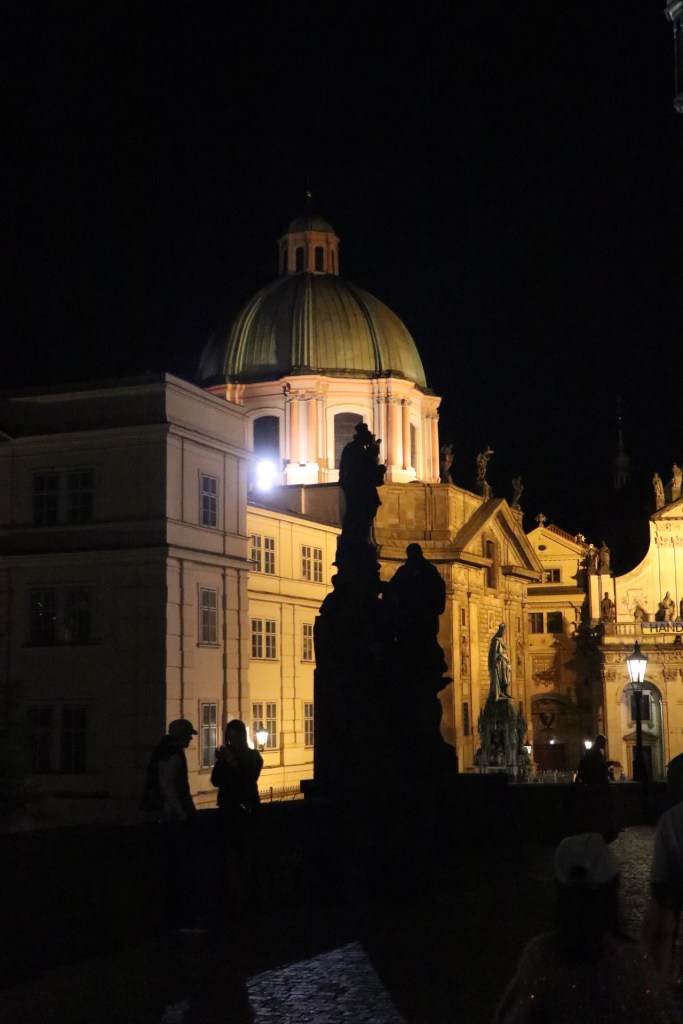
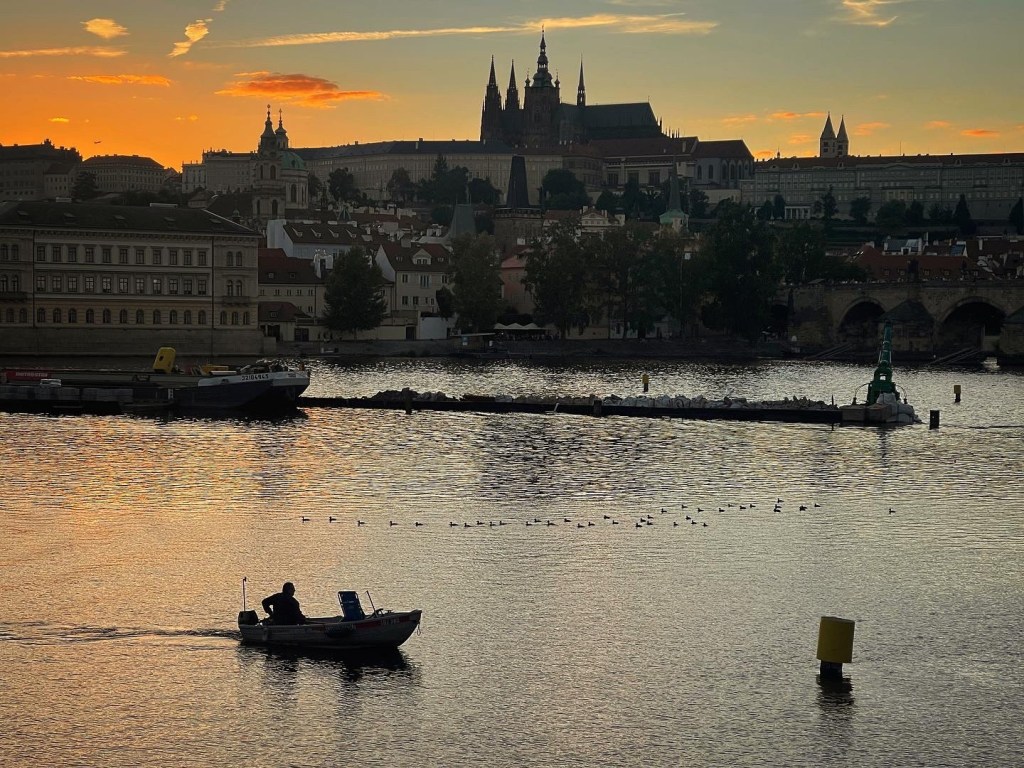
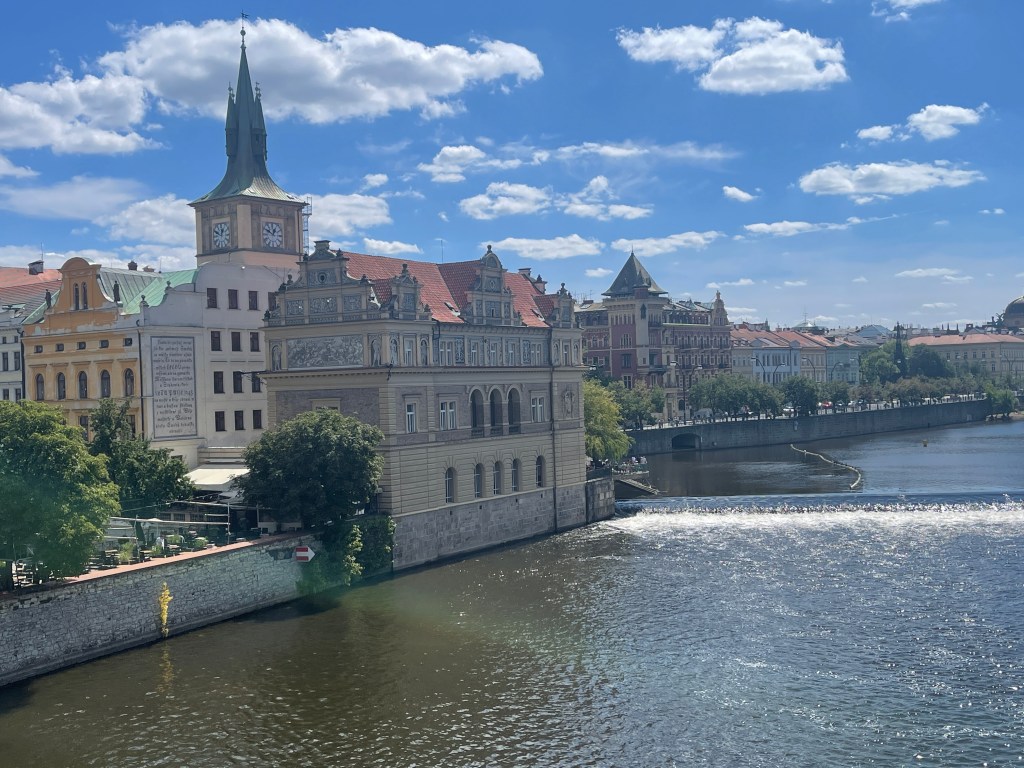
Prague
Find local supermarkets
Unless you are made of money, dining out for breakfast, lunch and dinner will cost you an arm and a leg. So, finding a local supermarket is absolutely essential. A supermarket shop will help greatly to reduce your travel costs. Alcohol in particular is way cheaper in the supermarkets, and you can quickly add bread, butter, cheese, cooked meat and milk to your shop – and even bring these along to your further destinations. The local grocery foods are wonderful – they are well provisioned with lots of local specialties. They are also much more likely to take cards instead of cash, still a problem for some restaurants.
Stuttgart
Manage your data
When abroad, there is a limit to how much broadband you can use, so keep an eye on your mobile data. You don’t have to turn it off completely as the broadband limit is quite generous, but you should selectively turn off mobile data for apps you don’t need to use, thus giving you some control. It’s possible to see how much of your allowance you have used. In the end we had plenty of unused data: it would have been more of a concern if we were downloading lots of movies, gaming, navigating extensively or using lots of data heavy mobile apps while out and about.
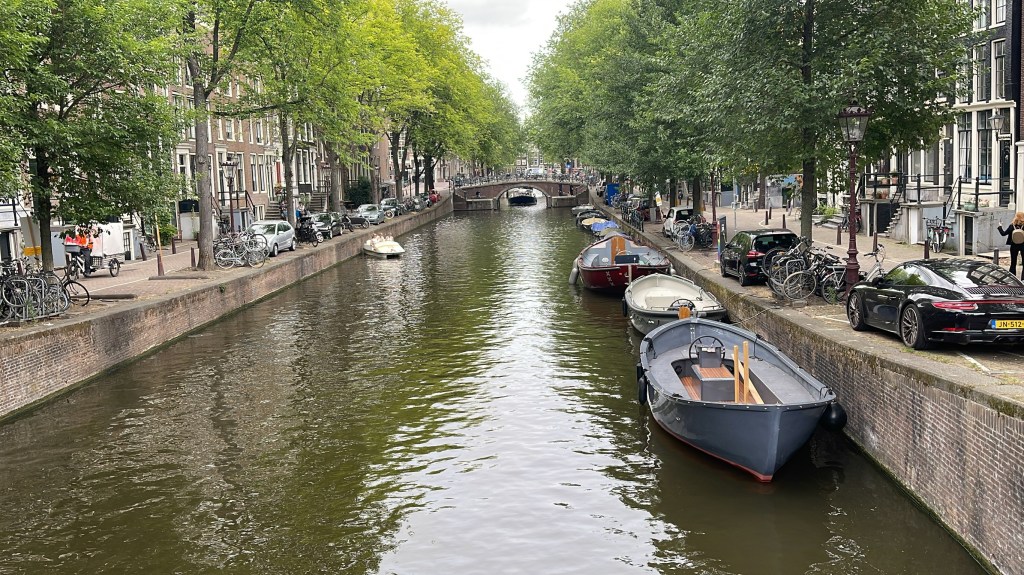
Amsterdam
Create online spaces for yourselves
For our trip, we set up joint picture sharing. We encouraged each other to take plenty of pictures and videos and we regularly uploaded these to our shared account. One of my sons now has the daunting task of creating a somewhat coherent account of our trip, but we can now enjoy both edited and non-edited versions of our trip.
We also created a shared account for messaging, so we could share documents and locations quickly, and communicate with each other if we were apart.
Finally we all shared our locations with each other, allowing us to find each other without much fuss, should we need to do so.
I found the whole experience of being online like this really helpful. A quick shared link helped to avoid lots of conversation and haggling. It also took the pressure off me to organise everything and it allowed for a second or third set of eyes and ears should I make a mistake.
There are no problems in nature. When something happens, no matter how bad, nature does not look for a solution or a resolution. An asteroid could hit a planet, and there are no tribunals of inquiry, no hunt for causes. Nope. In nature, irrespective of the damage, time just continues on. An invasive weed could take over an entire island, killing its former inhabitants, rendering the island deserted apart from that one obnoxious plant. If nobody is looking on, it’s not a problem, just a change.
Problems are only a product of the mind. To have a problem, you have to have some sort view as to how things should be. Problems are created when reality diverges from that view. If a machine is not running well, you need a concept of “running well” somewhere.
Thus problems are subjective. If there are different expectations of how reality should behave, then depending on who is looking at it, the problem will look different, or there might not be a problem at all.
If you are the invader of a country that does not want to be invaded, and they resist like hell, then your problem is that they are not complying with your intention the way you would like them to. If you are being invaded, then your problem is to get the buggers out. If you are an arms dealer, then what’s the problem?
So problems depend on who is asking and good problem solving depends on a sharing and agreeing a view of what the problem is.
Problem solving should therefore begin with the question “who?” – who is asking and what is their view of what reality should be? Without clarifying that, you are only inviting confusion.
I’m reminded of Gareth Morgan’s concept of a “psychic prison” when I think of the Russian invasion of Ukraine.
The idea is that in organisations, the neuroses, idiosyncrasies and psychoses of the founders and leaders get ossified in the culture and structures of the organisation. An observant watcher can see the signs everywhere, from how confidential information is handled, how dissidents are punished, how people are promoted and even the seemingly little things like the organisation of coffee breaks, all-hands meetings and nights out.
I think the same goes with countries: particularly ones with psychopathic leaders.
Russia right now is an extension of his diseased mind. A place where traitors are everywhere. Where enemies are seeking to invade. Where collapse and defeat is around every corner.
Russia is trapped in a psychic prison: not necessarily of Putin’s making, but one he fortified while in power. It’s a sick mental state that’s getting more paranoid and aggressive by the day.
My partner has seen Russian people she interacted with before the war turn into mouthpieces of the very worst of Putin’s ravings. She is involved in a very niche community on Facebook, but I expect that similar sentiments have been uttered in all sorts of different communities. Russians are trapped in their leader’s mental breakdown and parroting his fears and prejudices. It’s a sort of Stockholm syndrome.
Normal people with a relatively healthy attitude towards others don’t think like this.
It’s not just Russia, of course. Many German people had similar attitudes before and during World War II, as did many Japanese. You can see the same sentiments today in America, Poland, Hungary, China and Brazil. The paranoia of the leader infects the thinking of the populace.
But such breakdowns can also dissipate quickly. Germany and Japan quickly accepted radically different norms after their defeat in World War II, and many Eastern European countries quickly cast off their communist norms after 1989.
The end of this terrible debacle has to address this dreadful mode of thinking, otherwise it will persist beyond Putin. Russia has to have a stake in the future of the region. It should not be casted from the international community, lest we want a recurrence in an even more malignant form some years down the road.
But these sentiments are not for now. Right now, Putin has to be defeated or contained. He can’t be reasoned with or appeased. It’s after Putin that Russia needs positive engagement. A way has to be found to allow our Russian fellow travellers to bury their resentments and work for better days.


 Passive Impressions