Archives for category: technology

Charlie McCreevy

Our recently departed* finance Minister is causing a stir in Brussels by wishing to change the definition of copyright from an economic incentive into a welfare system for musicians. Techdirt doesn’t pull any punches, calling it “a total and complete bastardization of copyright law”. (There are echoes of the Spatial Strategy and Decentralisation here, methinks).

In addition, he supports the implementation of a levy on various recording devices, so that you pay for piracy even if you don’t pirate! Nice..

Copyright is where all the battles seem to be these days, with insufficient people looking at alternative ways of earning money in the Internet era, where copying is what makes the Internet so powerful in the first place.

* to Brussels, that is. Same thing, usually.

Last week I learned how to download podcasts to my mobile phone. It wasn’t that difficult: it just takes time to set up and download. I needed first of all to subscribe to the website RSS stream, then I had to download the MP3s to the computer and after that (whew) I had to use Nokia’s file download facility to transfer the stuff via a Bluetooth connection to the mobile phone.

The quality of the podcasts is very good. I was listening to the Skeptoid series on the phone while I was in London for a day last week, and often I thought that someone beside me was talking to me. It’s like my own “on demand” radio series for listening to when nothing else seems worthwhile listening to, which is kind of cool. I also downloaded the “Lie of the Land” series from RTE about the history of map-making in Ireland. I’ve been listening to that over the last few days.

The amount of space available on my phone is tiny: only around 400 Mb, which isn’t much when I am trying to download a few radio series to the phone. I suspect I will need to delete early and often if I am to get any benefit from it at all. I then discovered a dreadfully inconvenient problem with my Nokia. It doesn’t have any “Forward” or “Rewind” functions. When listening to a 30 minute show, this can be irritating in the extreme.

Do you listen to podcasts, and do you have a favourite show that you listen to?

Mind42

I’m a big fan of mind mapping apps: probably because I have a mind that often needs quite a bit of organising. While I was working on my thesis, I always had a copy of Mind Manager close at hand. It was invaluable as it allowed me to make sense of large amounts of research, organising it into useful categories quickly and efficiently. Now that I have since moved on into a new job, I don’t have it any more and I have felt slightly bereft, having to make do for the time being with Microsoft’s One Note.

Mind Manager is an excellent application, particularly if you have presentations or project plans to write on the fly. However, it’s a bit pricey, so the alternative is a free application on the web.

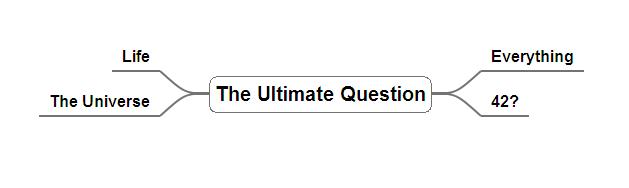
Mind42 allows you to write, save and publish your maps on the web. You can also collaborate with other users, co-writing or reviewing a map as part of a virtual brainstorming session. The mapping tools are rudimentary but nevertheless easy to use and more than adequate for the majority of mapping tasks.

I tried to publish the above mind-map to my blog using the publishing tools, but unfortunately the code provided does not work on WordPress.

It’s just an observation, but technology companies that no longer take risks are companies in great trouble.I’m talking about companies that have become used to a particular “way” of doing things. Where everything eventually becomes routine. New products are predictable. The launches are the same, the engineering details say more about technology obsolescence than they do about customer needs. These companies are in serious danger of extinction.

In the world of technology, the customer has become used to being spoiled. Customers want new, they want different. If they don’t get it from you, there are plenty of alternative options. This market is no place for those who wish to play it safe. You make it big by innovating. And innovating, more often than not, means taking a risk with the company’s money.

But here’s the problem. Very often, managers look at the new, the untried, the dangerous, and the instinct of self-preservation kicks in. Instead, they seek refuge in the safe world of numbers. Well, numbers are important, but they are not everything. Numbers only tell you what has happened in the past, but the past is a poor guide to the future. If you have a product that is on the decline, every promotion and marketing effort under the sun will only provide short-term respite from that long-term downwards trend. The refuge of numbers can be a leaky tent indeed.

That’s where vision and risk-taking come in. The people who impressed me greatly in my last job were those who said “I know this might not work at all. I know this may hurt us. I know I might need to look for a new job if it goes wrong. But, even still, we need to do it”. People like these are vitally important because they have a sense of what the customer might actually want, and they are prepared to stick their head over the parapet. They may often indeed be proven wrong, but that is rarely a reason to think less of them. Without people with that talent for seeking out the different and seeing it through, a company will go nowhere.

Here’s the formula: you’ve got to listen to your customers, feel their pain, then design solutions that will blow their mind. That’s it: apart from the fact that you need to keep doing it for as long as you can.
With innovation, failure is a high probability. Without innovation, failure is a certainty. Innovation gives your company a fighting chance.

Wikipedia is one of the most surprising hits to arise out of the Internet age. The proposition, when it was introduced back in 2001, sounded ludicrous. “What if, instead of having an encyclopedia compiled by a small group of experts, we open it up to millions of people and let them write it up instead?” It sounded preposterous. Letting non-experts provide and monitor the content sounded like a recipe for pure anarchy. Few restrictions were imposed. A few seeder articles were written by the in-house team, and then control was handed over to the mob. Despite trenchant criticism, it has been an incredible success. Now, 6 years later, it has 6 million articles in 250 languages, greatly overshadowing physical offerings such as Encyclopedia Brittanica and the World Book. And the thing is, somehow it works. It has evolved into a huge self-correcting, authoritative, dynamic organism. False, biased and slanderous entries do get written, but in general the work is quite accurate, and when errors do occur they can be corrected pretty quickly. One view on it is that in general it is an excellent repository of information even though many specifics might be flawed.

This idea that “mob rule” can evolve into something vibrant, self-correcting and comprehensive is intriguing to say the least. It’s a good example of the Wisdom of Crowds idea that I spoke about some time back.

So, what about applying the same rules to democracy, then?

Even though many people equate “democracy” with “freedom” and tend to think of the prevailing Western system of government as the best possible system, a debate still rages as to whether it is true democracy at all. If we go back into history (and indeed to many countries around the world today), the elites have been in power – people who have been educated, guided and born into privileged positions tended to take the reins of government when the chance arose. They often had exclusive authority over the “little people” and indeed sometimes asserted a “divine right” to rule over them. In the last 300 years or so, the populace started to demand a greater say in how things were governed, and the hard-won result is a compromise between the elites and the mob. This is parliamentary republicanism, or what many people call “democracy”.

In a republican system, the elites still rule, but us plebs can now attempt to throw them out every 4 years or so. Power is centred in the hands of a very small number of people, and that power is then tempered by the judicial system, the parliament or congress, international agreements, and the press and public opinion generally. It’s quite robust and certainly highly successful. A possible factor in its success is that change is possible in the medium term, without violence or coups d’etat, thus leading to greater stability and security. The addition of innovations such as freedom of speech, freedom of assembly and property rights etc have given people a lot of latitude and freedom in their personal lives.

But it’s far from being a perfect system. Legislation tends to lag the issues of the times, sometimes by many years. People who have experienced injustice often feel that no-one is listening. Corruption and cronyism persist. People with ties to the elite tend to be treated more leniently than those further down the pecking order. The same old names continue to rule over long periods. Many people feel disenfranchised, and this is evidenced in part by the decline in the number of people voting in elections all across the Western world.

So, it’s interesting, even as just a thought experiment, to imagine a world where legislation can be changed by professionals and amateurs alike, in much the same way as in Wikipedia. Normal citizens become the lawmakers, or law refiners, or critics, or whatever they choose. The public debate the issues and collaborate in the drafting of the laws of state. Where problems are found, these laws are then amended quickly, again though participatory discussion and collaboration. No one group has a monopoly on power – laws arise through the mechanisms of debate and consensus. Flawed legislation can be corrected or removed quickly. Everyone who wants to can have a say.

It seems perverse. It seems anarchic. And yet, as we are finding out with Wikipedia and its offshoots, it is possible to create something beautiful and workable by simply providing a framework and letting people get on with it.

Churchill once said “Democracy is the worst form of government except for all those others that have been tried”. Could Wikidemocracy lead us to a less worse form of goverment perhaps?

Now this book is quite amazing. I had heard about it some weeks ago, so I made a special point of attempting to find it when I went shopping in the US.

The Long Tail - Why the future of business is selling less of moreAnderson’s central thesis is this: with the introduction of the internet and new ways of working we now live in a time of abundance and practically infinite choice. And as a result, the rules completely change. No longer are we constrained to think in terms of “hits” or “blockbusters” or “top selling brands”. We can now buy anything we like, and it’s available for us to do so in just a few seconds of clicking or calling someone. And, what’s more, it’s happening all around us today.

What fascinates me most is how it seems to overturn one of the most powerful “laws” of doing business. A long-standing rule of business is the Pareto Principle, commonly known as the 80:20 Rule. Put simply, it means that, to make money, companies should only concentrate on their highest selling products or services. The slow movers and niche items are too expensive to store, and so they should be ruthlessly excised. The result, if you haven’t already seen it around you, is uniformity, blandness, lowest-common denominators and a staggering lack of choice.

These days are coming to an end.

The Long Tail hypothesis says that the action in the future will be in the lower selling categories. People are increasingly seeking out those things that they want to buy – the niche music tracks or clothes, the arty Spanish films, the British comics from the 1980’s. Whatever you are in to, you can find it quickly and buy it for a cheap price, thanks to Ebay, Google, Amazon and a host of smaller sites and blogs. The Long Tail idea says that hits will decline in importance as interest in niches grows and grows and grows.

So much choice…This is nothing short of a crisis for traditional big media organisations, whose job it has been for a century to sell a consistent message to as many people as possible. Now, with the explosion of new channels of communication, people are turning off their radios and TV sets, reading blogs instead of newspapers, downloading indie music instead of going to the record store, ordering customised T-shirts, footwear and jewelery over the web instead of accepting the limited offerings in the local shop. The message, loud and clear, is “Blandness and Hobson’s choices? No thanks”.

Mega celebrities, big-name TV shows, best-selling newspapers, hit pop bands, blockbuster movies: all are beginning to show significant drops in their market-worth and the trend is getting more pronounced with each year. The world of mass communications is splintering into a million pieces, and no-body seems to be able to put this Humpty Dumpty together again.

Does this mean that the age of the hit is well and truly over? Of course not. Just look at the recent global racism furore on Celebrity Big Brother for instance. However hits will possibly be more random in the future – arising from anywhere, and disappearing back into obscurity once their time in the spotlight has passed. It’s likely that hits will be much harder to achieve, and more limited in their impact. Marketing’s problem will be in getting their message out to a truly fractionalised audience, with no-one consumer quite using the same channels of communication.